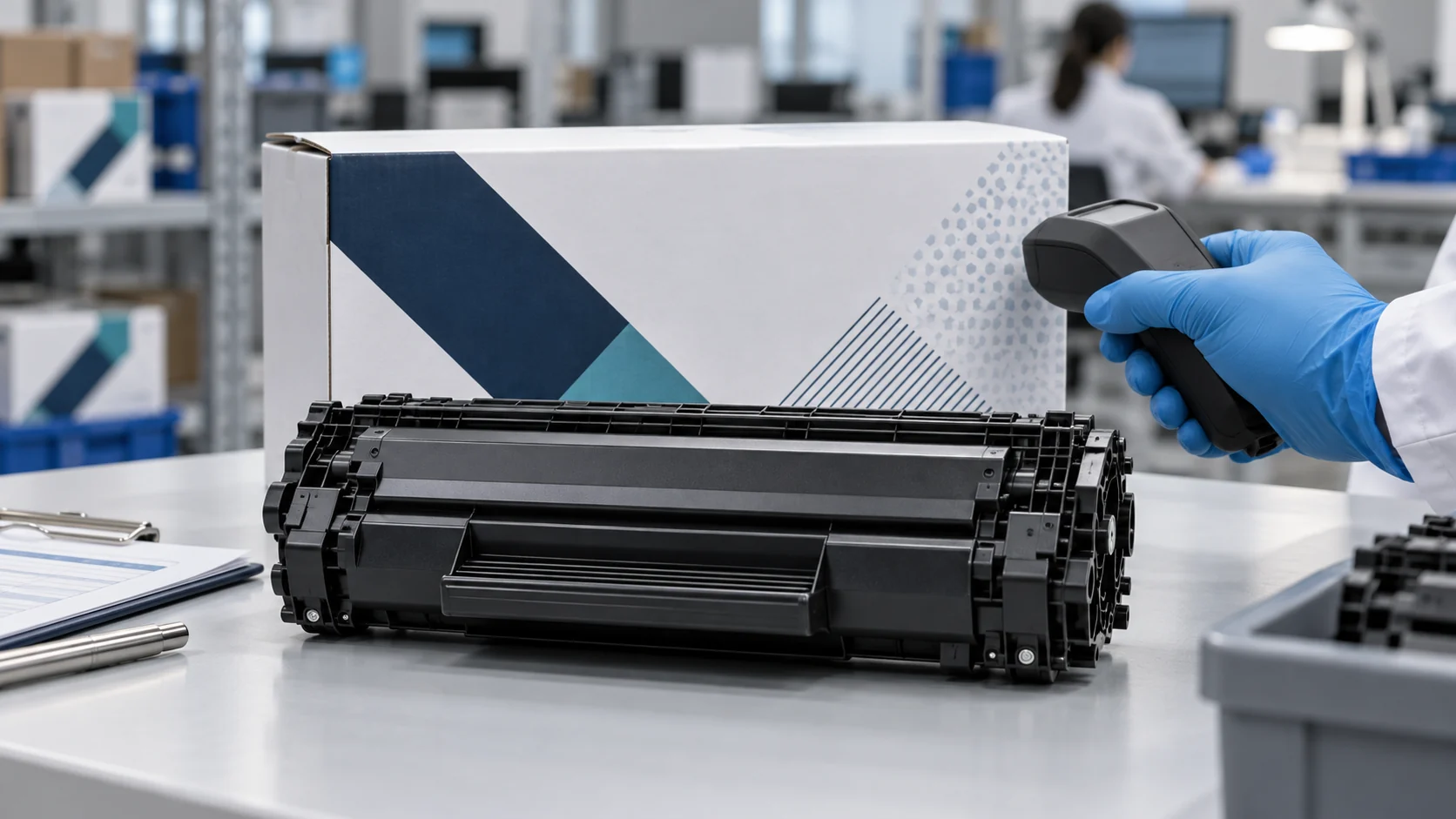
Invisible code for printed packaging
Micro-chain Code is Mina’s new-generation invisible graphic code for packaging, labels, and other printed materials. It is generated by Mina’s exclusive core algorithm, remains imperceptible to the naked eye, and can support both anti-counterfeiting and anti-diversion inspections without changing the original packaging design.
Labels and printed materials
Specialized equipment reading
Anti-counterfeiting and anti-diversion
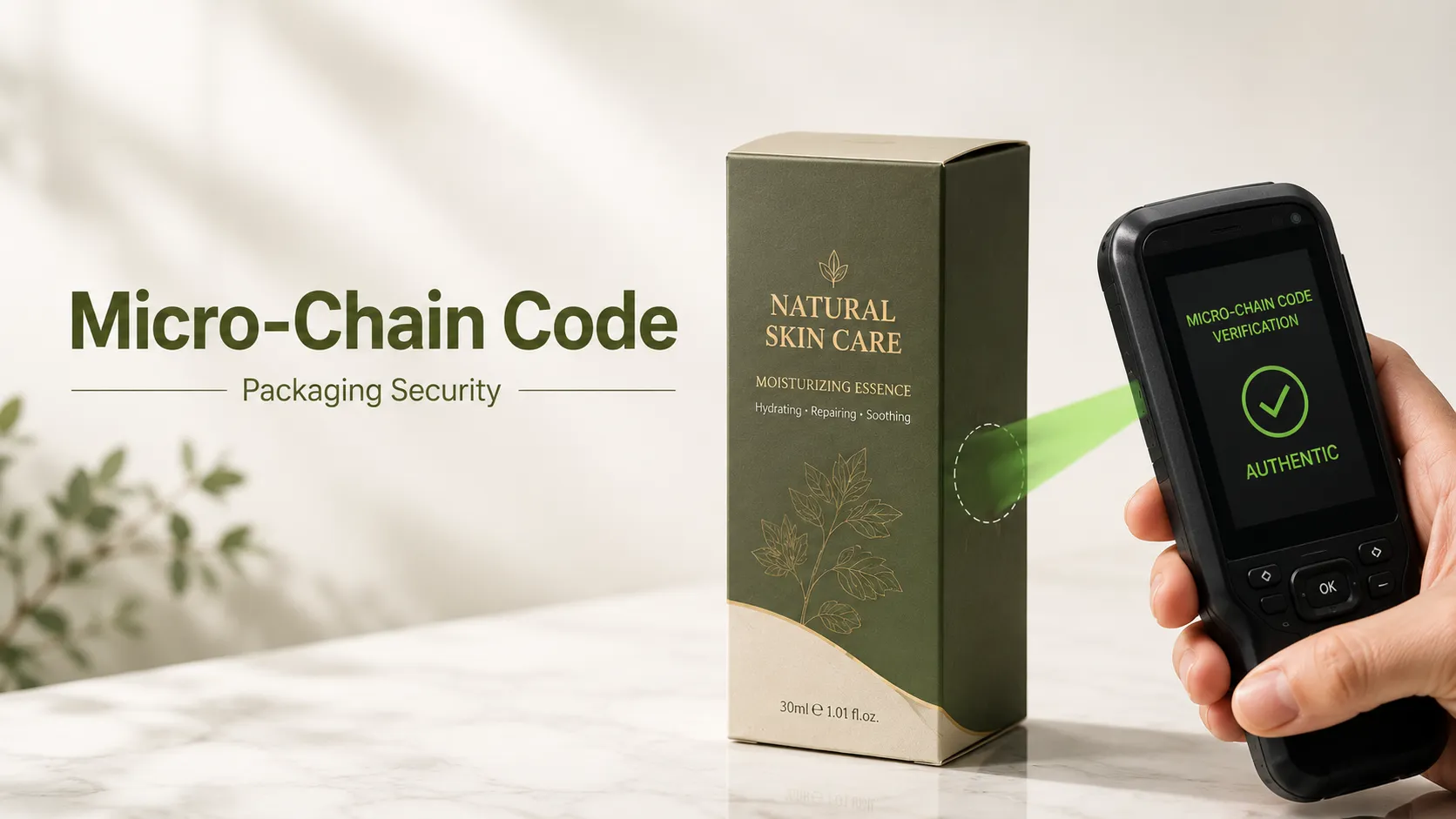
Micro-chain Code adds hidden authentication and anti-diversion information to printed packaging without changing the visible design.
What it protects
Labels, product packaging, cartons, boxes, bags, tags, inserts, printed films, and other printed packaging materials.
Why it matters
Visible QR codes, barcodes, and holograms can be copied, photographed, reprinted, or attacked because counterfeiters can see them.
How it works
The invisible graphic code is embedded into printed packaging and read by specialized equipment for restricted enterprise inspection.
Best use case
Brands that need hidden packaging evidence for authenticity checks, market audits, distributor control, and anti-diversion cases.
Key takeaways for procurement teams
- Micro-chain Code is an invisible packaging code, not a wine-specific solution.
- Mina’s source profile states that it is generated by an exclusive core algorithm and is imperceptible to the naked eye.
- It can be applied to product packaging, labels, and printed materials without altering the original design.
- Specialized equipment reads the information, making it difficult to detect, crack, or counterfeit.
- It supports both anti-counterfeiting and anti-diversion when connected to product, batch, market, or distributor data.
What is Micro-chain Code?
Micro-chain Code is an invisible graphic code technology developed by Mina for printed packaging, labels, and other printed materials. It is generated from Mina’s exclusive core algorithm and is designed to remain visually imperceptible while carrying authentication or channel-control information.
Unlike a visible QR code or barcode, Micro-chain Code does not need to dominate the package surface. It can be integrated with existing artwork, making it useful for brands that need covert inspection but do not want to change premium packaging design.
Mina’s source profile states that the code is read using specialized equipment and is difficult to detect, crack, or counterfeit. That makes it a restricted enterprise inspection layer rather than a general consumer scan feature.
Why invisible packaging codes matter
Packaging security often starts with visible codes because they are easy to scan. But visible marks can be copied, photographed, reprinted, or redirected. When counterfeiters know where the code is and how it looks, they can attack it directly.
Invisible codes change that equation. They allow a brand to keep consumer-facing artwork clean while preserving a hidden evidence layer for inspectors. This is valuable for cosmetics, daily chemical products, electronics accessories, apparel packaging, toys, and other categories where design consistency matters.
The counterfeit market creates a strong business reason for hidden packaging evidence. OECD and EUIPO reported counterfeit goods trade at USD 467 billion in 2021, or 2.3% of world imports. For brand owners, hidden codes can support market audits, distributor disputes, and investigations when visible features are copied.
How Mina’s Micro-chain Code works
Mina’s Micro-chain Code is printed into the packaging or label surface as an ultra-fine graphic code capable of carrying information. The brand’s visible design can remain unchanged, while the hidden code becomes available to authorized inspection teams.
The system can support anti-counterfeiting by proving that the package carries the correct hidden code. It can support anti-diversion by connecting the code to product distribution information. Mina source materials describe a workflow where inspectors log into an enterprise investigation system, scan the code on the package, and check product distribution information.
Because the code is not visible to ordinary users, procurement teams must define who has the reading equipment, what data is displayed, and how inspection results are recorded. The security value depends on both the printed code and the governance of the inspection workflow.
Best-fit applications
Cosmetics and daily chemical packaging
Premium cartons, labels, and boxes can carry hidden code without disrupting visual identity or shelf presentation.
Consumer electronics accessories
Accessory packaging can use invisible code to support authenticity checks in distributor and retail channels.
Apparel and footwear packaging
Boxes, tags, labels, and printed inserts can support licensee control and market audits.
FMCG channel control
High-volume goods can connect hidden packaging identity to market, batch, or distributor records for anti-diversion.
Anti-diversion data model for Micro-chain Code
Micro-chain Code becomes more valuable when the hidden print feature is connected to a clear data model. For anti-counterfeiting, the first question is simple: does the package carry the correct hidden code? For anti-diversion, the question is more operational: does this genuine package belong in this market, channel, distributor, or time window? Procurement should define both questions before printing.
A practical data model starts with SKU, batch, production date, packaging line, distributor, market, and shipment lot. The code can then support field checks without putting sensitive information on the visible package. For example, a market investigator can scan a cosmetics carton and see whether that carton was assigned to the inspected country or channel. If the result conflicts with the assignment, the case can be escalated even when the package itself is genuine.
This distinction is important because many brand-protection problems involve genuine goods in the wrong place. Grey-market movement, cross-border resale, unauthorized distributor transfer, and factory overproduction may not create a fake package. They create a channel-control problem. A hidden code gives the brand a way to inspect packaging without warning unauthorized sellers where the control point is located.
For high-volume products, the data model does not always need item-level identity. Batch-level or case-level identity may be enough for market audits. For premium cosmetics, electronics accessories, or regulated consumer goods, item-level identity may be justified. The right choice depends on unit margin, counterfeit risk, inspection frequency, and the cost of data management.
The inspection report should be designed for action. A useful report includes product name, hidden code status, expected market, scan market, scan time, inspector account, device ID, and case note. It should also distinguish “not genuine,” “genuine but wrong market,” “unreadable sample,” and “needs manual review.” Those categories help legal, sales, and distributor teams respond without arguing over ambiguous scan results.
Micro-chain Code vs QR, digital watermark, NFC, and hologram
| Option | Best use | Main weakness | Procurement guidance |
|---|---|---|---|
| Visible QR code | Consumer verification and product pages | Easy to copy visually | Use for consumers; add hidden code for enterprise checks |
| Barcode | Retail, logistics, basic SKU identification | Not a high-security feature by itself | Use for operations, not as sole anti-counterfeiting proof |
| Digital watermark | Design-integrated machine-readable packaging | Requires artwork and scanner ecosystem validation | Good for automated packaging data workflows |
| NFC | Premium tap interaction and electronic identity | Higher component cost and tag placement constraints | Use where tap experience adds value |
| Hologram | Visible retail trust cue | Can be imitated and reveals where to inspect | Use as an overt cue, not the only evidence layer |
| Mina Micro-chain Code | Invisible packaging authentication and anti-diversion inspection | Requires specialized equipment and controlled staff access | Best for enterprise inspection without changing package design |
Procurement checklist for Micro-chain Code projects
- Packaging carrier: define label, carton, box, bag, tag, insert, or printed film.
- Business goal: choose anti-counterfeiting, anti-diversion, licensee control, or market audit.
- Artwork protection: decide where hidden code can be integrated without changing visible design.
- Print process: validate offset, flexo, gravure, digital print, coating, varnish, and lamination.
- Reading workflow: define who uses specialized equipment and what result appears.
- Data model: connect the code to SKU, batch, factory, market, distributor, or case file.
- Counterfeit controls: test copied packages, reprinted artwork, damaged surfaces, and wrong-market samples.
- Equipment governance: control device issuance, numbering, storage, and training.
- Confidentiality: restrict artwork files, code placement, reading procedure, and sample materials.
- Scale-up: confirm production speed, QA sampling, rejection criteria, and audit reports.
Recommended pilot workflow
Choose one packaging carrier and one inspection goal
A cosmetics carton used for market audits needs different rules than an apparel hangtag used for licensee control. Keep the pilot narrow enough to measure clearly.
Prepare genuine and control samples
Print genuine samples, blank controls, copied artwork, damaged samples, and wrong-market samples for realistic inspection testing.
Validate readability after finishing
Test whether inspectors can detect the Micro-chain Code reliably and whether the code survives coating, varnish, lamination, folding, and handling.
Test the data workflow
The inspection result should connect to the right product, batch, distributor, or market record. Otherwise, anti-diversion value is limited.
Define access and escalation rules
Decide who can read codes, who can view distribution information, who handles suspect cases, and how evidence is stored.
Reader access and case escalation
Micro-chain Code should be managed like a restricted inspection capability. Procurement should not only buy printed packaging; it should define how readers are issued, who can use them, and how inspection results become evidence. A distributor sales manager may need a simple “genuine / suspect” check, while a brand-protection investigator may need full product, market, device, and timestamp records.
Reader access can be divided into three levels. Level 1 users confirm whether the hidden code can be read. Level 2 users see product and market assignment. Level 3 users can open a case, add photos, record seller information, and request legal or channel action. This prevents sensitive distribution data from being exposed to every field user while still giving the brand useful inspection coverage.
Escalation rules should be agreed before the pilot. If a package has no readable code, the sample may be counterfeit, damaged, or printed outside tolerance. If the package is genuine but assigned to another market, it may be a diversion case rather than a counterfeit case. If a reader fails repeatedly across many genuine samples, the issue may be training, equipment, or print quality. Clear categories help procurement evaluate the system fairly and help commercial teams respond without overreacting.
Limitations and practical risks
Micro-chain Code is an enterprise inspection layer. It is not the right tool if the main goal is a public consumer scan without special equipment. For consumer interaction, a visible phone-readable code may still be needed.
Print and finishing conditions matter. Heavy varnish, lamination, texture, ink spread, foil stamping, embossing, folding, or low contrast may affect reading. Test real production samples, not only digital artwork. If the package has multiple suppliers, test each print site because small differences in press conditions can change readability.
Security also depends on governance. If specialized equipment or artwork files are uncontrolled, the hidden code loses value. Treat the code placement and reading workflow as confidential information. Procurement should also define how unused packaging, rejected sheets, print waste, and obsolete artwork are destroyed or stored, because leaked genuine packaging can become a counterfeit supply source.
FAQ: Micro-chain Code for packaging
What is Micro-chain Code?
Micro-chain Code is Mina’s invisible graphic code technology for packaging, labels, and printed materials. It is generated by an exclusive algorithm and is imperceptible to the naked eye.
Can consumers scan it by phone?
It is mainly an enterprise inspection feature read by specialized equipment. Brands can pair it with visible consumer codes when public scanning is needed.
Does it change packaging design?
Mina source materials state that it can be applied without altering the packaging or label design, but production samples should still be validated.
How does it support anti-diversion?
The hidden code can connect to product distribution information so inspectors can check whether a package belongs in a given market or channel.
What should procurement test?
Test print method, coating, lamination, hidden code readability, copied artwork, damaged packages, wrong-market samples, and equipment workflow.
Which products are best fit?
Best-fit categories include cosmetics, daily chemicals, FMCG, consumer electronics accessories, apparel packaging, footwear packaging, and licensed product packaging.
Sources and evidence used
Product-specific information is based on Mina’s Micro-chain Code technical materials and application documentation. Public sources below were used for industry context, regulatory references, and benchmarking.
Next step for invisible packaging code projects
If your packaging, label, box, or printed material needs hidden enterprise inspection without changing visible design, prepare a brief with artwork, print process, carrier material, inspection goal, data model, and pilot quantity. Mina can then evaluate a Micro-chain Code pilot for your packaging workflow.
To connect the selected carrier with records and an inspection decision, review Mina’s combined anti-counterfeiting and traceability solutions and scope the identification level, data capture and verification users together.