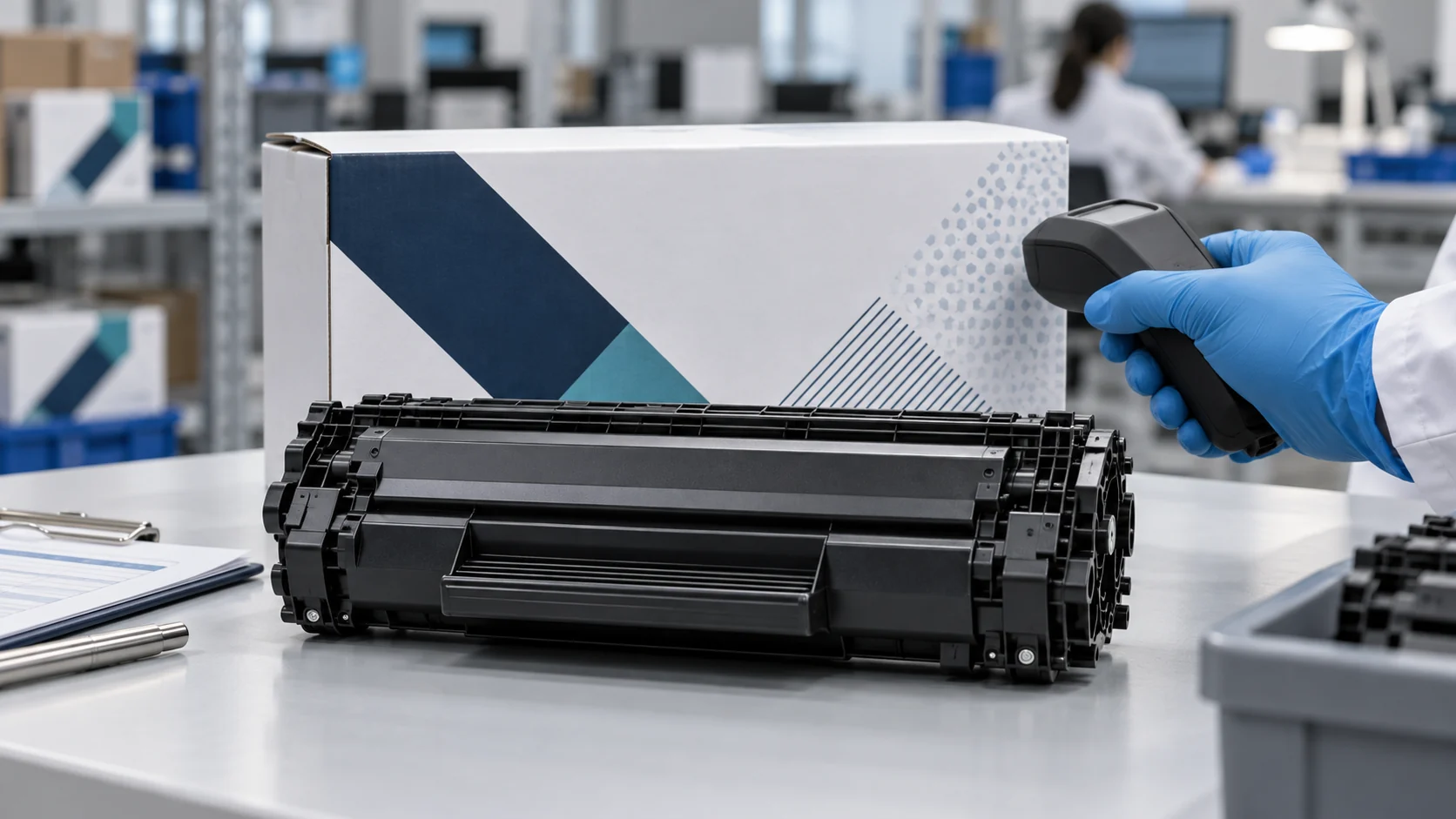
Invisible anti-counterfeit technology is the practical answer to a counterfeit market that the OECD values in the hundreds of billions of dollars each year. Pharmaceuticals, luxury goods, electronics, and automotive parts are all on the same target list.
The defense most B2B brand-protection teams converge on is invisible anti-counterfeit technology — covert markers that the naked eye cannot detect, but a trained inspector or smartphone can verify in seconds. It protects brand integrity without changing the look of the product.
Two formats lead the field. Invisible printing ink encodes a covert pattern that fluoresces under UV or near-infrared light. Nano marker solutions embed microscopic identifiers into substrates and packaging. Both deliver covert security that holds up against modern counterfeiting workflows.
Through 2026, demand for invisible anti-counterfeit technology continues to climb across regulated and brand-sensitive sectors. The brands investing now are the ones safeguarding margin, warranty exposure, and consumer trust over the next product cycle.
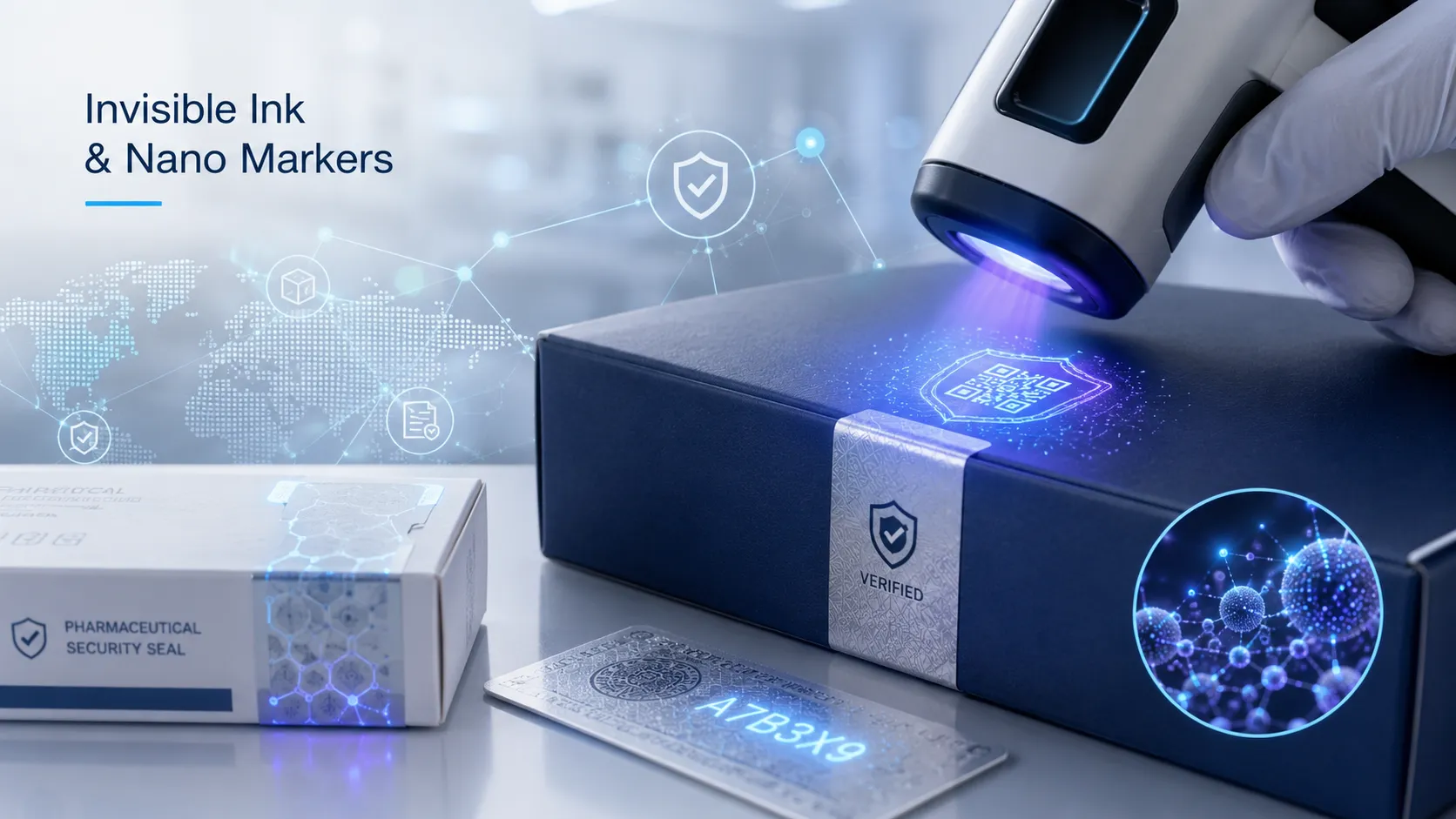
Why Invisible Anti-Counterfeit Technology Matters in 2026
Counterfeiting continues to grow globally. The activity reaches across fashion, electronics, automotive parts, and pharmaceuticals. As counterfeit goods flood the market, brands struggle to protect both their reputation and the people who buy their products.
The damage is both financial and reputational. Companies face direct revenue loss and a longer-term hit to consumer trust. In pharmaceuticals, counterfeit goods can endanger lives. In automotive and electronics, they can trigger warranty claims and recall costs.
To respond, brand-protection teams are deploying covert anti-counterfeit solutions at scale. Invisible printing ink and nano markers help maintain supply-chain integrity without changing how a product looks on the shelf.
Through 2026, three trends are pushing demand for covert authentication solutions:
- E-commerce growth widens the surface area counterfeiters can exploit.
- Buyers expect verifiable authenticity, not just brand promises.
- Tighter regulations on serialization, traceability, and product safety.
Investing in invisible anti-counterfeit technology has shifted from optional to standard. Brands that move first protect authenticity and the consumer trust behind it.
What Is Invisible Anti-Counterfeit Technology?
Invisible anti-counterfeit technology covers any authentication method that is undetectable to the naked eye. The covert layer protects products against cloning and refill counterfeiting without changing how they look. It is the foundation of credible brand-protection programs in regulated and brand-sensitive sectors.
The core function is verification without visual cost. Invisible printing ink and nano markers carry the authentication signal. They sit inside the substrate, the varnish, or the print layer, and a trained inspector or authorized device confirms them in seconds.
The building blocks of covert anti-counterfeit technology include:
- Invisible printing ink: Visible only under specific conditions, such as UV light.
- Nano markers: Minute identifiers that can be embedded in products.
- Invisible security tags: Used to track and verify products without being noticeable.
By applying these advanced methods, companies enhance their security measures. Invisible anti-counterfeit technologies are adaptive and can be tailored to various industry needs. This flexibility ensures robust protection against the evolving threat of counterfeiting.
Invisible Printing Ink in Anti-Counterfeit Technology: How It Works
Invisible printing ink sits at the heart of modern covert authentication. The ink stays unseen to the naked eye but becomes visible under defined conditions. UV light is the most common trigger, with near-infrared and thermochromic responses serving more specialized use cases.
The ink is used across high-value categories. Currency, passports, certificates, and excise stamps all rely on invisible ink to make casual reproduction unviable. In commercial packaging, it protects pharmaceuticals, premium spirits, cosmetics, and electronics. For deeper background on the printed-document side, see our writeup on anti-copy optically variable ink for ballots.
The mechanism behind invisible ink is a controlled chemical formulation. Specific pigments or fluorophores react under defined light or heat. The reaction reveals a covert pattern, code, or graphic that confirms authenticity. Inorganic formulations, like the ones Mina supplies, hold up far better against UV exposure, oil contact, and high temperature than organic dye-based equivalents.
Common applications of invisible printing ink in anti-counterfeit programs include:
- Currency and banknotes: Prevents forgery by embedding difficult-to-replicate features.
- Passports: Ensures authenticity and reduces the risk of falsification.
- Consumer goods packaging: Protects brands by verifying product origin.
This technology is not only effective but also versatile. It can be integrated into different materials without altering their aesthetic. By helping prevent counterfeiting, invisible printing ink supports consumer trust and brand protection.
Nano Markers: The Backbone of Invisible Anti-Counterfeit Technology
Nano marker solutions are a core pillar of covert anti-counterfeit solutions. The markers use microscopic particles to create signatures that are extremely hard to replicate. They add a robust verification layer for product authenticity, even when packaging copies look convincing.
Nano markers carry across many substrates. Their microscopic size keeps them invisible to the naked eye, so counterfeiters cannot see what they need to copy. That invisibility is what holds the security measure together over time. Mina’s micro-chain code on wine labels uses the same logic on a different format.
Nano markers also support customization. Each marker can carry batch numbers, production codes, or distributor IDs. That layer turns a security feature into a traceability tool, useful for both authentication and supply-chain investigation.
Where covert nano marker technology is applied:
Pharmaceuticals
Ensures medication authenticity and protects public health.
Electronics
Prevents counterfeit components from entering the market.
Luxury goods
Safeguards brand value and protects against imitation.
Adding nano markers to a brand-protection program lifts the difficulty bar for counterfeiters by an order of magnitude. The features are hard to replicate, hard to detect without authorized equipment, and easy to integrate into existing print workflows.
UV Detection Workflow for Invisible Anti-Counterfeit Technology
Invisible anti-counterfeit technology depends on a clear detection workflow on the field side. UV light is the most widely used trigger. A 365 nm torch makes the covert features fluoresce in the expected color and pattern, and the inspector confirms them in seconds.
UV verification is fast, low-cost, and non-destructive. It suits high-value goods, regulated products, and any category where pulling a sample apart is unacceptable. For an example of UV-based verification in regulated print, see Mina’s near-infrared ballot security printing.
A complete covert authentication stack pairs UV with backup detection methods:
- Spectral analysis — confirms ink chemistry, not just visible response.
- Infrared detection — reads markers that stay dark under UV alone.
- Dedicated portable readers — fast scans tied to brand verification platforms.
Layering UV with at least one secondary detection method protects the program against counterfeiters who reverse-engineer the visible response. The result is a verification path that holds up at the warehouse, the customs counter, and the workshop.
Industry Applications of Invisible Anti-Counterfeit Technology
Invisible anti-counterfeit technology has been adopted across many sectors, but pharmaceuticals lead the curve. The category is heavily regulated, and counterfeit medication directly endangers patient safety. The WHO reports that one in ten medical products in low- and middle-income countries is substandard or falsified.
Luxury goods are the second major adopter. High-end brands embed invisible ink and nano markers to protect against imitation. The covert layer protects margin, distributor trust, and the resale market.
Electronics and automotive sectors also rely on covert anti-counterfeit solutions to keep counterfeit parts out of supply chains. Fake automotive parts can fail catastrophically. Counterfeit electronic components can take down entire production lines.
Where covert security shows the strongest ROI:
Pharmaceuticals
Ensuring genuine medicine distribution.
Luxury Goods
Protecting brand integrity and value.
Electronics
Verifying component authenticity.
Automotive
Safeguarding parts and vehicles from fraud.
Invisible anti-counterfeit technology adapts to whichever sector applies it. The covert layer protects margin, brand integrity, and end-user safety in parallel. That flexibility is what makes it the standard choice across regulated and consumer-facing markets.
Pairing Invisible Anti-Counterfeit Technology With Digital and Blockchain Layers
Invisible anti-counterfeit technology delivers more value when paired with a digital traceability layer. Digital verification adds real-time scan data to the covert authentication signal. The combined stack strengthens both security and supply-chain visibility from factory to checkout.
Blockchain pushes that further. An immutable scan log makes record tampering nearly impossible. Covert markers paired with blockchain produce a verifiable chain of custody for each unit, useful for regulatory audits and channel-conflict investigations.
Brands adopting this stack report stronger anti-diversion enforcement. The combined layers also lower the cost of internal audits, since the scan log provides the data anyway.
What pairing covert authentication with blockchain adds:
- Stronger traceability — fewer manual reconciliations across supply-chain partners.
- Cleaner audit trail — distributors and regulators see the same record.
- Tamper resistance — once written, scan history cannot be quietly rewritten.
The result is a verification system that holds up in court, not just at the workshop counter. For brands operating across borders, that distinction is what makes covert anti-counterfeit solutions worth the program cost.
Benefits and Challenges of Invisible Anti-Counterfeit Technology
Invisible anti-counterfeit technology delivers measurable returns for brand-protection programs. The covert layer raises product security without changing what the customer sees. The system slots into existing print and packaging workflows, so converters do not have to overhaul their lines.
The trade-offs are real. Up-front cost includes ink or marker qualification, detection equipment, and the verification platform. Brands must weigh that investment against the warranty exposure, distributor disputes, and consumer-trust damage that counterfeiting drives over time.
For most B2B brands, the math favors adoption. Companies running covert anti-counterfeit programs typically report measurable drops in counterfeit-driven returns and clearer evidence in distributor enforcement cases.
Where covert anti-counterfeit solutions pay off, and where they cost:
Benefits
- Enhances product authenticity.
- Protects brand integrity.
- Reduces economic losses from counterfeiting.
Challenges
- Initial implementation costs.
- Requires ongoing maintenance and updates.
- Complexity in technology integration.
Balancing these factors is crucial for successful adoption. By addressing challenges, businesses can maximize the value of these advanced solutions.
Where Invisible Anti-Counterfeit Technology Is Headed Next
Invisible anti-counterfeit technology is moving fast. New materials, smarter detection, and tighter integration with supply-chain platforms are pushing the field forward. The next product cycle will look noticeably different from the last.
Smart technology integration is the headline trend. IoT readers and AI-driven scan analysis support real-time monitoring across distribution. The combined system catches anomalies — repeated scans, off-territory codes, batch clusters — without manual review.
Sustainability is the second axis. New invisible markers prioritize lower environmental impact and recyclable substrates. Blockchain stays in the picture for verifiable authentication records, and Mina’s AI Cloud Code dot matrix packaging shows where the data side is heading.
The trends shaping covert anti-counterfeit solutions in the next cycle:
- AI and IoT readers for live scan monitoring across distribution.
- Lower-impact substrates and inorganic markers with longer service life.
- Blockchain-backed scan logs for cross-border verification.
Brands that align early with these directions get a longer payback window from their invisible anti-counterfeit technology investment. The covert layer holds, the data layer scales, and the verification path stays current.
Building Brand Protection With Invisible Anti-Counterfeit Technology
Invisible anti-counterfeit technology gives brand-protection teams a credible defense against cloned products, refilled packs, and cross-border diversion. The covert layer protects authenticity. The serialization layer produces evidence. The verification platform turns both into action.
Brands that adopt invisible anti-counterfeit technology now stay ahead of the next counterfeit cycle. To scope a covert authentication and traceability program for your category, reach Mina’s brand-protection team via https://minananotech.com/contact-us/.