Brand protection selection guide
Invisible Ink vs Anti-Counterfeit Labels: Buyer Guide
Invisible ink vs anti-counterfeit labels is not a simple contest between a modern technology and an old one. Security ink is an authentication feature; a label is a physical carrier that may contain tamper evidence, serialized data, holograms, covert ink, or several features together. The right choice depends on what must remain authentic, how an attacker is likely to interfere with it, and who must verify it.
Short answer: choose a direct or covert ink mark when the protected product, component, or existing package must carry hidden evidence without a separate removable element. Choose a security label when first-opening evidence, consumer instructions, variable data, or rapid retrofit matters most. Use both when a copied or transferred package could conceal a fake product.
Invisible Ink vs Anti-Counterfeit Labels: Correct the Category First
A procurement brief often asks whether invisible ink should replace an anti-counterfeit label. That wording hides an important design fact: invisible ink can be printed on a label, carton, document, closure, molded component, coated surface, or directly on a product when the formulation and process are compatible. Meanwhile, an ordinary pressure-sensitive label may carry no real authentication feature at all, or it may combine destructible material, void effects, a secure QR code, unique serialization, and covert markers.
Use the invisible ink vs anti-counterfeit labels comparison to choose where evidence belongs, rather than to rank two feature names in isolation.
The EUIPO Anti-Counterfeiting Technology Guide describes anti-counterfeiting inks as visible or invisible marking technologies used mainly for authentication. It also notes that an ink-based mark can support identification and tracking when a unique product identifier is included. This distinction matters: a covert mark proves a physical feature, while a unique code establishes an item identity. One does not automatically provide the other.
A fair invisible ink vs anti-counterfeit labels evaluation therefore compares two deployment architectures:
- Integrated evidence: a covert ink or material is applied to, printed on, or incorporated into the protected object or its existing packaging.
- Applied evidence: a separate label or seal is attached to the object and performs authentication, tamper indication, identification, communication, or a combination of those jobs.
Do not compare a high-security covert ink with a plain decorative sticker. Compare complete, specified systems at the same threat level. A destructible serialized label with covert authentication is fundamentally different from a generic hologram label bought from an open catalogue.
Start the Invisible Ink vs Anti-Counterfeit Labels Decision with the Failure Mode
The best technology is the one that leaves useful evidence after the most likely attack. Begin with the fraud event, not a feature list.
| Likely attack | What must be proven | Stronger starting architecture | Reason |
|---|---|---|---|
| Label removal and transfer to a fake item | The physical item is genuine | Direct covert mark, or a destructible label plus product mark | Authentication evidence remains tied to the item instead of only the removable carrier. |
| Package opening, refill, or component substitution | The closure has not been opened unnoticed | Tamper-evident seal or closure label | First-opening evidence requires a feature that bridges the opening interface and changes irreversibly. |
| Visual copying of a branded carton | The printed pack contains a controlled covert feature | Invisible ink in existing artwork or coating | The public design remains unchanged while authorized inspectors receive a hidden proof point. |
| Code cloning or repeated use of one genuine serial | The code and the physical object belong together | Serialized label or print plus covert physical authentication | The data layer detects duplicate behavior; the covert layer helps distinguish a copied code from a genuine item. |
| Unauthorized overproduction by an approved factory | Quantity and identity stayed within authorization | Controlled serialization supported by covert marks | A hidden mark alone does not count units. Identity issuance and reconciliation are required. |
| Grey-market movement between territories | The item was found outside its assigned channel | Unique code or micro-chain code with market assignment | Anti-diversion depends on identity, destination, and event data rather than authentication alone. |
| Consumer uncertainty at purchase | The buyer can perform an understandable check | Consumer-facing label or code, backed by covert inspection | A fully hidden feature gives consumers no visible instruction and usually requires a controlled reader. |
An invisible ink vs anti-counterfeit labels scorecard should weight the attacks most relevant to the product. A tamper result should not compensate for weak item authentication when substitution is the dominant risk, and a covert response should not compensate for missing opening evidence when refill is the dominant risk.
ISO 22383:2020 provides guidelines for selecting and evaluating authentication solutions after a counterfeiting risk assessment. Its lifecycle view is useful here: the mark must remain fit for purpose through production, distribution, use, inspection, and disposal, not only when a pristine sample leaves the printer.
Invisible Ink vs Anti-Counterfeit Labels: Procurement Comparison
Read the invisible ink vs anti-counterfeit labels matrix as a set of trade-offs, then verify the preferred architecture against physical samples.
| Decision factor | Invisible security ink | Applied anti-counterfeit label |
|---|---|---|
| Relationship to the product | Can be integrated into the product surface, existing print, coating, or material, subject to compatibility testing. | Creates a separate carrier attached to the product, package, closure, or document. |
| Resistance to transfer | Strong when the mark is placed on a non-removable product surface or within a material. | Depends on adhesive, facestock, die-cuts, void effect, placement, and substrate. High-security labels can provide strong transfer evidence. |
| Visible appearance | Can preserve artwork and product appearance because the security information is hidden. | May be visible and occupy design space, although covert features can be integrated into a visually ordinary label. |
| Tamper and first-opening evidence | Not inherent. Ink must be designed across a break point or combined with another tamper mechanism. | A major strength of seals using destructible films, fiber tear, void messages, or security cuts. |
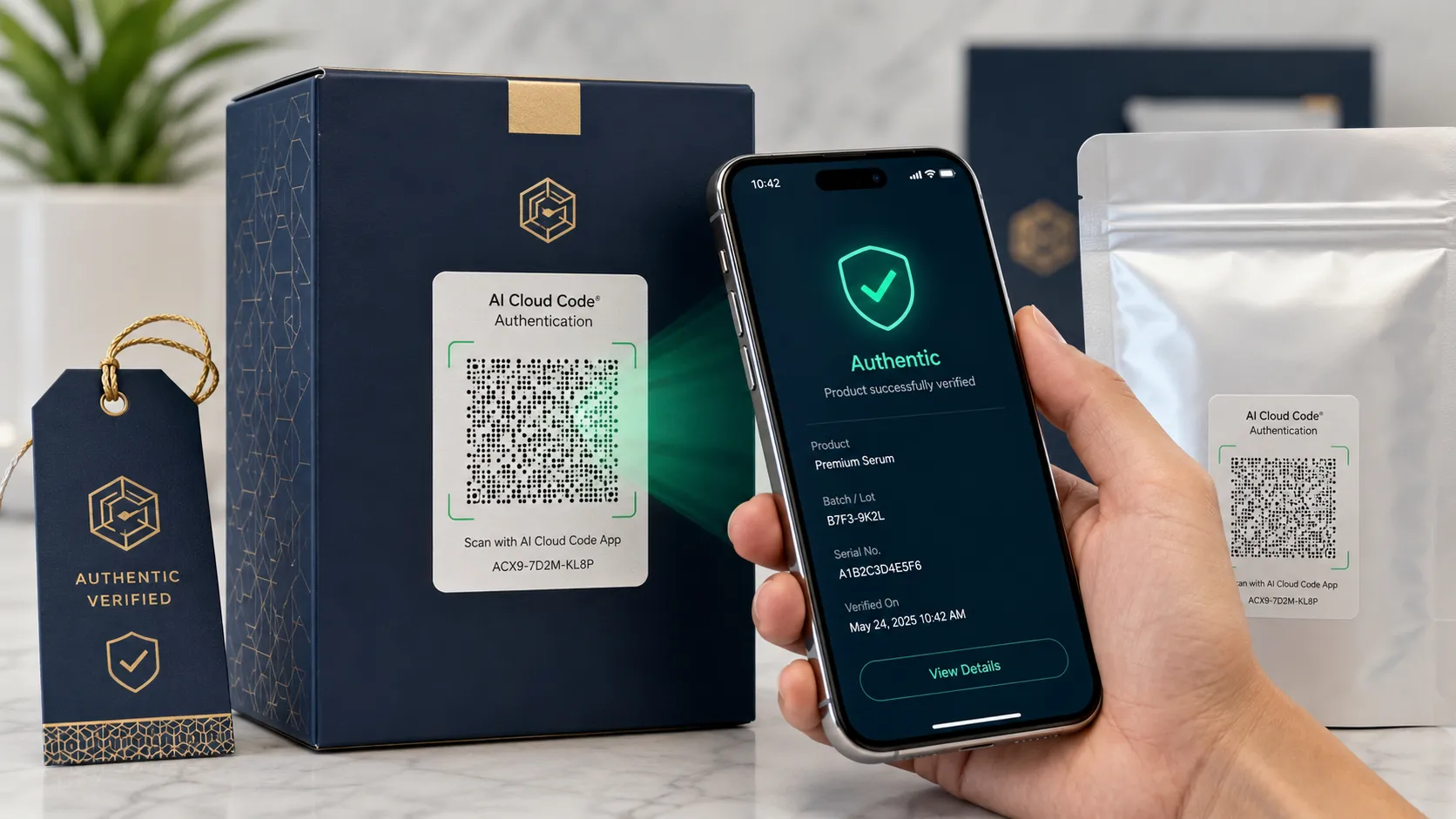
| Variable identity and traceability | Possible when the mark includes a unique machine-readable code, but a static covert response is not serialization. | Well suited to variable printing, serial numbers, secure QR codes, logistics codes, and consumer instructions. |
| Verification audience | Best for trained inspectors, distributors, quality teams, customs, and controlled channel partners using specified readers. | Can support consumers, warehouse staff, and inspectors, depending on whether features are overt, digital, or covert. |
| Production change | May require ink qualification, print-process control, curing validation, cleaning rules, and detector calibration. | May require label conversion, applicators, roll inventory, adhesive trials, placement inspection, and line-clearance controls. |
| Small or irregular objects | Can be advantageous where label area is scarce, provided the mark can be applied and read reliably. | Constrained by available surface, curvature, texture, temperature, and adhesion performance. |
| Counterfeiter discovery | A covert location and response can reduce early discovery, but secrecy is lost if inspection details are widely distributed. | Visible labels disclose their location. Covert label features can still preserve restricted authentication evidence. |
| Replacement and SKU changes | Artwork or process changes may require print trials and new controls. | A label can be easier to retrofit or change across existing products without altering the product material. |
Where Invisible Ink Creates a Clear Advantage
In practical invisible ink vs anti-counterfeit labels reviews, direct covert marking gains value when evidence must stay with the protected object and remain unobtrusive.
Authenticate the item
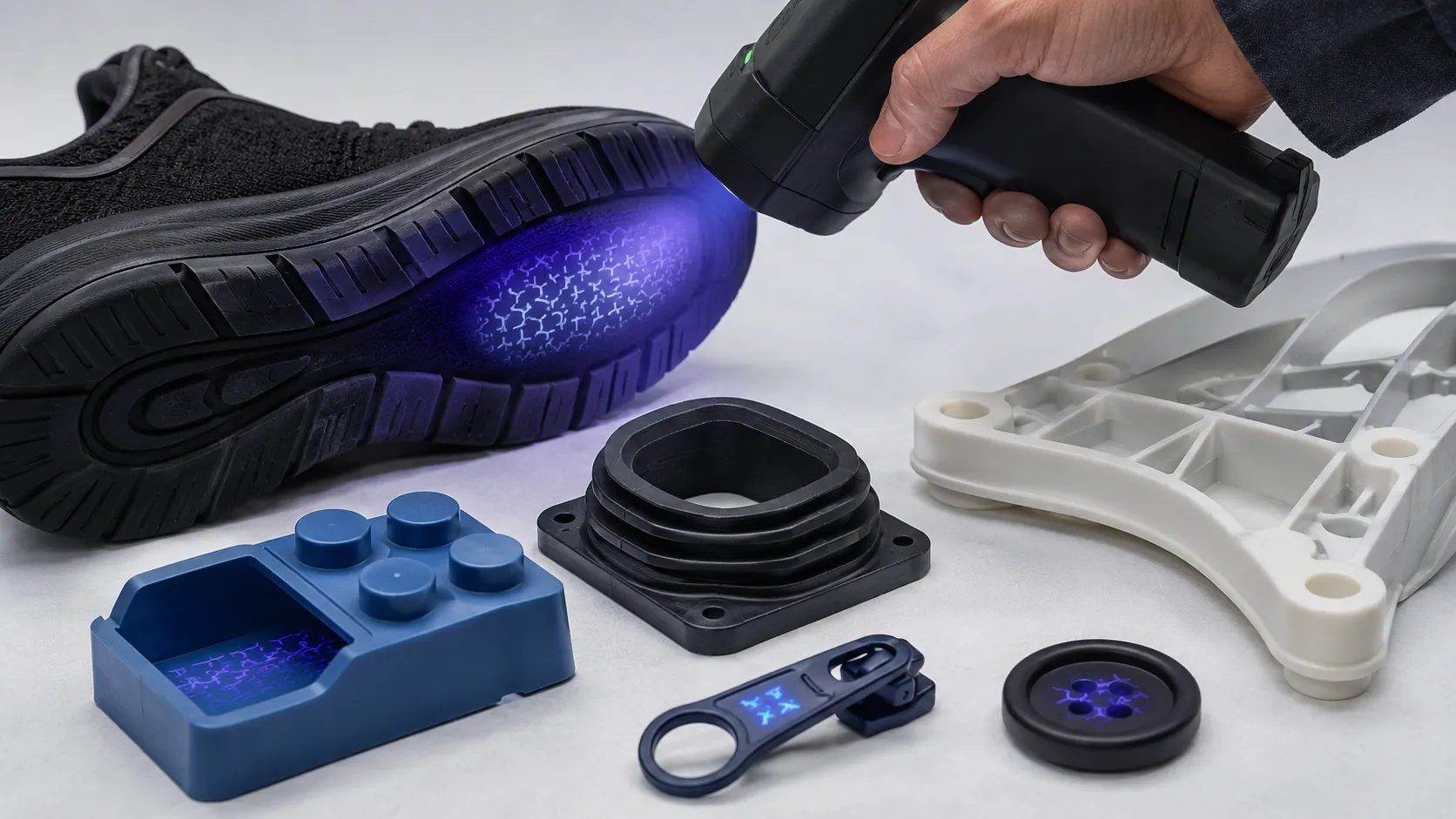
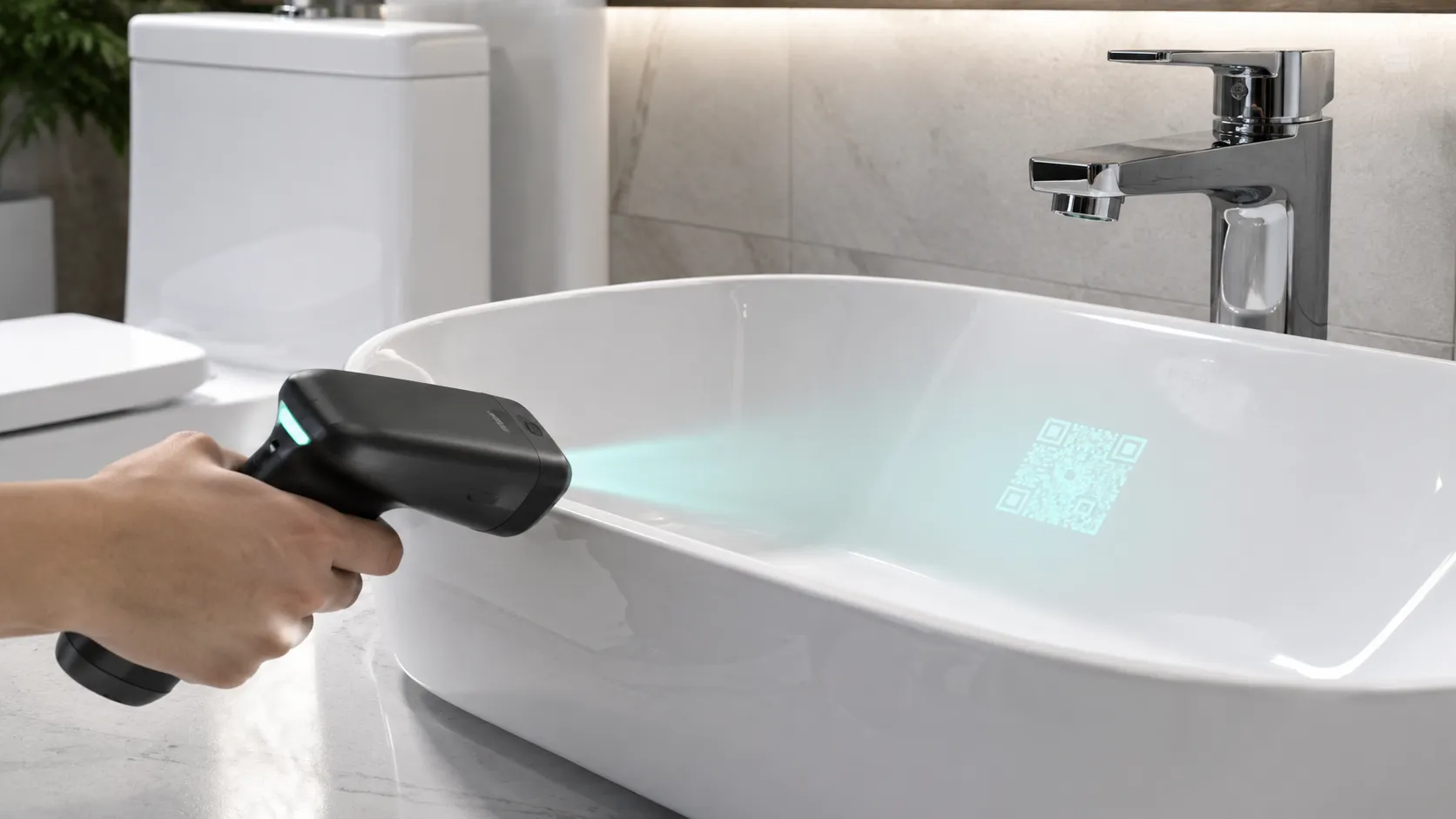
Invisible ink has a strong advantage when a genuine label could be removed and placed on a counterfeit replacement. A mark on the housing, bottle body, component, ceramic surface, cable jacket, security document, or molded part gives inspectors evidence from the object they actually need to trust.
This is especially relevant when package authentication alone cannot rule out refilling, substitution, or reuse. Mina’s invisible packaging code guide explains how covert evidence can be connected with controlled verification and channel data.
Preserve design
A hidden mark can protect premium artwork, transparent packaging, small components, and regulated layouts without adding a conspicuous security badge. EUIPO identifies avoiding appearance changes as one reason invisible inks are used. This advantage is practical rather than cosmetic: it allows the security feature to occupy an existing print or material layer instead of competing for front-panel space.
Reduce removable parts
Where a label is difficult to apply or easy to detach, direct marking can remove an extra component from the bill of materials. The gain should be confirmed with a full line study, because security ink still creates costs for formulation, printing, quality control, readers, training, and exception handling.
Control inspection
Covert features separate public appearance from restricted evidence. The brand can assign detectors and authentication procedures to specific teams instead of explaining the feature to every buyer. This can make counterfeit preparation harder and gives field investigators a second check after visual packaging review.
Where a Security Label Remains the Better Tool
The invisible ink vs anti-counterfeit labels decision should favor a label when the business problem is opening evidence. A label can bridge a cap, carton flap, vial closure, electronics housing, or maintenance panel and reveal an irreversible change. Specialist systems use destructible material, void effects, fiber tear, and die-cuts; these should not be dismissed as ordinary stickers.
Labels are also useful when buyers need visible instructions, regulatory text, variable data, a scannable code, warranty information, or a consumer engagement route. A brand can add a serialized label to an established product faster than it can reformulate or requalify a direct marking process in some applications. The correct choice depends on validation scope, line equipment, product life, and the cost of managing another component.
For a broader view of label selection, see Mina’s anti-counterfeiting technology comparison and the guide to better packaging authentication.
When Invisible Ink vs Anti-Counterfeit Labels Is the Wrong Question
A hybrid design is justified when different evidence must survive different attacks. The objective is not to add every feature available. It is to place independent checks on the objects an attacker would need to replace.
1. Put opening evidence at the access point
Use a tamper-evident label or seal across the closure. Its job is to show opening, peeling, cutting, or replacement. It should fail visibly and irreversibly under defined removal conditions.
2. Put covert evidence on the product or critical component
Apply an invisible authentication feature to the bottle, component, product surface, document, or material that must remain genuine. This protects against a counterfeiter who obtains or imitates the outer package.
3. Put identity in a controlled data layer
Use a unique code, such as an appropriate micro-chain code, dot matrix code, or other serialized identifier, when item history, market assignment, or duplicate-scan detection is required. Keep authentication status distinct from channel status.
4. Assign checks to real users
Consumers may scan a public code; warehouse teams may verify serial status; investigators may inspect the covert feature with controlled equipment. Each user should see only the information needed for a decision.
This architecture avoids a common weakness: a genuine package with a fake product inside. It also avoids asking a hidden feature to perform jobs it was not designed for, such as public communication or unit-level diversion analytics.
Compare Total Deployed Cost, Not Unit Price
A price-per-label and price-per-gram comparison is misleading. In an invisible ink vs anti-counterfeit labels business case, procurement should calculate the cost of a functioning control over its expected life.
| Cost area | Questions for invisible ink | Questions for labels |
|---|---|---|
| Integration | Which print process, coating, curing window, cleaning procedure, and substrate qualification are required? | Is a new applicator, sensor, roll format, liner handling process, or placement control required? |
| Quality control | How will response strength, location, readability, and batch consistency be sampled? | How will adhesion, position, destructibility, serial readability, and missing-label events be controlled? |
| Verification | How many readers, calibration standards, training sessions, and replacement devices are needed? | Does verification use vision, smartphone, database access, a special reader, or several methods? |
| Operations | How are formulas, print files, feature locations, and detector access protected? | How are label stocks, serial ranges, waste, rework, and obsolete rolls reconciled? |
| Failure | What happens when a genuine mark is weak, contaminated, damaged, or unreadable? | What happens when a label lifts, tears during application, scans twice, or is placed incorrectly? |
A lower component price can produce a higher deployed cost if field teams cannot authenticate reliably or if production exceptions create excessive holds. Conversely, a more controlled technology may reduce investigation time and false decisions. Use pilot data instead of generic savings claims.
Acceptance Tests for Invisible Ink vs Anti-Counterfeit Labels
Ask suppliers to test genuine, counterfeit, altered, aged, and poorly handled samples under blinded conditions. A procurement specification should define measurable acceptance rules before volume production.
- Authentication accuracy: record true accept, true reject, false accept, false reject, and inconclusive results across multiple operators and devices.
- Transfer challenge: attempt to remove, relocate, copy, overprint, or conceal the feature. Inspect both the source and destination object for evidence.
- Lifecycle exposure: test abrasion, chemicals, light, moisture, temperature, flexing, cleaning, storage, and transit conditions relevant to the real product.
- Line capability: measure application or printing consistency at production speed, including startup, changeover, rework, and end-of-roll or end-of-batch conditions.
- Reader repeatability: confirm that approved devices give consistent results across shifts, sites, expected distances, and trained operators.
- Identity control: where serialization is used, test duplicate codes, invalid ranges, wrong-market items, offline scans, and database outages.
- Exception handling: define what staff do with an unreadable genuine sample, a readable code with no covert response, and a genuine covert response attached to the wrong item.
- Security governance: audit who can order materials, access print files, know feature locations, issue serials, hold detectors, and approve replacement stock.
Mina can formulate super-invisible or covert anti-counterfeiting materials for selected printing, packaging, label, and product-marking applications, with proprietary verification methods and optional code-based traceability. Compatibility and performance should be established through samples and application-specific trials. Where products face high heat or harsh processing, the high-temperature security ink guide outlines additional qualification questions.
Five Procurement Rules to Keep the Project Focused
Apply these rules before issuing an invisible ink vs anti-counterfeit labels request for quotation.
- Name the protected object. State whether the evidence belongs to the product, component, closure, package, label, document, or shipment.
- Name the attacker action. Copying, transfer, refill, opening, overproduction, and diversion require different controls.
- Name the verifier. Consumer, retailer, distributor, inspector, laboratory, and customs teams have different tools and response times.
- Separate authentication from identification. A genuine material response does not automatically prove a unique item history; a valid code does not automatically prove the physical object is genuine.
- Buy verified performance. Approve specifications, negative controls, durability tests, reader governance, and field procedures rather than a feature name alone.
FAQ: Invisible Ink vs Anti-Counterfeit Labels
Is invisible ink always more secure than an anti-counterfeit label?
No. Security depends on formulation, secrecy, application control, reader control, durability, and the attack being addressed. A high-security destructible and serialized label can outperform a poorly controlled ink mark for tamper evidence and identification.
Can invisible ink be printed on an anti-counterfeit label?
Yes. Invisible ink can be one feature within a label. This is often useful when the label also needs variable data, a consumer code, a seal function, or a specific adhesive construction.
Does invisible ink provide traceability?
A static covert response authenticates a feature but does not identify each unit. Traceability requires a unique identifier and a data process that records issuance, assignment, and events. The identifier may be printed with a compatible covert system.
When is direct-to-product marking preferable?
It is preferable when the item itself must be authenticated, label area is limited, a removable carrier creates transfer risk, or visible packaging design must remain unchanged. Substrate and process qualification are essential.
When should a brand use both technologies?
Use both when the package must show opening or carry consumer data while the enclosed product also needs independent covert evidence. The two features should be tested and governed as separate checks.
What should a supplier receive before recommending a system?
Provide product samples, substrates, print or application process, line speed, expected lifecycle, threat scenarios, verification audience, target markets, traceability requirements, and acceptance criteria.
Standards and Technical References
Define the Evidence Before Selecting the Carrier
For an application-specific invisible ink vs anti-counterfeit labels assessment, prepare samples and a one-page threat brief covering the protected object, likely attack, manufacturing process, verification audience, lifecycle exposure, and serialization needs. Mina can evaluate whether a covert mark, security label, or combined architecture fits the required evidence.