Cordless tool consumables
Counterfeit power tool batteries are fake or unauthorized lithium-ion packs imitating original brand batteries, sold mostly through online marketplaces at prices that look like bargains. The Power Tool Institute warns they can overheat, catch fire, or explode, damaging tools and chargers and voiding warranties, and the FBI has publicly warned about the scams behind them. For tool brands, dealers, and the contractors who buy packs by the dozen, this guide explains how fake batteries reach job sites, why safety marks alone have not stopped them, and how layered authentication on the pack and its box protects the system.
FBI has warned on the scams
Counterfeits may carry false UL or CSA marks
Warranty voided at first use
Key takeaways for tool brands and buyers
The battery is the dangerous part. High-density lithium energy makes packs efficient and, when protection circuitry is missing or mismatched, the Power Tool Institute warns of burns, fires, and explosions.
Counterfeits skip the safety system. Genuine safety listings apply to tool, battery, and charger as a matched system with proprietary control electronics; a fake pack is never part of that system.
Certification marks are faked. Industry guidance notes counterfeits may falsely bear UL or CSA marks, so a logo on a clone is a claim, not a listing.
Marketplaces are the gateway. Industry and FBI guidance points at third-party sellers and too-good pricing; even major retailers’ marketplace sections carry risk.
Layer the checks. A consumer scannable code per pack, a covert marker for brand inspectors and dealers, and first-scan analytics for the brand catch fakes at three different moments.
Authentication is not fire safety. It proves the pack is the brand’s product; certification of the battery system remains with testing bodies and the OEM’s electronics.
What are counterfeit power tool batteries?
Counterfeit power tool batteries are packs manufactured to imitate an original brand’s battery, carrying the brand’s name, logo, and model styling without the brand’s cells, protection circuitry, or quality control. The industry separates them from knock-offs, which copy the look but not the brand name, and from remanufactured packs, where dead batteries are opened and re-cellled by third parties. Both categories operate outside every listing and quality system the original was certified under, and the Power Tool Institute notes that opening a pack for rebuilding immediately voids its safety listing.
The distinction matters commercially as well as legally. Honest aftermarket packs sold under their own name compete on price; counterfeits steal the OEM’s identity and its safety reputation. And because a battery only proves itself over months of charge cycles, a convincing clone can sell, fail, and burn before reviews catch up.
The buyer problem: when a two-pack of batteries arrives from a marketplace seller at half the brand’s price, nothing on the box reliably tells a contractor, or even the brand’s own dealers, whether the packs are genuine without an authentication layer designed to answer that question.
Why the fire risk is real, not theoretical
Lithium-ion packs concentrate energy deliberately. In a genuine system, the tool, battery, and charger are engineered together, with control circuitry monitoring cell balance, energy flow, and temperature; that is why safety listings apply to the whole matched system. The Power Tool Institute’s safety guidance warns that the same high-density energy can cause dangerous burns, fires, or explosions when packs are abused or when protection is absent, exactly the condition in a counterfeit that skips the protection circuitry to hit a price point.
The scale of the problem drew federal attention. The FBI, in partnership with the Intellectual Property Rights Center, issued a public alert about counterfeit battery scams, and the Power Tool Institute’s 2023 release tied the influx to supply-chain pressures and steady replacement demand: scammers exploit both to push fakes through online channels. Risks listed by the industry include overheating, fires, explosions, personal injury, property damage, poorer performance, and complete product failure, alongside tool and charger damage and voided warranties. Procurement teams facing similar hidden-component risks can use the inspection logic in Mina’s guide to electronic component authentication beyond visual inspection.
For brands, every counterfeit pack carries the brand’s name into a potential incident report. Fire services and insurers ask what failed; the label answers with the OEM’s logo, not the counterfeiter’s. Reputational liability, service costs, and warranty disputes arrive together, which is why the response belongs at the pack, before sale, rather than in incident reviews after it.
How fake batteries reach job sites
Marketplace third-party sellers
Listings at aggressive prices under the brand’s name and model numbers; guidance warns that even major retailers’ marketplace sections host such sellers.
Import and gray lots
Counterfeit packs produced abroad and mixed into distribution; dealers buying on price can receive mixed genuine and fake lots without knowing.
Service and re-cell channels
Remanufactured packs re-entering circulation as replacements; the industry states rebuilt packs lose their listing the moment they are opened.
Trades bulk buying
Contractors replacing packs by the dozen on price; a bad lot lands across multiple crews and sites before the first failure.
Replacement economics drive every route: batteries are consumables, they fade, and demand never stops. That makes them as attractive to counterfeiters as ink and toner, with the added hazard of stored energy.
Verification layers for battery packs, compared
| Layer | What it proves | Main weakness |
|---|---|---|
| Price and seller checks | The channel and deal look legitimate | Guidance-level only; convincing storefronts defeat buyer judgment |
| UL or CSA mark inspection | The pack claims a safety listing | Marks are counterfeited too; industry guidance notes false marks on fakes |
| Charger-tool behavior | Genuine system electronics accept the pack | Surfaces after purchase; clones mimic handshakes with mixed success |
| QR code on the pack | The code resolves to the brand’s page | Copied codes resolve normally until scan analytics flag duplicates |
| Mina covert marker with dedicated detection | Hidden information exists exactly where the brand placed it | Requires controlled devices and trained, authorized staff |
| Mina micro-chain code on cartons | Invisible item-level data for lot and case audits | Needs device governance, like every covert layer |
Layering is the pattern across safety-critical consumables: a public check for buyers, a covert check for professionals, and data for the brand. The same decision logic appears in Mina’s comparison of covert product marking versus security labels.
Marking packs, labels, and boxes
Mina applies ultra-invisible anti-counterfeiting information to the printed surfaces a battery product already carries: the pack’s label and graphics, the retail box, the insert, and shipping cases. The hidden information integrates into existing artwork without changing the visible design and remains invisible under normal light, ultraviolet light, and infrared light, unreadable by conventional equipment, so a counterfeiter cannot locate it while copying everything visible.
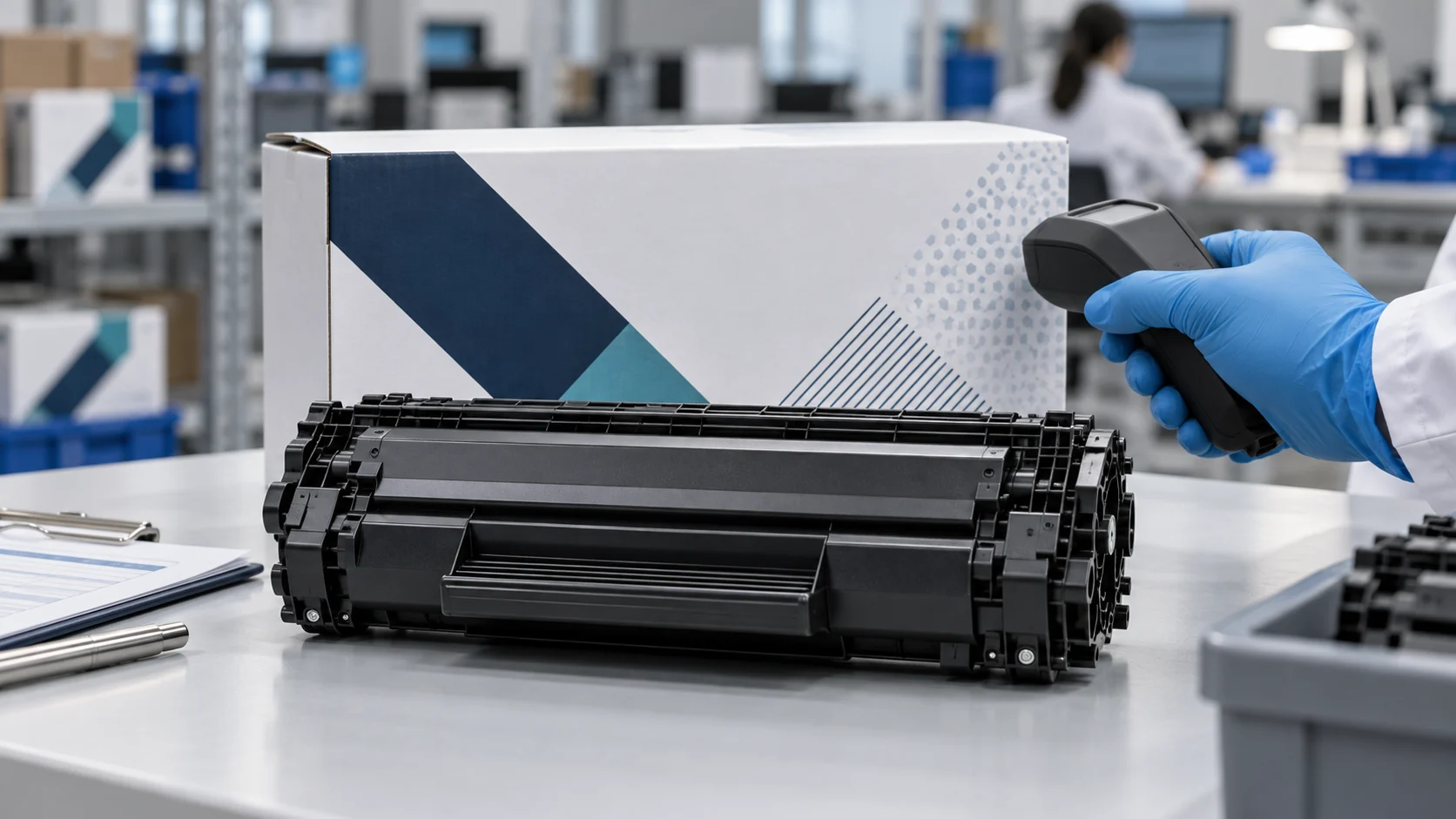
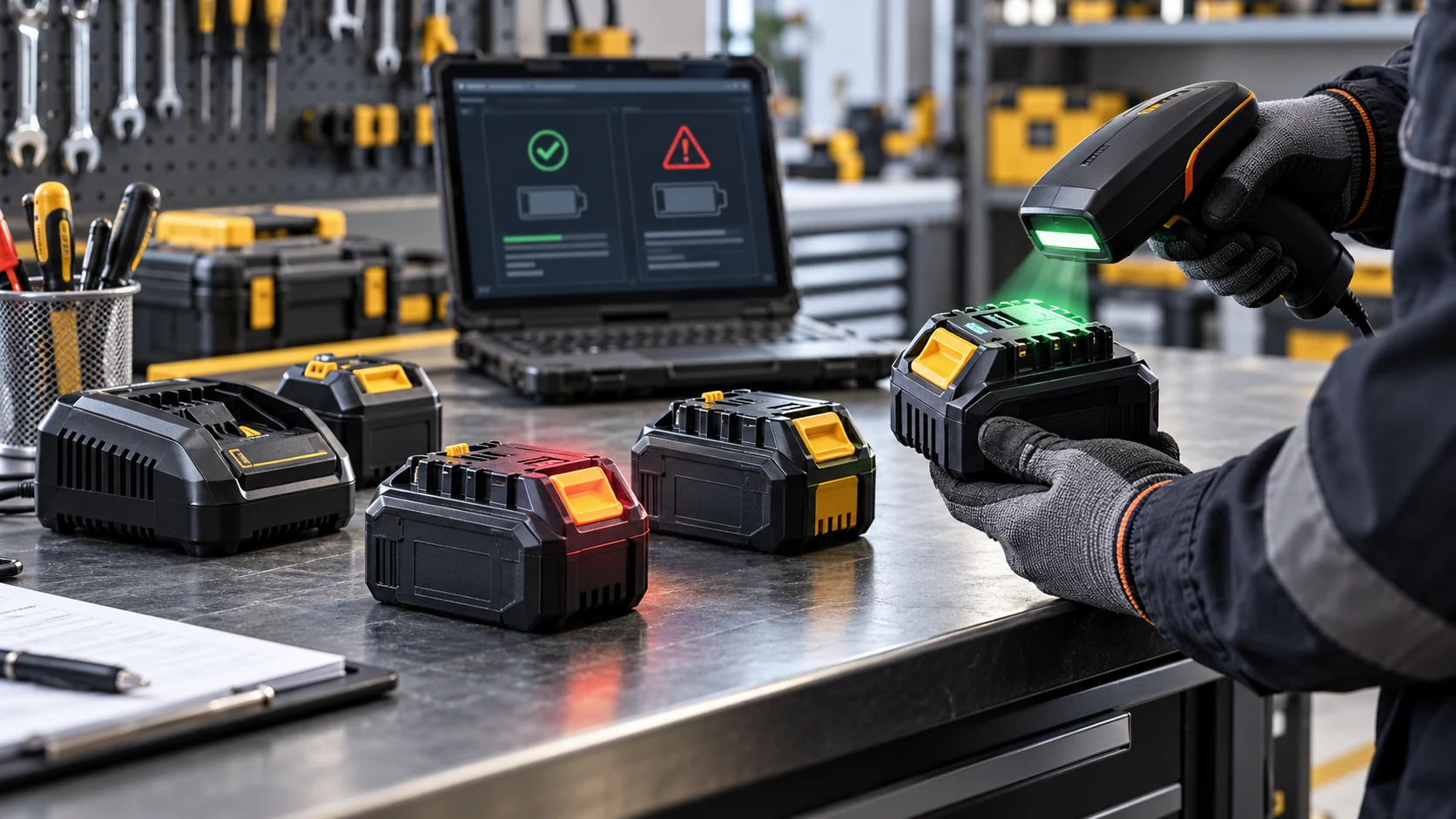
Authorized verification uses dedicated detection devices supplied only to partner clients, each with a unique identification number. Audio verification returns sound and vibration on genuine print and no reaction on fakes; image verification displays the covert information where it was placed. For dealers receiving mixed lots, brand inspectors sampling marketplaces, and distributors auditing gray-channel stock, that converts authentication into a seconds-long binary check.
Consumers and trades buyers get a phone-readable layer: a code scannable with an ordinary camera, backed by first-query time and scan-count records that expose a code copied across thousands of clones. One-item-one-code data ties each pack to production and distribution records, and the overt and covert codes are interrelated, so a swapped or damaged label still leaves the covert identity readable for investigation.
Boundaries: Mina authenticates the pack’s printed identity and its record, not the electrochemistry. Cell quality, protection circuitry, and charger matching remain the OEM engineering and certification domain; the covert layer works alongside them so the first line of defense happens at purchase, not at the first overheat.
Acceptance testing workflow before rollout
- 1
Map channels and failure patterns
Rank marketplace clones, gray lots, and re-cell circulation per market, and list where your packs are bought: dealers, big-box, online, service.
- 2
Fix marking surfaces
Decide where covert information sits on pack label, box, insert, and case, and where the public code sits, without changing pack design.
- 3
Build test panels
Genuine packs, cloned boxes from scans, knock-off lookalikes, and re-cellled packs in genuine shells; every panel member must be called correctly.
- 4
Run environment trials
Verify marking survives label application, carton converting, transport vibration, and the heat and dust of warehouse and van storage.
- 5
Prove readout and analytics
Confirm audio and image detection per device across inspectors and dealers, and validate duplicate-scan flags on the cloned-code panel.
- 6
Document governance
Device registers, dealer training, marketplace takedown evidence packs, and quarterly review of scan data by region and seller.
The acceptance report doubles as the brand’s enforcement file: it documents what distinguishes a genuine pack before any incident defines the question.
Dealer and channel governance
Tool brands sell through networks, and networks are where governance pays. Dealer agreements should require intake verification of battery lots, record outcomes against purchase orders, and route suspect stock to quarantine rather than the shelf. Authorized-seller lists should be public and specific, because industry guidance tells buyers to buy from the original manufacturer or authorized retailers and to distrust marketplace third parties.
Enforcement benefits from the same records. Takedown requests backed by covert verification evidence and scan analytics carry more weight than lookalike screenshots, and the FBI’s engagement with battery scams shows federal channels are open when evidence is organized. Warranty policy closes the loop: genuine-marked packs with records resolve claims quickly, while unmarked or failed-verification packs resolve as counterfeit, protecting the service budget. For licensed factories and contract manufacturers, Mina’s guide to controlling unauthorized production addresses the upstream governance layer.
Finally, support the trades’ own habits: print the verification step into packaging inserts, dealer catalogs, and job-site guidance, so the scan becomes as routine as charging the pack.
Limitations and risks to state plainly
Authentication proves identity, not safety: a genuine-marked pack is the brand’s product, but safe behavior still depends on the OEM’s cells, electronics, and certification. Covert verification requires device coverage and custody; a failed check after physical damage is a quarantine signal, not automatic proof of counterfeiting.
Public codes depend on buyers scanning, and analytics need volume before duplicates surface, so early clone batches can appear clean. Knock-offs that avoid the brand’s name sit partly outside trademark enforcement and are better handled by channel policy and buyer education. And lithium hazards exist independently of counterfeiting: damaged, abused, or mismatched genuine packs also fail, which is why authentication complements, never replaces, the industry’s battery-safety guidance.
FAQ: counterfeit power tool batteries
What are counterfeit power tool batteries?
Fake lithium packs imitating an original brand’s battery in name, logo, and styling, without the brand’s cells or protection circuitry. Knock-offs copy the look without the name; rebuilt packs lose their safety listing once opened.
How dangerous are they?
Industry guidance lists overheating, fires, explosions, personal injury, property damage, tool and charger damage, and voided warranties; the FBI has publicly warned about the scams distributing them.
Where do fake batteries come from?
Mostly online marketplaces through third-party sellers at tempting prices, plus gray-channel lots and re-cellled packs; industry guidance warns even major retailers’ marketplace sections carry risk.
Can a UL or CSA mark be trusted on a pack?
Only as a claim. Industry guidance notes counterfeits may falsely bear UL or CSA marks; the listing applies to the genuine tool-battery-charger system, not to a clone carrying the logo.
How do authorized teams verify a Mina-marked pack?
With dedicated detection devices supplied to partner clients: audio verification returns sound and vibration on genuine print and no reaction on fakes; image verification displays the hidden information. Each device has a unique identification number.
What should be tested before adopting covert marking?
Panels of genuine, cloned, knock-off, and re-cellled samples; marking survival through converting, transport, and hot warehouse storage; per-device readout reliability; and duplicate-scan analytics validated against the cloned-code panel.
Sources
Put a verification layer on every pack
If counterfeit power tool batteries are surfacing in your channels, prepare a brief covering your pack and packaging components, markets, sales channels, and the counterfeit patterns seen so far. Mina can evaluate covert marking plus scannable verification for your battery labels, boxes, and cases, and propose an acceptance test plan. A fire-risk consumable deserves authentication that works before the first charge.