Secure ballot printing and traceability
Presidential Ballot Ultra-Invisible Anti-Counterfeiting and Traceability
Ballot anti-counterfeiting is a layered security printing approach that helps election authorities verify whether a ballot is genuine, unaltered, and traceable through controlled inspection. Mina’s presidential ballot solution integrates ultra-invisible information into the ballot without changing its appearance or voter-facing use.
Ultra-invisible verification
NIR, serials, microtext and security paper
Authenticity and traceability
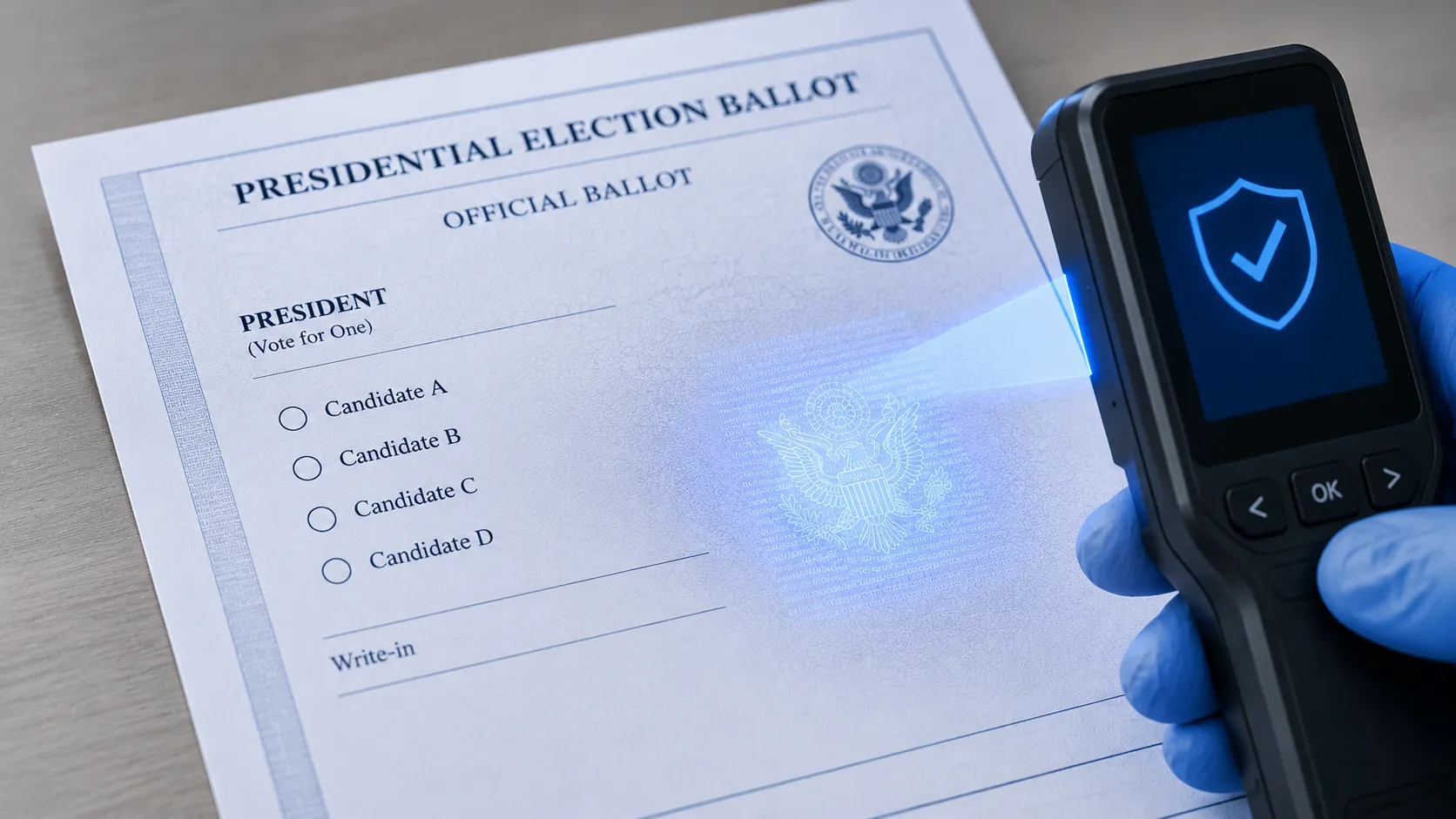
Ultra-invisible ballot information supports controlled authentication without changing the visible ballot design or voter-facing use.
What it protects
Presidential ballots, official voting documents, security printed ballot stock, audit samples, and election-related paper documents.
Why it matters
Visible-only ballot features can become imitation targets. Covert layers help officials verify authenticity without exposing every security method.
How it works
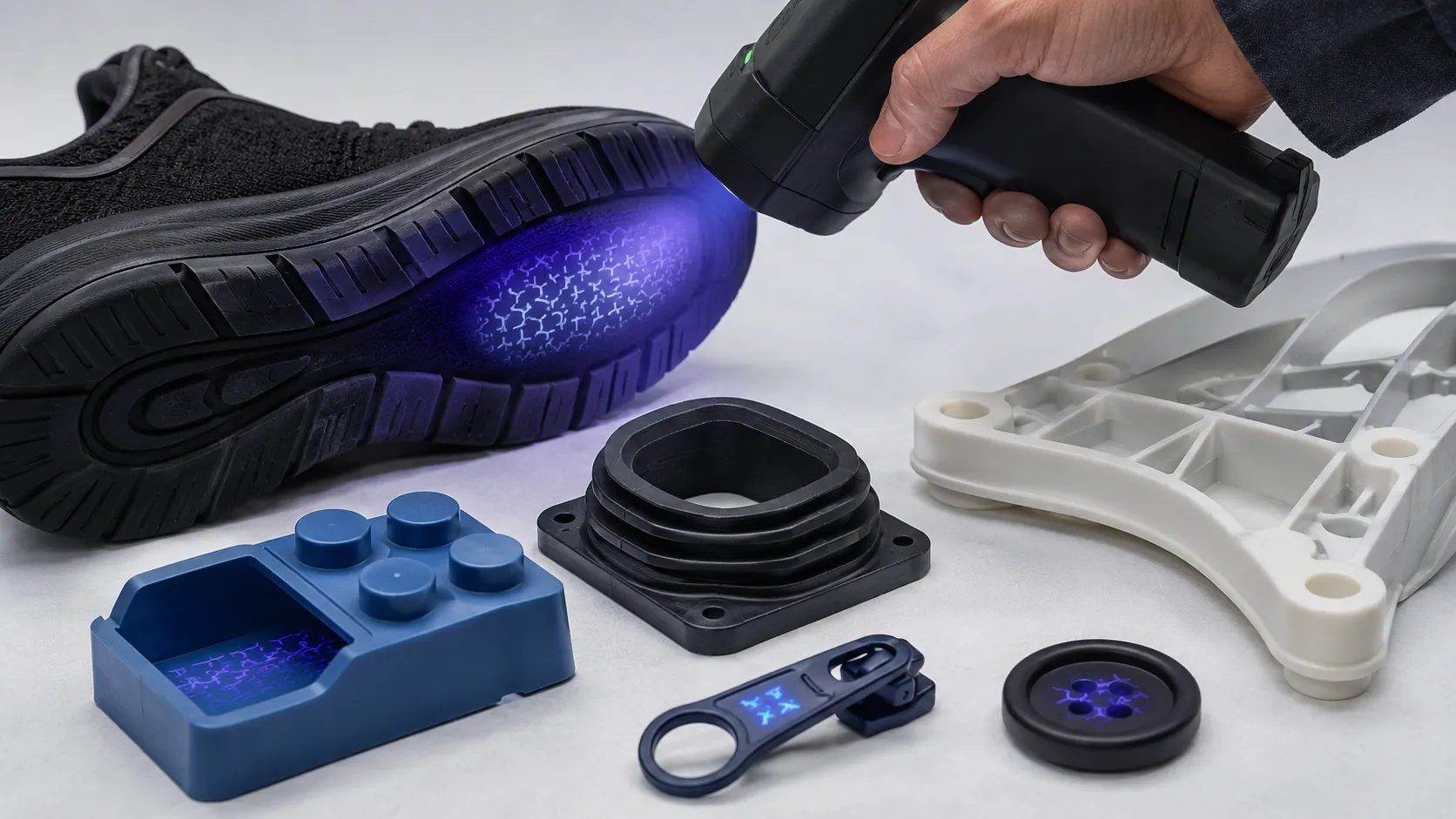
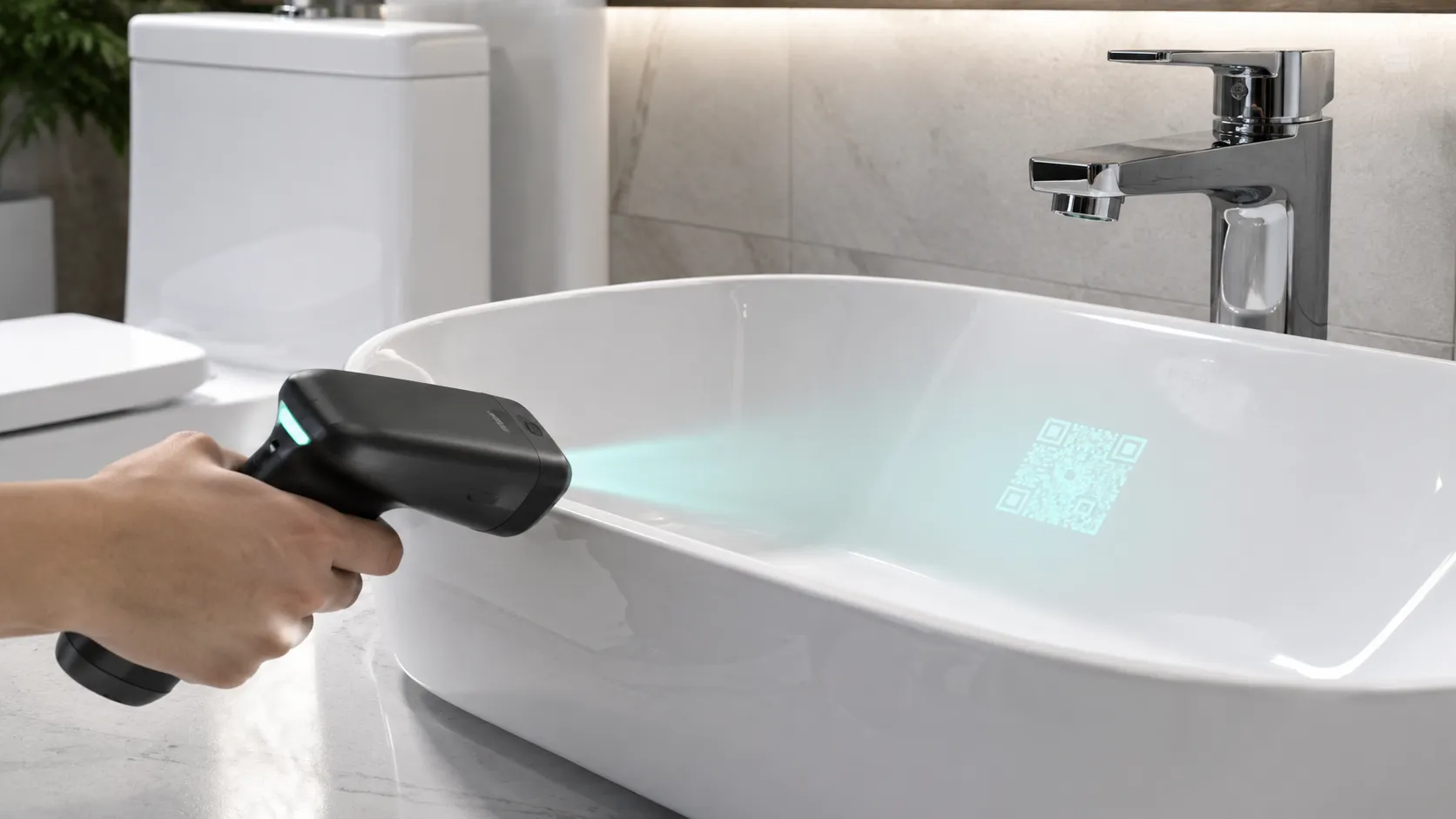
Ultra-invisible information is integrated into the ballot and verified with dedicated audio or image recognition equipment.
Best use case
Election authorities and security printing contractors that need layered ballot authentication and documented traceability.
Key takeaways for procurement teams
- This article covers one public-sector application: presidential ballot ultra-invisible anti-counterfeiting and traceability.
- Mina’s supplied ballot solution states that ultra-invisible information can be deeply integrated into ballots without affecting appearance or use.
- Dedicated equipment supports audio recognition and image recognition: fake samples show no reaction or no content, while genuine samples show sound/vibration or clear hidden information.
- The proposed ballot stack can include watermarks, fluorescence, microtext, thermochromic ink, unique serial numbers, anti-copy / optically variable ink, special security paper, holographic technology, and NIR technology.
- Procurement should evaluate both the physical feature and the chain-of-custody workflow.
What is ballot anti-counterfeiting?
Ballot anti-counterfeiting is the use of security paper, security printing, unique identifiers, covert verification features, and chain-of-custody controls to help election authorities distinguish genuine ballots from forged, altered, duplicated, or unauthorized ballots.
For presidential elections, the requirement is not only a difficult-to-copy paper product. The system must also support fast authentication, controlled verification, auditable handling, and public trust. A ballot that is secure in print but weak in custody can still create operational risk.
Mina’s supplied presidential ballot solution positions ultra-invisible information as a core covert layer. It is integrated into the ballot, does not affect the ballot’s appearance or use, and can be checked only with dedicated equipment.
Why presidential ballots need layered security
Ballot fraud risks can include unauthorized bulk printing, counterfeit security elements, ballot tampering, fake seals, and leakage of unused blank ballots. The Mina source file identifies these as high-risk scenarios because they can disrupt counting, verification, recounts, and public confidence.
Election-security guidance from organizations such as the U.S. Election Assistance Commission, CISA, and NIST often emphasizes chain of custody, auditability, paper records, and procedural controls. Physical ballot features should support these operational controls rather than replace them.
A single visible security feature is easier to attack than a layered system. Watermarks, microtext, serial numbers, NIR features, special inks, and covert information each serve different inspection levels. Public-facing features can support manual checks, while restricted features support official verification and investigations.
How Mina’s ultra-invisible ballot solution works
Mina’s ballot solution integrates ultra-invisible anti-counterfeiting information into the ballot. The supplied source states that this does not affect ballot appearance or use. That is important because voter-facing usability must remain simple and consistent.
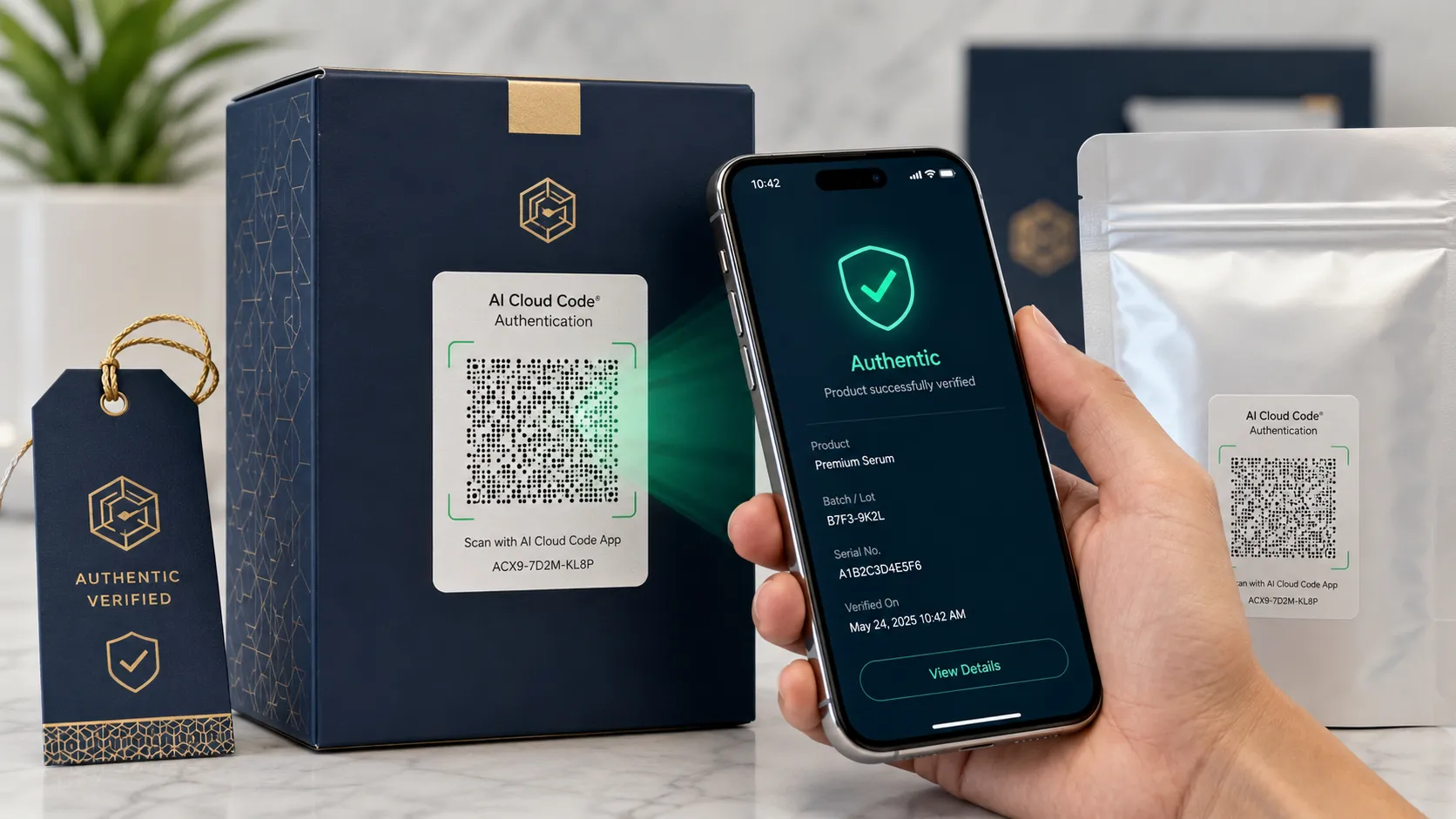
The source describes two inspection paths. In audio recognition, fake samples show no reaction while genuine samples produce sound and vibration. In image recognition, fake samples show no recognized content while genuine samples reveal clear hidden information. This gives officials a restricted verification method for suspicious ballots or audit samples.
The solution is not only one invisible mark. The source also lists NIR near-infrared technology, anti-copy / optically variable ink, thermochromic ink, unique serial numbers, microtext, special security paper, and holographic technology. These layers can be combined according to the election authority’s risk model and verification workflow.
Security layer map for ballot procurement
| Layer | Purpose | Inspection audience | Procurement note |
|---|---|---|---|
| Ultra-invisible information | Covert authenticity verification | Authorized officials with dedicated equipment | Protect location and detection method |
| NIR near-infrared feature | Invisible image or material response under 780-2500 nm range | Officials with infrared light, camera, or detector | Specify equipment and read criteria |
| Unique serial number | Ballot identity and traceability | Election operations and audit teams | Control issuance, blanks, spoiled ballots, and logs |
| Microtext | Fine-detail anti-copy feature | Manual or magnified inspection | Define print tolerance and counterfeit comparison |
| Thermochromic ink | Temperature-triggered visible response | Trained officials | Define temperature threshold and test method |
| Special security paper | Physical substrate protection | Printer, election office, audit team | Control paper supply, waste, and chain of custody |
Traceability architecture for secure ballot programs
Ballot traceability should be designed around custody events, not only printed serial numbers. A unique number can identify a ballot or ballot batch, but the security value comes from recording how that ballot stock moves through printing, packaging, transport, storage, issuing, return, reconciliation, and audit. Procurement should therefore specify both the physical identifier and the custody record.
A practical architecture begins with controlled blank ballot stock. The election authority or printer should record paper receipt, storage location, production run, waste, spoiled sheets, accepted sheets, packaged bundles, seal numbers, and delivery records. If Mina ultra-invisible information is added, the record should also include which production lots contain the covert feature and which officials can verify it.
The next layer is issue control. Ballot bundles, precinct allocations, mailed ballot groups, and replacement ballots should be reconciled against printed quantities. The public-facing ballot should remain easy for voters to use, but official records should make it difficult for unauthorized blanks, copied ballots, or altered ballots to enter the count without creating an accounting mismatch.
The third layer is exception handling. Election programs need a documented rule for unreadable features, damaged ballots, spoiled ballots, provisional ballots, and ballots requiring adjudication. The ultra-invisible feature should support that rule. For example, a suspicious ballot can be isolated, inspected by authorized personnel, documented with the detector result, and stored with a case note. That process protects both security and fairness.
The final layer is audit sampling. Officials do not need to inspect every ballot with every feature during normal processing. Instead, they can define risk-based samples: random sample from accepted ballots, sample from returned ballots, sample from high-risk custody events, and sample from suspect cases. A layered ballot system is strongest when physical authentication and procedural audit reinforce each other.
Ultra-invisible ballot security vs visible-only security
| Option | Best use | Main weakness | Procurement guidance |
|---|---|---|---|
| Plain paper ballot | Low-cost voting record | Limited physical authentication | Not sufficient for high-risk procurement |
| Visible watermark or seal | Manual recognition and public confidence | Can become imitation target | Use as an overt layer |
| Serial number only | Traceability and ballot accounting | Does not prove substrate authenticity by itself | Combine with physical security printing |
| NIR or special ink only | Machine-assisted verification | Requires equipment and training | Define inspection workflow before purchase |
| Mina ultra-invisible layer | Restricted covert authenticity verification | Requires dedicated equipment governance | Best as part of a layered ballot security program |
Procurement checklist for ballot security projects
- Threat model: define counterfeit printing, tampering, blank ballot leakage, fake seals, or custody gaps.
- Ballot substrate: specify paper, watermark, fiber, security thread, and print compatibility.
- Covert feature: define ultra-invisible location, inspection equipment, and access controls.
- Machine features: specify NIR, optical, thermochromic, or other detector-based responses.
- Visible features: define microtext, anti-copy background, hologram, OVI, or official seals.
- Serial logic: control unique numbering, blanks, spoiled ballots, replacements, and reconciliation.
- Chain of custody: define printing, transport, storage, polling-place issue, return, and audit logs.
- Training: prepare official instructions for inspection without exposing restricted details publicly.
- Counterfeit controls: test copied ballots, altered marks, fake watermarks, and unauthorized blanks.
- Evidence protocol: define how suspicious ballots are isolated, inspected, documented, and escalated.
Recommended pilot workflow
Run a risk workshop
Involve election operations, security printing, legal, logistics, and audit teams to decide which threats the physical ballot must address.
Create genuine and control ballots
Prepare genuine features, blank controls, copied ballots, altered marks, fake watermarks, and invalid serial numbers for comparison.
Test manual, machine, and covert verification
Officials should test visible features, serial reconciliation, NIR response, ultra-invisible information, and reader performance.
Run a mock custody process
Include printing, packaging, transport, storage, ballot issue, spoiled-ballot handling, return, reconciliation, and audit sampling.
Define equipment governance
Document who can use verification equipment, who can view hidden information, how devices are numbered, and how suspicious ballots are preserved.
Procurement documents to prepare
A secure ballot project should produce more than a technical sample. The buyer should prepare a ballot security specification, a chain-of-custody procedure, a reader custody procedure, a spoiled-ballot procedure, an acceptance-test report, and a restricted verification manual. Each document should name the responsible authority, the review date, and the evidence record that proves the control was followed.
The technical specification should describe visible and covert layers without exposing sensitive details to the wrong audience. The chain-of-custody procedure should cover blank stock, printed ballots, rejected sheets, transport, storage, issue, return, and reconciliation. The reader custody procedure should record device ID, operator, training status, issuance time, return time, and test result.
These documents are useful even if no counterfeit ballot is found. They show that the election authority treated ballot security as a controlled system. In a dispute, a documented process can be as important as the security feature itself because it shows how authenticity, custody, and verification decisions were made.
Acceptance testing before election use
Election procurement should require an acceptance test before any secured ballot stock is released for official use. The test should include genuine ballots, copied ballots, altered ballots, blank controls, invalid serial numbers, damaged ballots, and ballots exposed to normal handling. Officials should test visible features, serial reconciliation, NIR response, ultra-invisible information, and reader performance under documented conditions.
The acceptance test should also measure human workflow. How long does an authorized official need to verify a ballot? Can two trained officials reach the same result? What happens if a feature is unreadable because the ballot is torn, folded, stained, or marked? These questions matter because election environments are operational, not laboratory conditions.
For public trust, the authority should separate public explanation from restricted procedure. Public materials can state that ballots include layered security and are reconciled through chain-of-custody controls. Restricted manuals should contain the exact detector method, covert feature location, response thresholds, and evidence-handling steps. This balance protects transparency without exposing the security design to attackers.
Limitations and governance risks
Ballot anti-counterfeiting cannot rely on physical features alone. Chain of custody, poll-worker procedures, reconciliation, observation, and post-election audits remain essential. Security printing supports those controls; it does not replace them.
The second risk is overexposure. Public documentation can explain that layered security exists, but the exact covert feature location and detection response should be restricted to authorized officials.
The third risk is equipment governance. Dedicated readers must be numbered, stored, tested, and issued under controlled procedures. If devices are uncontrolled, the covert layer becomes harder to protect. The procurement file should define calibration, device custody, operator training, test logs, and what happens if a reader fails during an election period.
FAQ: presidential ballot anti-counterfeiting
What is ballot anti-counterfeiting?
It is a combination of security paper, printing features, unique identifiers, covert verification, and custody controls used to distinguish genuine ballots from fake or altered ballots.
What is ultra-invisible ballot information?
It is hidden anti-counterfeiting information integrated into the ballot without affecting appearance or use. Mina source materials state that it can be checked only with dedicated equipment.
How does Mina ballot verification work?
The supplied ballot solution shows audio recognition and image recognition. Fake samples show no reaction or no content; genuine samples produce sound/vibration or reveal clear hidden information.
Does security printing replace chain of custody?
No. Security printing supports ballot authentication, but election authorities still need documented chain of custody, reconciliation, audits, and procedural controls.
What technologies can be layered with ultra-invisible features?
The Mina ballot source lists watermarks, fluorescent features, microtext, thermochromic ink, unique serial numbers, anti-copy or optically variable ink, special security paper, holograms, and NIR technology.
What should procurement test first?
Test paper, print quality, serial logic, invisible feature detection, NIR response, microtext, counterfeit controls, custody logs, and evidence escalation procedures.
Sources and evidence used
Next step for secure ballot projects
If your election authority or security printing contractor needs ballot anti-counterfeiting and traceability, prepare a brief with threat model, ballot design, substrate, serial logic, custody workflow, verification audience, and pilot quantity. Mina can then evaluate an ultra-invisible ballot security pilot with layered verification features.