Anti-Counterfeiting for Cables: Protecting Electrical Safety
Anti-counterfeiting for cables is the application of authentication technology to electrical cables and wires so that manufacturers, contractors, inspectors, and end users can verify whether a cable is genuine before installation. Counterfeit cables use substandard conductors, thinner insulation, and non-compliant materials that create direct risks of fire, electrocution, equipment damage, and building code violations. This guide covers how authentication works for cables, which technologies apply, and what procurement teams should specify.
The counterfeit cable problem
Counterfeit cables are a pervasive problem across construction, industrial, energy, and telecommunications markets. Industry estimates suggest that counterfeit and substandard cables may represent over 25% of the market in some developing regions. The Cable Manufacturers Association and similar national bodies have repeatedly warned that counterfeit cables entering legitimate supply chains pose unacceptable safety risks.
The economics are straightforward. A genuine power cable uses copper conductor with the specified cross-section, insulation material that meets flammability and temperature ratings, and sheathing compounds that comply with environmental and safety standards. A counterfeiter reduces cost by using smaller copper conductors (or copper-clad aluminum), thinner insulation, recycled PVC without proper flame retardants, and non-compliant sheathing. The exterior dimensions and printed markings may appear identical, but the cable fails under load, heat, or fault conditions.
The OECD and EUIPO reported that counterfeit goods represented USD 467 billion in global trade in 2021. Electrical equipment, including cables, is consistently identified in seizure data. Counterfeit cables have been found in residential buildings, commercial projects, industrial installations, and infrastructure projects across Africa, the Middle East, Southeast Asia, Latin America, and parts of Europe.
Safety and regulatory context
Electrical cables must comply with national and international standards that specify conductor material and cross-section, insulation type and thickness, flammability ratings, voltage ratings, temperature ratings, and environmental resistance. Key standards include IEC 60227 and IEC 60228 for conductor specifications, BS 7671 for UK wiring regulations, NEC (NFPA 70) for US electrical code, and regional standards such as SANS in South Africa and PSB in Singapore.
Counterfeit cables routinely fail these standards even when they carry printed markings claiming compliance. The problem is compounded by the fact that visual inspection cannot reliably detect substandard conductors or insulation thickness on finished cables. A cable that looks correct on the outside may be dangerously non-compliant on the inside.
This is where authentication technology adds value beyond brand protection. When a cable carries covert authentication from a verified manufacturer, the presence of the authentication signal serves as a proxy for manufacturing compliance. If the authentication is absent, the cable’s origin and compliance become immediately suspect, triggering further testing before the cable is installed.
How counterfeit cables reach the market
Understanding the counterfeiting supply chain helps procurement teams identify where authentication can interrupt the fraud.
- Manufacturing: Counterfeit cable factories use standard extrusion equipment. They source cheap conductor (undersized copper, copper-clad aluminum, or recycled copper with impurities) and low-cost insulation compounds. The cable is produced to match the external appearance and printed markings of genuine brands.
- Marking: Surface printing machines replicate brand names, model numbers, standard references, and meter markings. Some counterfeiters even copy certification logos (UL, CE, BASEC, PSB) without authorization. Without a hidden authentication layer, these printed markings cannot be distinguished from genuine ones in the field.
- Distribution: Counterfeit cables enter the supply chain through grey-market wholesalers, online marketplaces, cross-border trade, and sometimes through legitimate distributors who unknowingly source from unauthorized suppliers. Multi-tier distribution obscures the origin.
- Installation: By the time cable reaches a job site, the original reel label, packaging certificate, and shipping documents may be separated from the product. The electrical contractor sees only the cable itself with its surface markings. This is the moment when cable-level authentication has the highest value.
Authentication methods for the cable and wire industry
For cable products, authentication information can be spray-printed directly onto the cable sheathing during manufacturing or after the extrusion and marking process. Additional authentication can be applied to packaging, reel labels, and compliance certificates.
Spray-coded authentication on cable sheathing
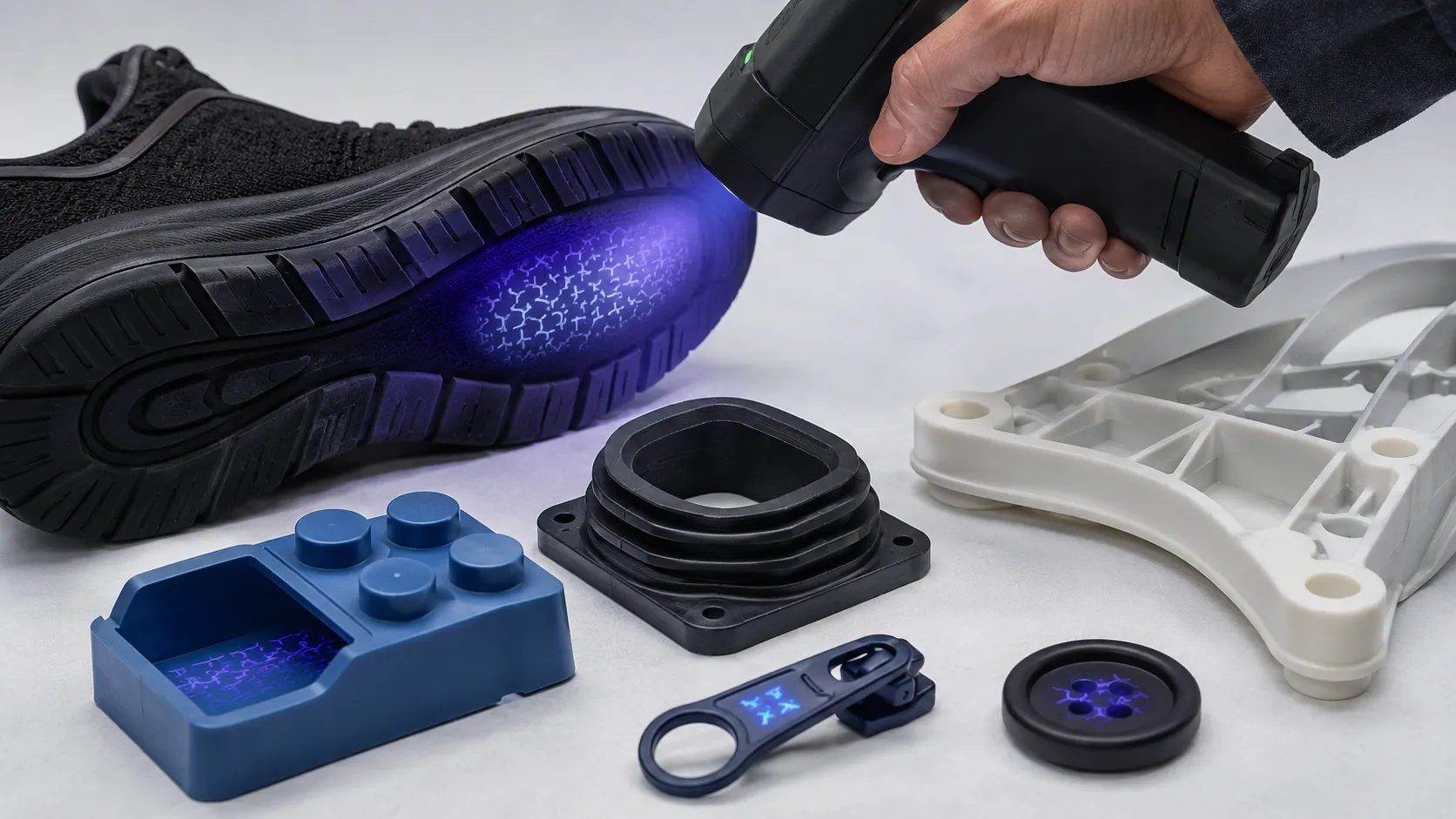
Ultra-invisible anti-counterfeiting material is spray-applied to the cable jacket surface as part of the production line. The marking is invisible under normal, UV, and IR light. Field inspectors use Mina’s proprietary detection device to verify the cable at the distribution point, job site, or during building inspection. This is the highest-value method because the authentication travels with the cable itself.
Masterbatch integration in cable sheathing
Anti-counterfeiting markers can be mixed into the PVC, XLPE, or LSZH sheathing compound as a masterbatch before extrusion. The markers become part of the cable jacket material. This approach provides authentication that cannot be removed by surface abrasion, chemical cleaning, or re-sheathing. It is particularly suitable for cables in harsh environments.
Reel and packaging authentication
Labels on cable reels, packaging cartons, and shipping containers can carry micro-chain code or ultra-invisible authentication. This supports distributor-level verification and warehouse audit. However, packaging authentication does not protect the cable after it is separated from its original packaging.
Compliance certificate security
Test certificates, declarations of conformity, and inspection reports can be printed on security paper with covert authentication. This prevents counterfeiters from forging compliance documentation. Combined with cable-level authentication, it creates a two-point verification system: the document proves compliance, the cable proves origin.
Technology comparison for cable authentication
| Method | Applied to | Survives installation? | Field equipment needed | Counterfeiter barrier |
|---|---|---|---|---|
| Ultra-invisible spray code (Mina) | Cable sheathing surface | Yes, if not fully abraded | Proprietary detector | Very high: invisible, proprietary material |
| Masterbatch in sheathing | Cable jacket material | Yes, permanently embedded | Proprietary detector | Very high: embedded in polymer matrix |
| Printed surface markings | Cable sheathing | Yes | Visual inspection | Low: printing is easily replicated |
| RFID tag on reel | Cable reel or drum | No: separated at cut point | RFID reader | Medium: tag cloning is possible |
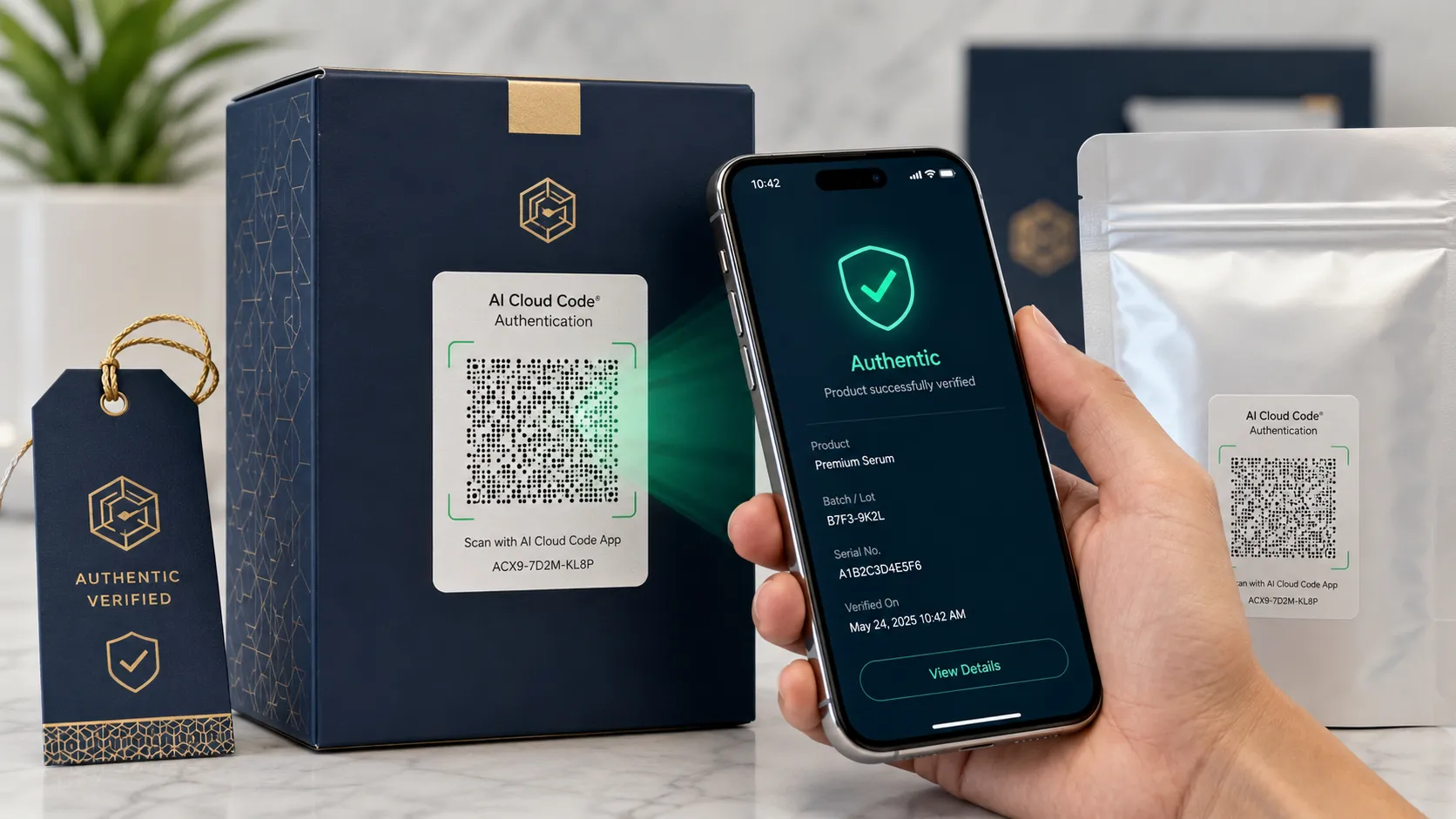
| QR code on label | Packaging label | No: removed with packaging | Smartphone | Low: easily photographed and reproduced |
| Holographic reel label | Reel packaging | No: separated from cable | Visual inspection | Medium: high-quality copies available |
For cables, the decisive factor is whether the authentication survives the separation of cable from packaging. Only surface spray codes and embedded masterbatch meet this requirement. All other methods protect the packaging, not the cable itself.
Procurement specifications for cable authentication
- Application point: Specify whether authentication will be applied to the cable jacket surface (spray), embedded in the jacket compound (masterbatch), or applied to packaging only. For maximum protection, use cable-level authentication as the primary layer and packaging authentication as a secondary layer.
- Environmental durability: Request test data for authentication signal retention after exposure to UV aging (1000+ hours), moisture immersion, chemical contact (oils, solvents common in industrial environments), abrasion from conduit pulling, and temperature cycling from -20 to +90 degrees C or as appropriate for the cable rating.
- Production line integration: For spray-applied authentication, confirm that the spray system can operate at production line speeds (typically 50-200 meters per minute for power cables) without creating bottlenecks or requiring significant line modifications.
- Detection in field conditions: Test the detection device on cable samples in realistic conditions: coiled on drums, pulled through conduit, installed in cable trays, and partially buried or cemented. The device must work on curved surfaces and through minor surface contamination.
- Compliance with cable standards: Confirm that authentication materials (spray coating or masterbatch additives) do not affect the cable’s compliance with relevant standards for insulation resistance, flame retardancy, smoke emission, and toxicity. Request independent test reports.
- Serialization integration: Determine whether the authentication system can carry or be linked to serial numbers, batch codes, or production records for traceability beyond binary genuine/fake verification.
Limitations and practical constraints
- Authentication does not replace testing. Even with verified authentication, critical installations should still test cable electrical properties (insulation resistance, conductor resistance, voltage withstand) per project specifications. Authentication confirms origin, not installed condition.
- Surface spray durability varies by environment. Aggressive conduit pulling, direct burial, chemical exposure, or high-abrasion environments may degrade surface-applied authentication. Masterbatch-embedded authentication provides better durability in harsh conditions but requires integration at the compounding stage.
- Cut lengths lose packaging context. When a distributor cuts cable from a reel and sells shorter lengths, the cut length has no packaging, no reel label, and no certificate unless the cable itself carries authentication. This is the strongest argument for cable-surface or embedded authentication.
- Market adoption requires stakeholder alignment. Cable manufacturers, distributors, contractors, inspectors, and standards bodies all play roles in the authentication chain. A program that only covers the manufacturer without engaging downstream stakeholders will have limited enforcement value.
- Cost considerations at commodity cable volumes. Authentication adds per-meter cost to cable production. For commodity cables with thin margins, the cost may be justified only when counterfeit risk is high or when the cable serves safety-critical applications (fire-rated, medical, industrial, infrastructure).
FAQ: anti-counterfeiting for cables
What is anti-counterfeiting for cables?
Anti-counterfeiting for cables is the use of covert or overt authentication technology applied to cable sheathing, packaging, or compliance documents to enable verification that a cable is genuine and manufactured by an authorized producer. It addresses the safety and commercial risks of counterfeit cables that use substandard materials.
Why are counterfeit cables dangerous?
Counterfeit cables typically use undersized conductors, thinner insulation, and non-compliant materials. Under rated electrical load, they overheat. Combined with insulation that lacks proper flame retardants, this creates direct fire and electrocution hazards, especially in concealed installations where the cable cannot be easily inspected.
Can you visually tell if a cable is counterfeit?
In most cases, no. Counterfeit cables are designed to match the external appearance, dimensions, color, and surface markings of genuine products. The substandard materials are inside the cable. Reliable identification requires either cross-section analysis (destructive), electrical testing, or authentication technology on the cable surface or within the sheathing material.
How does spray-code authentication work on cables?
Ultra-invisible authentication material is spray-applied to the cable jacket during production. The material is invisible under all normal inspection conditions. Authorized inspectors use a proprietary detection device that produces a signal (audio or visual) when scanning a genuine cable. A counterfeit cable produces no response.
Does cable authentication survive installation?
Spray-applied authentication survives normal handling and installation but may degrade under severe abrasion or chemical exposure. Masterbatch-embedded authentication is permanently integrated into the cable jacket material and survives any condition the cable itself survives.
What should a procurement team test before adopting cable authentication?
Test environmental durability (UV, moisture, chemicals, abrasion, temperature), production line integration speed, detection reliability on curved and contaminated surfaces, compliance of authentication materials with cable standards, and field usability for inspectors and contractors.
Sources
Mina product capabilities are sourced from the company’s official profile documents. External sources are used for industry context and safety data.
Protect your cable products and your customers
If your cable manufacturing operation or procurement program faces counterfeiting risk, prepare a brief with your cable types, production volumes, distribution channels, field verification needs, and target markets. Mina can evaluate spray-code and masterbatch authentication options for your specific cable products and compliance requirements.
Contact Mina Anti-counterfeiting Technology for cable authentication consultation