Brand Licensing Anti-Counterfeiting: A Control Guide
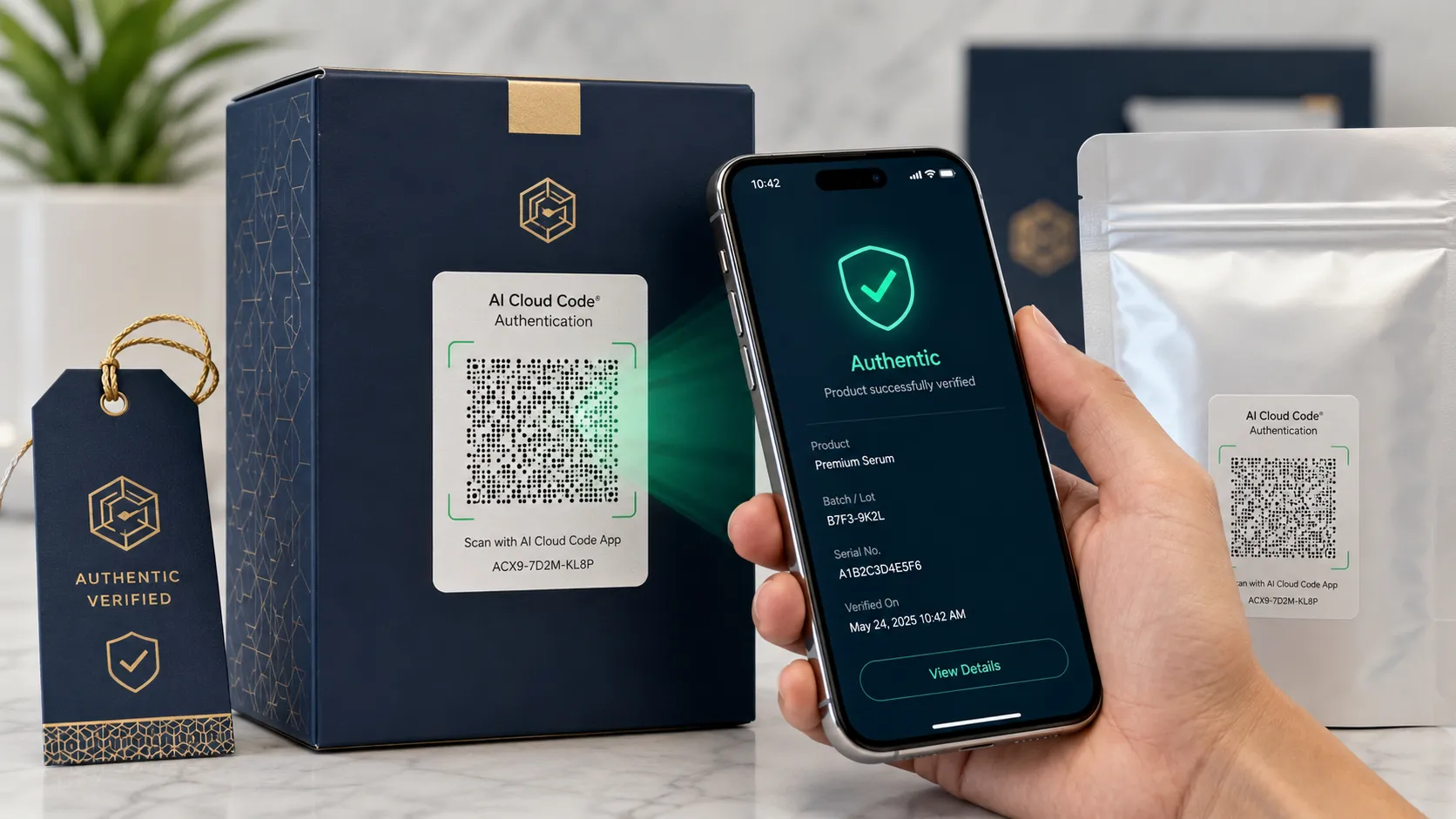
Brand licensing anti-counterfeiting is the practice of embedding covert authentication technology into licensed products, labels, hang tags, and packaging so the brand owner can independently verify whether goods were produced by an authorized licensee, in authorized quantities, and distributed through authorized channels. This guide explains the operational workflow, risk framework, and procurement considerations for brand owners who need technology-based control over their licensing programs.
Key takeaways
- The biggest licensing risk is not external counterfeiters. It is authorized licensees who overproduce beyond contracted quantities, divert goods outside assigned territories, or continue manufacturing after license expiration. Covert authentication addresses this insider threat directly.
- Mina’s IP brand licensing management system works by controlling the supply of authenticated labels, hang tags, and packaging. Licensees obtain required authentication labels through the brand owner, while each label carries ultra-invisible authentication that can be independently verified by the brand.
- Dual verification channels (audio and image) provide rapid field evidence. Fake or unauthorized products show no reaction during detection. Genuine products produce a sound/vibration signal and display hidden visual information through a proprietary image reader.
- This approach treats authentication materials as a metering mechanism. If a licensee orders 100,000 authenticated labels, the brand knows the licensee can only ship 100,000 verified units. Overproduction without authentication becomes detectable in the market.
- Procurement must plan the full operating model, including label ordering workflows, detector distribution, audit schedules, evidence handling, and escalation procedures, not just the technology purchase.
What is brand licensing anti-counterfeiting?
Brand licensing anti-counterfeiting is a technology-based control system that gives brand owners the ability to independently verify whether licensed products are genuine, authorized, and within contracted production limits. It goes beyond traditional anti-counterfeiting, which typically focuses on external counterfeiters, by addressing the specific risks created by authorized manufacturing relationships.
In a licensing arrangement, the brand owner (licensor) grants a manufacturer (licensee) the right to produce goods bearing the brand’s trademarks, characters, designs, or other intellectual property. The licensee pays royalties based on production volume or sales. The fundamental control problem is that the licensor depends on the licensee’s own reporting for royalty calculations, production quantity verification, and territorial compliance.
Technology-based licensing control addresses this dependency by embedding covert authentication into the physical materials that licensees must use, such as labels, hang tags, packaging, certificates, or the product itself. Because the authentication materials can only be sourced through the brand owner, production volume becomes independently verifiable.
Mina Anti-counterfeiting Technology offers a dedicated IP brand licensing management service. By centralizing the supply of authenticated labels and tags through the brand owner, the system helps regulate global licensees, strengthen supply control, and reduce unauthorized production. Mina’s ultra-invisible anti-counterfeiting technology is integrated into these materials so the brand can verify authenticity and identify unauthorized products in the field using proprietary detection equipment.
The overproduction problem: why licensees are a specific risk category
Unauthorized overproduction by licensed manufacturers is one of the most financially damaging forms of IP abuse, yet it receives less attention than external counterfeiting. The reason is simple: the overproduced goods are physically identical to authorized goods because they come from the same factory, same tooling, same materials, and same workforce. There is no quality difference to detect.
The International Chamber of Commerce has noted that unauthorized overproduction and third-shift manufacturing by authorized suppliers are recognized forms of intellectual property infringement that cost brand owners billions in lost royalties annually. Unlike external counterfeiting, where product quality often provides a detection signal, overproduction is invisible at the product level.
The economic incentive for overproduction is straightforward. A licensee paying 8-12% royalty on reported production volume can increase profit margin substantially by manufacturing unreported units and selling them through grey channels. The products look genuine, pass quality inspection, and may even carry authentic packaging if the licensee controls the printing.
Licensing International reported that global licensing industry revenue reached approximately USD 340.8 billion in retail sales of licensed merchandise in 2023. Even a small percentage of unreported overproduction across this market represents a massive royalty loss for brand owners. The problem is amplified in markets with weak contract enforcement, where legal remedies are slow, expensive, and uncertain.
Risk framework: four types of licensing fraud that authentication addresses
Not all licensing fraud is the same. A procurement team evaluating authentication solutions should understand which risk types the technology can address and which require complementary controls.
Unreported overproduction
The licensee manufactures more units than reported to the brand, sells the excess through unofficial channels, and retains all revenue from unreported units. Authentication metering makes this detectable because the licensee cannot obtain more authenticated labels than ordered through the brand.
Territorial diversion
The licensee is authorized for one territory but diverts product to another market where a different licensee holds the rights, or where the brand has no licensee and charges higher wholesale prices. Authenticated labels with territory-coded data allow market auditors to trace product origin.
Post-expiry manufacturing
After a license agreement expires or is terminated, the former licensee continues manufacturing using retained tooling, molds, and supplier relationships. Without authenticated materials from the brand, post-expiry products become detectable in the market through the absence of valid authentication.
Unauthorized sublicensing
A licensee subcontracts production to a third-party factory without brand approval. The subcontractor may use inferior materials, skip quality controls, or produce unreported overruns. Authentication ensures that only products carrying brand-issued labels are treated as genuine, regardless of manufacturing origin.
A well-designed authentication system does not prevent these behaviors absolutely, but it makes them detectable and provable. The shift from honor-system reporting to evidence-based verification changes the enforcement dynamic fundamentally.
How covert authentication manages licensee compliance
The operational workflow for licensing authentication involves five stages, from initial setup to ongoing enforcement. Each stage involves coordination between the brand, the authentication technology provider, and the licensee.
Label and tag production with embedded authentication
Mina can integrate ultra-invisible anti-counterfeiting information into labels, hang tags, packaging elements, and other authentication carriers, while keeping the information invisible under normal light, UV light, and IR light. Each batch is serialized and recorded in the brand’s control system.
Controlled distribution to licensees
Licensees order authenticated materials through the brand, not directly from the authentication provider. The brand approves quantities based on contracted production volumes. This creates a physical control point: the licensee cannot manufacture verified products beyond the authenticated material supply.
Manufacturing and application
The licensee applies authenticated labels and tags during normal production. The materials are designed to integrate with existing product packaging, labeling, and finishing processes without requiring special equipment or workflow changes at the factory level.
Field verification and market audit
Brand protection staff conduct market sweeps using Mina’s exclusive detection devices. Each device has a unique identification number and is distributed only to authorized personnel. During audits, inspectors scan products to confirm authentication status. Genuine products produce sound and vibration through audio detection or display hidden information through image detection. Products without authentication show no response.
Reconciliation and enforcement
The brand compares authenticated label orders against licensee-reported production volumes and market audit findings. Discrepancies trigger investigation. If a market contains significant volumes of non-authenticated product bearing the brand’s marks, the evidence supports contractual remedies, royalty adjustments, or termination proceedings.
TThis system helps brand owners collect verification evidence quickly when they suspect unauthorized label overproduction, unauthorized production, or misuse of licensed packaging materials. The technology provides rapid field determination that does not depend on laboratory testing, supply chain records, or licensee cooperation.
Evidence collection for licensing enforcement
One of the most valuable aspects of covert authentication in licensing is the quality of evidence it generates. Licensing disputes often hinge on whether the brand can prove that specific products were manufactured without authorization. Traditional methods, such as factory audits, production record reviews, and supply chain tracking, depend partly on the licensee’s cooperation and record-keeping integrity.
Authentication-based evidence works differently. The brand’s auditor purchases or inspects products in the market and tests them with the detection device. The test result is binary: the product either contains the authentication signal or it does not. This creates a documented, repeatable evidence trail that does not require access to the licensee’s factory records.
For cross-border enforcement, this evidence model is particularly useful. Many jurisdictions require physical proof of unauthorized manufacturing to support customs seizure, civil claims, or criminal complaints. A detection device result showing that market products lack the authentication feature expected of genuine goods provides a clear, technology-based proof point.
Mina states in its profile that brands can use its technology to promptly determine authenticity and disclose findings to relevant authorities and the public. The controlled nature of the detection devices, which are not available on the open market and carry unique identification numbers, strengthens the evidentiary chain by demonstrating that only authorized personnel performed the verification.
Decision matrix: which licensing programs need authentication
Not every licensing arrangement requires technology-based authentication. The decision should be based on risk factors, not on product category alone.
| Risk factor | High risk (authentication recommended) | Lower risk (standard controls may suffice) |
|---|---|---|
| Licensee geography | Markets with weak IP enforcement, distant from brand HQ, multiple sublicensing layers | Domestic licensees with strong legal infrastructure |
| Production volume | High-volume products where small percentage overproduction represents large absolute numbers | Low-volume specialty items with transparent production |
| Royalty structure | Per-unit royalties where overproduction directly reduces brand revenue | Flat-fee licenses where volume does not affect revenue |
| Product value | Premium or luxury products where counterfeits or overruns damage brand equity | Commodity products with minimal brand premium |
| Distribution complexity | Multi-market, multi-channel distribution with limited brand visibility | Direct-to-consumer or single-channel distribution |
| License history | New licensee relationships, prior compliance issues, or markets with known grey-channel activity | Long-term trusted partners with clean audit records |
The best-fit licensing categories for authentication include character and entertainment licensing, fashion and apparel brand licensing, sports league merchandise, luxury brand extensions, consumer electronics accessories, and any program where the licensee has direct access to manufacturing and the brand has limited factory-floor visibility.
Procurement planning for licensing authentication
Implementing authentication in a licensing program is an operational decision, not just a technology purchase. Procurement teams should plan across five areas.
Authentication material specification
Define which physical items will carry authentication: labels, hang tags, packaging, certificates, product components, or a combination. Each item type requires integration testing to confirm that the authentication signal survives application processes such as sewing, heat pressing, adhesive bonding, or insertion.
Ordering and distribution protocol
Establish a formal ordering process where licensees submit production plans, the brand approves quantities, and authenticated materials are shipped from the technology provider or a brand-controlled warehouse. Track inventory, shipments, and reconciliation at the brand level.
Detection device management
Plan the distribution of detection devices to brand protection staff, regional auditors, customs partners, and authorized retailers if applicable. Mina’s profile states that each device has a unique identification number, enabling the brand to track device custody and usage.
Audit cadence and methodology
Define how frequently and where market audits will be conducted. Retail sweeps, online marketplace sampling, trade show inspections, and customs checkpoints each require different protocols. The audit plan should cover all markets where licensed products are sold, not only the markets assigned to individual licensees.
Contractual integration
Amend licensing agreements to require the use of authenticated materials. Specify that products sold without authentication are deemed unauthorized regardless of other compliance factors. Include audit rights, evidence handling, and remedies for authentication failures. Legal counsel should review the contractual language to ensure enforceability in each jurisdiction.
Limitations and governance risks
- Authentication does not prevent overproduction; it makes it detectable. A licensee can still manufacture excess units. Without authenticated labels, those units become identifiable in the market, but only if audits are conducted. The system depends on active enforcement, not passive prevention.
- Label security must be maintained end-to-end. If authenticated labels are stolen, diverted, or mismanaged between the technology provider and the licensee, the metering function breaks down. Secure logistics, inventory reconciliation, and destruction protocols for damaged or unused labels are essential.
- The system requires ongoing operational commitment. Authentication is not a one-time deployment. Market audits, device management, label reconciliation, and escalation procedures need sustained resourcing. Brands that deploy authentication but reduce audit budgets will not realize the full control benefit.
- Licensee pushback is common. Requiring authenticated materials adds cost, lead time, and dependency for the licensee. Some licensees may resist adoption. The brand should frame the requirement as a partnership standard that protects legitimate licensees from unauthorized competitors, rather than as a surveillance measure.
- Digital integration is optional but valuable. Covert physical authentication can be paired with serialization, cloud-based tracking, and scan-event logging for richer data. However, the physical authentication layer should work independently even if digital systems are offline or unavailable.
FAQ: brand licensing anti-counterfeiting
What is brand licensing anti-counterfeiting?
Brand licensing anti-counterfeiting is the use of covert authentication technology in licensed products and their labels, tags, or packaging to give brand owners independent verification of licensee compliance. It addresses overproduction, territorial diversion, post-expiry manufacturing, and unauthorized sublicensing.
How does it differ from standard anti-counterfeiting?
Standard anti-counterfeiting protects against external counterfeiters who copy products. Licensing anti-counterfeiting addresses insider threats from authorized manufacturers who exploit their access to produce unreported quantities, divert to unauthorized markets, or continue production after license termination.
How does the authentication metering mechanism work?
The brand controls the supply of authenticated labels or tags. Licensees order these through the brand based on approved production volumes. Because the licensee cannot manufacture or source the authentication materials independently, the number of authenticated labels equals the maximum number of verified products the licensee can ship.
Can a licensee copy the authentication?
The authentication uses covert technology that is invisible under normal conditions and requires proprietary detection equipment. Mina’s technology is positioned as a highly controlled authentication solution, supported by proprietary detection devices that are not publicly available on the open market. Replication requires access to the proprietary material formulation and production process.
What evidence does the system produce for enforcement?
Market auditors test products with detection devices and record binary results: authenticated (genuine) or not authenticated (unauthorized). This creates a documented evidence trail that supports contractual remedies, royalty adjustments, or legal proceedings without depending on access to the licensee’s factory records.
Is this suitable for small licensing programs?
The technology is most cost-effective for programs with high volumes, high royalty rates, or high brand-equity risk. For small programs with a single trusted licensee and direct oversight, the operational overhead may exceed the risk reduction benefit. Evaluate based on the risk factors in the decision matrix above.
What happens if authenticated labels are lost or stolen?
Lost or stolen labels represent a security breach. The brand should treat authenticated materials like controlled inventory: track shipments, reconcile receipts, require destruction reports for damaged items, and investigate discrepancies. The serialization of labels can help identify where losses occurred.
Sources
Strengthen your licensing program with authentication
If your brand licensing program faces overproduction risk, territorial diversion, or weak licensee reporting, prepare a brief with your licensing structure, product categories, licensee count, market coverage, and current audit capabilities. Mina can assess how its authentication materials and detection system fit into your licensing compliance workflow.
Contact Mina Anti-counterfeiting Technology for a licensing consultation