Ceramic sanitary ware authentication
A high-temperature invisible code is a covert product identity mark designed to survive ceramic firing and remain invisible after production. For ceramic sanitary ware brands, Mina’s high-temperature invisible-code technology provides one-code-one-product authentication that can support anti-counterfeiting and traceability even when a visible code, label, or surface mark is damaged.
Ceramic sanitary ware
Resistant up to 1800°C
Covert product-level identity
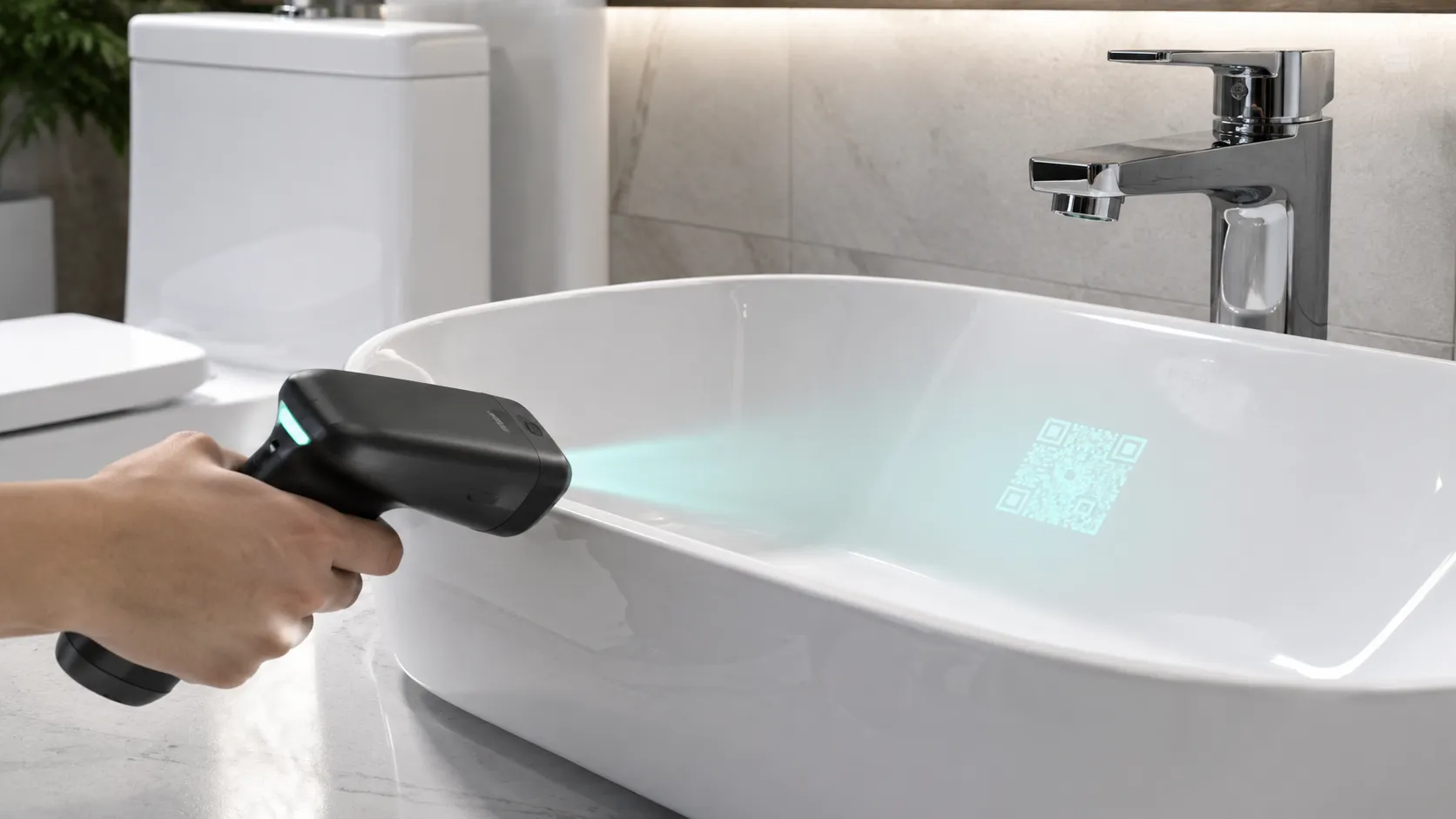
Covert high-temperature invisible code detection for ceramic sanitary ware authentication and traceability.
What it protects
Ceramic sanitary ware products such as toilets, basins, smart toilet ceramics, ceramic bathroom accessories, and project-channel fixtures.
Why it matters
Visible labels, QR codes, stickers, and laser marks can be copied, removed, damaged, or separated from the product itself.
How it works
The covert code is integrated with the ceramic product and remains invisible after high-temperature firing.
Best use case
Premium sanitary ware brands that need hidden product-level evidence for anti-counterfeiting, traceability, warranty, and channel control.
Key takeaways for procurement teams
- This article covers one non-wine application: high-temperature invisible code for ceramic sanitary ware authentication and traceability.
- Mina’s source profile states that the technology is resistant to temperatures up to 1800°C and is used for ceramic bathroom products with one code, one product.
- After high-temperature firing, the code leaves no visible trace under normal light, ultraviolet light, or infrared light.
- The covert code can still support anti-counterfeiting investigations even if a visible code is destroyed.
- Procurement should test the real ceramic body, glaze, firing curve, code location, detector workflow, and destructive counterfeit scenarios before approval.
What is a high-temperature invisible code?
A high-temperature invisible code is a covert product identity feature that can be integrated with a ceramic product and remain hidden after firing. Unlike a visible laser code, sticker, printed QR code, or surface serial number, it is designed to preserve product appearance while giving authorized teams a way to verify authenticity or traceability.
For ceramic sanitary ware, this matters because the product surface is part of the brand promise. Toilets, basins, smart toilet bodies, shower trays, and ceramic bathroom accessories are expected to look clean, durable, and premium. A visible code may be rejected for appearance reasons, placed only in a hidden area, or damaged during grinding, polishing, cleaning, or installation.
Mina’s priting ink with a high-temperature invisible-code technology resistant to temperatures up to 1800°C. It states that the technology is integrated with ceramic sanitary ware products and that, after high-temperature firing, no traces are visible under normal light, ultraviolet light, or infrared light. The code remains invisible while still supporting covert inspection.
Why ceramic sanitary ware brands need covert product identity
Ceramic sanitary ware brands face a different anti-counterfeiting problem from fast-moving consumer goods. The product is large, durable, often exported, and frequently sold through distributors, project channels, building-material markets, installers, and e-commerce platforms. Fake or unauthorized products can harm brand reputation long after the sale because the product may remain installed for years.
Visible markings can help with warranty and traceability, but they can also be attacked. A printed label can be removed. A warranty sticker can be copied. A visible laser mark can be ground down, covered, or imitated. A QR code can be photographed. If the visible identity is destroyed, the brand may lose evidence during a counterfeit investigation.
The broader counterfeit market is large enough that hard-product brands should not assume packaging alone is enough. The OECD and EUIPO reported that global trade in fake goods reached USD 467 billion in 2021, equal to 2.3% of world imports. For sanitary ware, the damage may include warranty fraud, channel conflict, fake replacement claims, project-bid substitution, unauthorized overproduction, and IP licensing disputes.
How Mina’s 1800°C high-temperature invisible code works
Mina positions the technology as one code, one product for ceramic bathroom products. The code is not a paper label added after production. It is integrated with the ceramic sanitary ware product and is designed to remain hidden after high-temperature firing. The supplied source specifically says it is difficult to detect or tamper with.
The source profile also compares Mina’s ultra-invisible anti-diversion code with a traditional laser anti-diversion code. The visible laser code is described as easy to damage, while the Mina covert-code system remains available for investigation when the visible code is destroyed. For procurement teams, that is the core buying logic: visible marks are useful for routine operations, while covert marks protect evidence when the visible layer fails.
Detection is controlled. Mina’s ultra-covert anti-counterfeiting system can support multiple verification methods, including sound detection, image detection, and invisible code detection. For real-world use, brands can define who is authorized to inspect the code, how detection equipment is controlled, what verification result should be produced, and how inspection records are linked to product, batch, factory, distributor, or project data.
The most important implementation point is process fit. Ceramic bodies, glaze formulas, firing curves, kiln atmosphere, product geometry, and polishing steps vary by manufacturer. A high-temperature invisible-code project should therefore be validated on the real product and real firing process, not only on a flat laboratory sample.
Best-fit applications for ceramic sanitary ware
Premium bathroom fixtures
High-value toilets, basins, smart toilet ceramics, and branded bathroom fixtures can use covert identity to support warranty and authenticity checks.
Project and hotel supply
Large projects can face product substitution. A covert product code helps confirm whether installed sanitary ware came from the authorized batch.
Export channels
Exported ceramic sanitary ware may pass through multiple distributors. Covert inspection can support market audits without changing visible product appearance.
IP licensing control
Brands can use product-level evidence when investigating unauthorized overproduction, licensee disputes, or counterfeit parts in the market.
The best fit is not every ceramic product. Low-cost products with little counterfeit risk may only need carton labels or standard serial numbers. The invisible code is most valuable when product identity, brand reputation, project proof, or channel control matters after installation.
High-temperature invisible code vs laser marking, QR labels, RFID, and warranty stickers
Most ceramic traceability options are visible or package-based. Mina’s high-temperature invisible code is a product-level covert layer, so it should be compared by role rather than cost alone.
| Option | Best use | Main weakness | Procurement guidance |
|---|---|---|---|
| Laser marking | Visible serial numbers, production traceability, warranty support | May affect appearance and can be damaged, ground, covered, or imitated | Use for routine traceability, but add covert identity for high-risk products |
| Printed QR label | Consumer lookup, warranty registration, installation records | Label can be removed, copied, photographed, or separated from the product | Useful for public access, not enough as sole product evidence |
| RFID tag | Warehouse, logistics, and automated read workflows | Tag placement, cost, durability, and installation environment can be limiting | Use for logistics when automated reading is valuable |
| Warranty sticker | Basic after-sales record and consumer support | Easy to remove or transfer if not paired with product-level proof | Use for service convenience, not serious anti-counterfeiting evidence |
| Visible ceramic decal | Branding, decoration, visible production identification | Visible features can be copied and may not suit minimal product design | Use when visual identity is acceptable |
| Mina high-temperature invisible code | Covert product-level authentication after ceramic firing | Requires controlled detection, firing validation, and inspection governance | Best when the product needs hidden identity that survives production and tampering attempts |
GS1 traceability principles are useful for data structure, but a ceramic brand still needs a durable physical carrier for identity. The high-temperature invisible code can serve as that hidden carrier, while visible systems support everyday operations.
Procurement checklist for high-temperature invisible-code projects
Use this checklist before approving a ceramic sanitary ware invisible-code pilot.
- Product scope: define whether the project covers toilets, basins, smart toilet ceramics, shower trays, ceramic tiles, or bathroom accessories.
- Threat model: identify counterfeiting, unauthorized overproduction, warranty fraud, project substitution, grey-market sales, or IP licensing disputes.
- Ceramic body: document body composition, glaze type, firing temperature, kiln atmosphere, and firing duration.
- Code location: choose a location that survives firing and handling while supporting inspection after installation when needed.
- Visible identity: decide whether the product will also carry visible laser code, QR label, carton code, or warranty label.
- Data model: connect hidden code to SKU, batch, factory, kiln run, distributor, project, warranty, or licensee information.
- Detection workflow: define who uses Mina detection equipment, how results are interpreted, and how devices are controlled.
- Durability testing: test firing, cleaning agents, abrasion, polishing, installation handling, water exposure, and long-term use.
- Counterfeit controls: test products with destroyed visible codes, fake laser marks, copied warranty stickers, and unauthorized products.
- Launch governance: control code issuance, production records, detector storage, staff training, and investigation escalation.
Recommended pilot workflow
Review the real production process
Mina and the ceramic manufacturer should document raw body material, glaze, firing profile, kiln conditions, cleaning steps, polishing, packaging, and installation exposure.
Create controlled test groups
Prepare genuine invisible-code products, blank controls, products with visible codes only, products with damaged visible codes, and counterfeit-like samples.
Run production-like validation
Include high-temperature firing, glaze behavior, cooling, inspection, packing, shipment, water exposure, cleaning chemicals, abrasion, and installation handling.
Test field inspection
A market auditor, quality engineer, or brand-protection partner should be able to detect the hidden code, interpret the result, and connect it to the right product record.
Limitations and practical risks
High-temperature invisible code should not be approved without product-specific testing. Ceramic products differ in glaze chemistry, firing curves, body composition, and surface treatment. A result on one product line may not automatically apply to another factory or product series.
The second limitation is inspection access. A hidden code has value only when authorized teams can check it. Procurement should define whether inspection occurs at factory, warehouse, distributor, project site, after-sales service, or legal investigation stage.
The third risk is data separation. If the hidden code is not connected to production and channel records, it may prove that a product is genuine but not where it belongs. Connect the code to batch and distribution data when anti-diversion or warranty control matters.
How invisible code fits into ceramic traceability
A practical ceramic identity system can use several layers. Visible laser marks or carton labels support routine logistics and warranty access. QR labels can support consumer registration. The high-temperature invisible code provides a restricted evidence layer that survives attempted damage and preserves the product’s appearance.
This layered approach is especially useful for brands that sell through project channels or licensed factories. If a dispute arises, the brand can inspect the product itself rather than relying only on cartons, stickers, invoices, or visible marks. For ceramic sanitary ware, that product-level evidence can be the difference between a weak claim and a defensible investigation record.
FAQ: high-temperature invisible code for ceramic sanitary ware
What is a high-temperature invisible code?
It is a covert product identity code designed to survive high-temperature ceramic processing and remain invisible after firing. Authorized teams can use it for authentication, traceability, or anti-counterfeiting investigations.
How hot can Mina’s ceramic invisible code resist?
Mina’s high-temperature invisible-code technology can withstand temperatures up to 1800°C, making it suitable for ceramic bathroom products that require durable, covert authentication.
Is the code visible after firing?
According to Mina’s source profile, after high-temperature firing no traces are visible under normal light, ultraviolet light, or infrared light. The code remains invisible.
How is it different from laser marking?
Laser marking is visible and useful for routine traceability, but it can be damaged or imitated. Mina’s invisible code is a covert product-level feature for restricted inspection.
Which ceramic products are the best fit?
Best-fit products include premium toilets, basins, smart toilet ceramic bodies, ceramic bathroom accessories, project-channel sanitary ware, ceramic tiles, and licensed-brand ceramic products.
What should procurement test before approval?
Test the real ceramic body, glaze, firing profile, code location, cleaning exposure, abrasion, detector response, data connection, damaged visible codes, and field inspection workflow.
Sources and evidence used
Product-specific information is based on Mina’s technical materials, product documentation, and application experience. Public sources below were used for market context, standards context, and external evidence.
Next step for ceramic product authentication
If your ceramic sanitary ware or bathroom fixture brand needs hidden product-level identity, prepare a brief with product type, ceramic body, glaze, firing temperature, code location, visible traceability system, inspection audience, and channel-control goal. Mina can then evaluate a high-temperature invisible-code pilot on your real ceramic product.