Automotive safety and brand protection
Anti-counterfeiting for automotive parts is the use of covert and overt authentication technology on vehicle components, their packaging, and associated documentation to enable OEMs, distributors, mechanics, and inspectors to verify that parts are genuine before installation. Counterfeit automotive parts are a direct safety threat: substandard brake pads, filters, sensors, belts, and electrical components cause accidents, vehicle fires, and system failures. This guide covers the risk landscape, authentication methods applicable to automotive parts, and procurement specifications for OEMs and aftermarket distributors.
Key takeaways
- Counterfeit automotive parts are a life-safety issue. Substandard brake components, airbag parts, steering components, and electrical connectors fail under conditions that genuine parts are engineered to withstand. The consequences include accidents, injuries, and fatalities.
- The aftermarket is the primary entry point for counterfeit parts. While OEM supply chains have supplier qualification controls, the independent aftermarket, online marketplaces, and cross-border trade create channels where counterfeit parts enter circulation.
- Mina lists automotive parts as a core application industry. The company’s authentication technology can be applied to plastic housings via masterbatch, to packaging via printed integration, to labels, and to compliance documentation.
- Part-level authentication survives beyond the packaging. When a mechanic opens a box, the packaging is discarded. Authentication embedded in the part itself (via masterbatch in plastic housings or spray-code on surfaces) remains verifiable throughout the part’s service life.
- Procurement must address both component authentication and documentation security. Counterfeiters forge not only parts but also certificates of conformity, test reports, and origin documentation.
The scale of automotive parts counterfeiting
The automotive parts counterfeiting problem is massive. The Motor and Equipment Manufacturers Association (MEMA) has estimated that counterfeit and substandard auto parts represent a significant share of the global aftermarket, with industry losses running into tens of billions of dollars annually. The U.S. Federal Trade Commission and Customs and Border Protection regularly seize counterfeit auto parts at ports of entry.
The OECD has identified automotive components among the top product categories in counterfeit seizure data globally. Parts counterfeiting affects every market, but is particularly acute in regions with large independent aftermarkets, weak enforcement, and price-sensitive buyers: the Middle East, Africa, Southeast Asia, Latin America, and parts of Eastern Europe.
The counterfeiting supply chain is sophisticated. Factories in low-cost manufacturing regions produce parts that mimic the branding, part numbers, and packaging of major OEMs and tier-1 suppliers. Some counterfeits are manufactured using inferior materials (recycled metals, substandard polymers, wrong-grade rubber). Others are produced to approximate genuine specifications but skip the quality testing, heat treatment, surface finishing, or calibration that genuine parts undergo.
Safety risks by part category
Brake components
Counterfeit brake pads, rotors, and calipers may use inferior friction materials that overheat, fade, or disintegrate under emergency braking. Documented incidents include complete brake failure from counterfeit pads.
Filters (oil, air, fuel)
Counterfeit filters use lower-grade media that allows contaminants to pass through, accelerating engine wear. Counterfeit fuel filters may restrict flow, causing stalling. Counterfeit oil filters may bypass entirely.
Electrical components
Counterfeit sensors, connectors, relays, and wiring use substandard conductors and insulation. Failures can cause vehicle fires, loss of electronic control systems, or incorrect sensor readings that affect safety systems.
Steering and suspension
Counterfeit tie rods, ball joints, and control arms use weaker metals or improper heat treatment. Failure can cause loss of steering control at driving speed.
Belts and hoses
Counterfeit timing belts and radiator hoses use inferior rubber compounds that crack, stretch, or fail prematurely. A broken timing belt can destroy an engine; a burst radiator hose causes overheating.
Lighting and signals
Counterfeit headlights, taillights, and signal assemblies may not meet optical standards, reducing visibility and creating hazards for other road users. Non-compliant materials may melt or burn.
The aftermarket vulnerability
The independent aftermarket is where most counterfeit parts enter the vehicle fleet. Unlike OEM assembly lines, which source from qualified tier-1 and tier-2 suppliers through controlled procurement processes, the aftermarket includes thousands of independent distributors, online sellers, and workshops sourcing from a broad and often opaque supply base.
A mechanic ordering parts from an online marketplace or a local distributor may receive counterfeits packaged to look identical to genuine parts. The packaging may carry genuine-looking brand logos, part numbers, holographic stickers, and even barcodes that link to cloned product information pages. Without authentication technology that verifies the physical product rather than its visible markings, the mechanic has no reliable way to verify authenticity short of destructive testing or laboratory analysis, both of which are impractical in a service workshop environment.
Fleet operators face the same challenge at larger scale. A fleet manager purchasing thousands of filters, brake pads, or belts annually cannot test every part. Yet a single counterfeit brake pad installed across a fleet of delivery vehicles creates liability exposure for the entire operation. Authentication provides a scalable verification method: scan the part or its packaging with a detection device, get a binary genuine/fake result, and proceed or reject accordingly.
The online marketplace problem has intensified the aftermarket vulnerability. Major e-commerce platforms host thousands of auto parts sellers, many of whom source from unverified suppliers. A 2023 review by the Automotive Anti-Counterfeiting Council found counterfeit automotive parts listings across multiple online platforms, often sold at prices close to genuine parts to avoid suspicion. The buyer receives a convincing package that may only be identifiable as counterfeit through material testing or authentication technology.
Cross-border trade adds another layer of complexity. Parts manufactured in one country, shipped through free trade zones, and repackaged before entering the destination market can pass through multiple intermediaries. At each handoff, the traceability chain weakens. Product-level authentication that is embedded in the part itself, not just its packaging, provides verification that survives the entire distribution journey.
Authentication methods for automotive parts
Different part types require different authentication carriers. Mina’s technology portfolio supports multiple application points across the automotive parts supply chain.
| Authentication carrier | Part types | Mina technology | Survives installation? |
|---|---|---|---|
| Plastic housing (masterbatch) | Sensor housings, connector bodies, filter casings, lamp assemblies | Anti-counterfeiting plastic masterbatch embedded in resin | Yes, permanently |
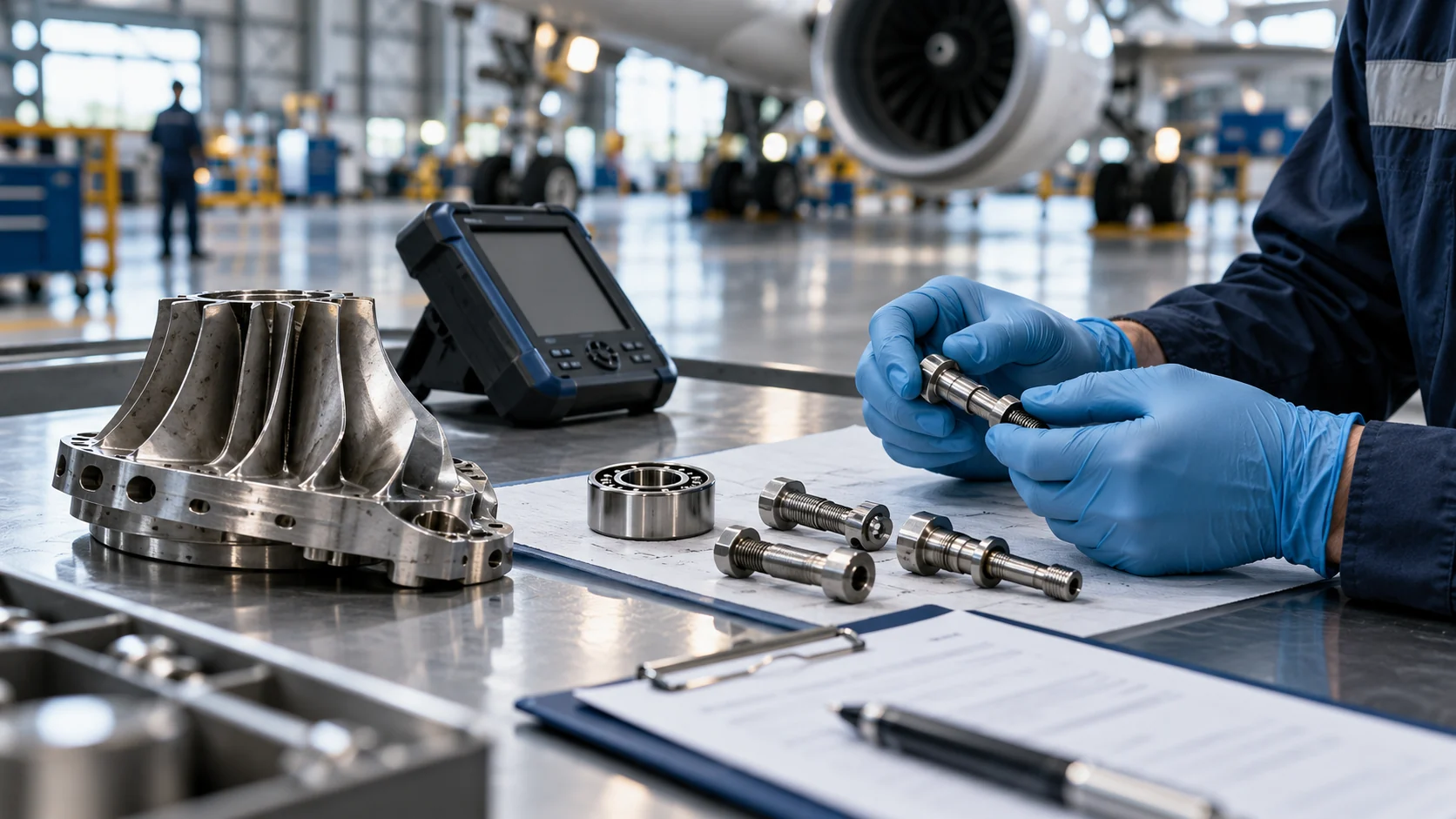
| Part surface (spray code) | Metal brackets, engine components, structural parts | Ultra-invisible spray-applied authentication | Yes, if not machined away |
| Product label | All parts with affixed labels | Ultra-invisible integration in label printing | Depends on label durability |
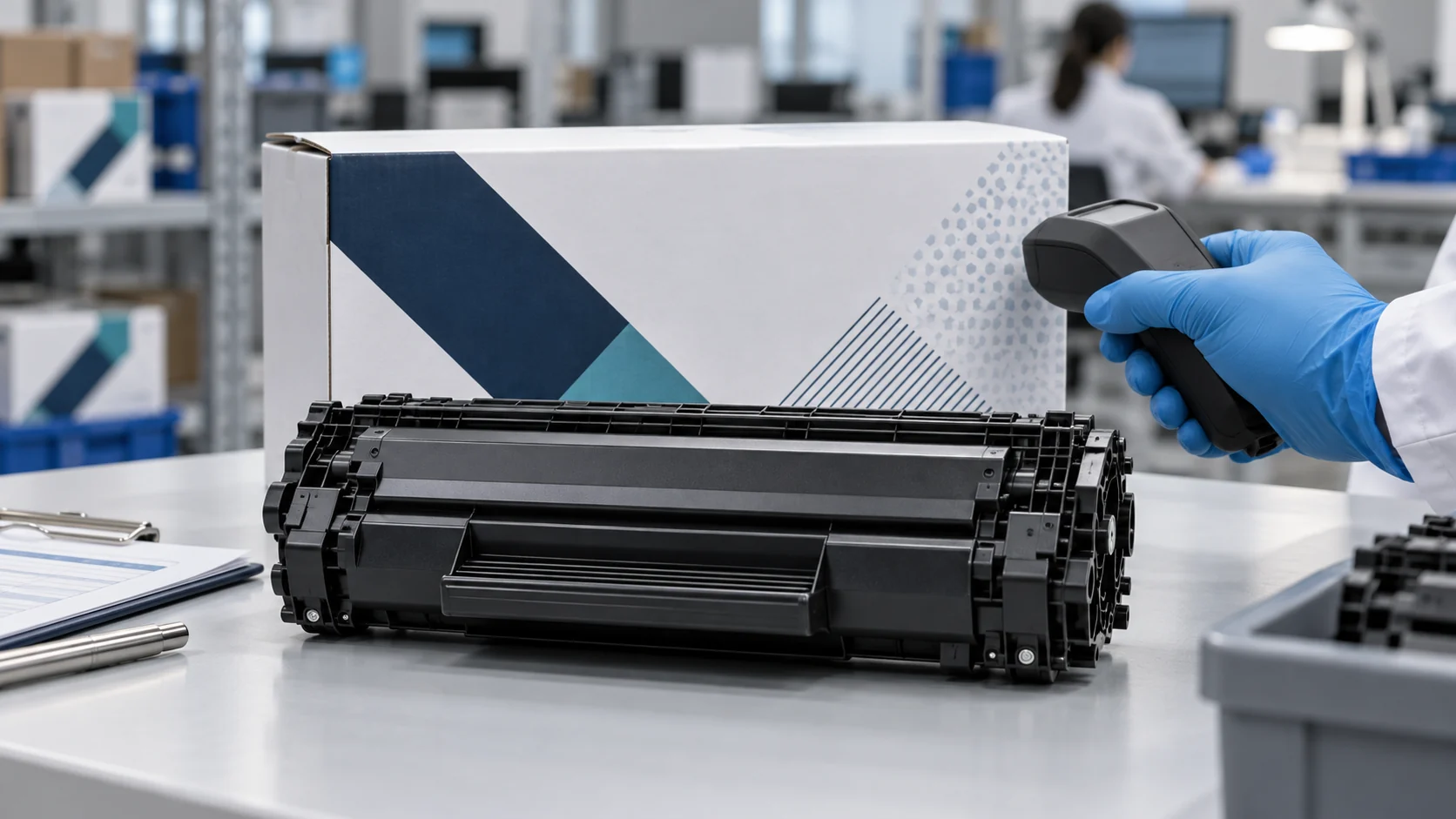
| Packaging box | All boxed parts | Ultra-invisible or micro-chain code in packaging print | No, packaging is discarded |
| Compliance certificate | All regulated parts | Security paper with covert authentication | Yes, if retained in records |
The strongest approach for safety-critical parts combines packaging-level authentication (for distribution and warehouse verification) with part-level authentication (for workshop and post-installation verification). This dual-layer model ensures that authentication persists after the packaging is opened and discarded.
Technology comparison for automotive parts authentication
| Method | Part-level? | Counterfeiter barrier | Field equipment | Best fit |
|---|---|---|---|---|
| Covert embedded (Mina) | Yes | Very high | Proprietary detector | Enterprise/customs verification |
| Holographic label | No (packaging) | Medium | Visual | Retail trust cue |
| QR code | No (packaging/label) | Low | Smartphone | Consumer lookup |
| RFID tag | Possible | Medium | RFID reader | Supply chain tracking |
| Laser engraving | Yes | Low-medium | Visual | Traceability marking |
| Forensic taggant | Yes | Very high | Lab spectrometer | Legal/insurance disputes |
Procurement specifications for automotive authentication
- Identify critical part categories. Prioritize safety-critical parts (brakes, steering, electrical, airbag components) and high-volume aftermarket items (filters, belts, spark plugs) where counterfeiting frequency is highest.
- Select the authentication carrier per part type. Plastic parts: masterbatch. Metal parts: spray code or label. All parts: packaging and certificate authentication as a baseline layer.
- Test automotive environmental conditions. Request authentication durability data under engine bay temperatures (up to 150 degrees C), vibration, oil/fuel exposure, road salt, UV aging, and moisture cycling.
- Validate detection in workshop conditions. Test the detection device in realistic workshop environments: poor lighting, oily hands, parts on shelves, and time pressure. The scan must be quick and reliable for adoption by mechanics.
- Integrate with existing part numbering. The authentication system should complement existing OEM part numbering, not replace it. Link authentication data to part numbers, batch records, and warranty information.
- Plan channel deployment. Determine which distribution tiers receive detection devices: OEM dealers, authorized independent distributors, fleet operators, customs agencies, or all of the above.
Limitations
- Authentication does not test part performance. A genuine authentication signal confirms manufacturing origin, not installed condition. Parts damaged during shipping, storage, or improper installation still need standard quality inspection. Authentication is a supply chain verification tool, not a substitute for mechanical testing or visual inspection during installation.
- Aftermarket fragmentation makes universal coverage difficult. Thousands of independent distributors and workshops may not have access to detection devices or training. Phased rollout through key distribution partners, authorized service networks, and fleet operators is more practical than attempting universal deployment from the start. Plan the rollout in tiers, starting with regions where counterfeiting is most prevalent.
- Metal parts have fewer authentication options than plastic. Masterbatch integration works well for plastic components such as sensor housings, connector bodies, and filter casings. Metal parts require surface application methods such as spray code or adhesive label, which may be affected by machining, grinding, heat treatment, or surface coating in some configurations. Test compatibility early in the development process.
- Cost must be justified per part category. High-value, safety-critical, and frequently counterfeited parts justify the authentication investment. Low-value commodity fasteners and gaskets may not warrant per-unit authentication unless they serve a safety-critical function. Evaluate the cost of authentication against the cost of a warranty claim, recall, or liability event caused by a counterfeit part in that category.
- Regulatory landscape is evolving. Some jurisdictions are developing mandatory traceability requirements for automotive parts, particularly in the European Union under extended producer responsibility and product safety regulations. Authentication systems deployed today should be designed with future regulatory requirements in mind, including potential integration with digital product passports and serialization mandates.
- Multi-brand compatibility is complex. An independent distributor handling parts from dozens of brands cannot practically use a different authentication device for each brand. Standardization within authentication provider ecosystems, or cross-brand compatibility agreements, would improve adoption rates in the independent aftermarket.
FAQ: anti-counterfeiting for automotive parts
What is anti-counterfeiting for automotive parts?
It is the use of covert and overt authentication technology on vehicle components, packaging, and documentation to verify that parts are genuine. This protects against safety risks from substandard counterfeit parts and protects brand revenue.
Why are counterfeit auto parts dangerous?
Counterfeit parts use inferior materials and skip quality testing. They fail under conditions genuine parts are engineered to withstand, causing accidents, fires, and system failures in vehicles.
Can authentication survive after parts are installed?
Masterbatch authentication in plastic housings and spray-coded authentication on part surfaces survive installation and remain verifiable throughout the part’s service life. Packaging-level authentication does not survive once packaging is discarded.
Who should have detection devices?
OEM brand protection teams, authorized distributor quality staff, fleet maintenance managers, and customs enforcement agencies are the primary users. Extending to independent workshops improves coverage but requires training and device distribution logistics.
What parts should be authenticated first?
Prioritize safety-critical parts (brakes, steering, electrical) and high-volume aftermarket items (filters, belts) where counterfeiting is most frequent and consequences are most severe.
Sources
Protect your automotive parts from counterfeiting
If your OEM or aftermarket parts business faces counterfeiting risk, prepare a brief with your critical part categories, materials (plastic, metal, rubber), production volumes, and distribution channels. Mina can evaluate authentication integration at the part, packaging, and documentation levels.
Contact Mina Anti-counterfeiting Technology for automotive consultation