Construction Material Anti-Counterfeiting: Traceability Systems for Steel, Concrete, and Building Products
How ultra-covert marking technology protects structural integrity, ensures code compliance, and prevents substandard materials from compromising public safety.
The Scale of Counterfeit Construction Materials
Counterfeit steel, substandard cement, and falsely certified building components represent a $12–15 billion annual global market, according to research from the Global Construction Anti-Counterfeiting Coalition. The consequences extend far beyond financial loss: structural failures caused by inferior materials have led to building collapses, bridge failures, and infrastructure damage costing hundreds of lives worldwide.
Unlike counterfeit consumer products that harm brand reputation, fake construction materials harm public safety. A substandard steel beam in a high-rise building may not fail during construction—but under seismic stress, fire exposure, or decades of environmental loading, the material’s weakness emerges catastrophically. The International Organization for Standardization’s ISO 9001 quality management standards increasingly emphasize supply chain traceability for critical materials.
Key insight: Traditional quality control—lab testing of random samples—cannot detect systematic substitution of inferior materials across entire supply chains. What’s needed is traceability from foundry to foundation, verifying every batch’s origin and specifications without relying solely on documentation that can be forged.
High-Risk Construction Materials and Counterfeiting Methods
| Material | Common Counterfeiting Tactics | Detection Difficulty |
|---|---|---|
| Rebar and structural steel | Substituting lower-grade alloy; falsifying mill certificates; recycling scrap metal without proper processing | High—requires spectroscopic analysis to verify composition |
| Cement and concrete additives | Diluting with fly ash or limestone beyond permitted limits; substituting industrial-grade for construction-grade | Moderate—strength testing needed, but batch-level verification difficult |
| Pipe and tubing | Using thinner walls than specified; substituting standard carbon steel for corrosion-resistant alloys | High—requires dimensional and metallurgical testing |
| Fasteners and anchors | Replacing heat-treated bolts with ungraded equivalents; counterfeiting grade markings | Very high—visual inspection unreliable; failure occurs under load |
| Roofing materials | Substituting thinner gauge metal; using inferior protective coatings | Moderate—visible after installation but too late |
| Electrical conduits and wiring | Using undersized conductors; substituting copper-clad aluminum for pure copper | High—requires specialized equipment to detect |
Construction material counterfeiting succeeds because verification typically occurs at two points: initial supplier qualification and random sampling during delivery. What happens between those points—and after materials disappear into the building—remains invisible.
Ultra-Cover Marking for Construction Material Traceability
From Surface Labels to Material Integration
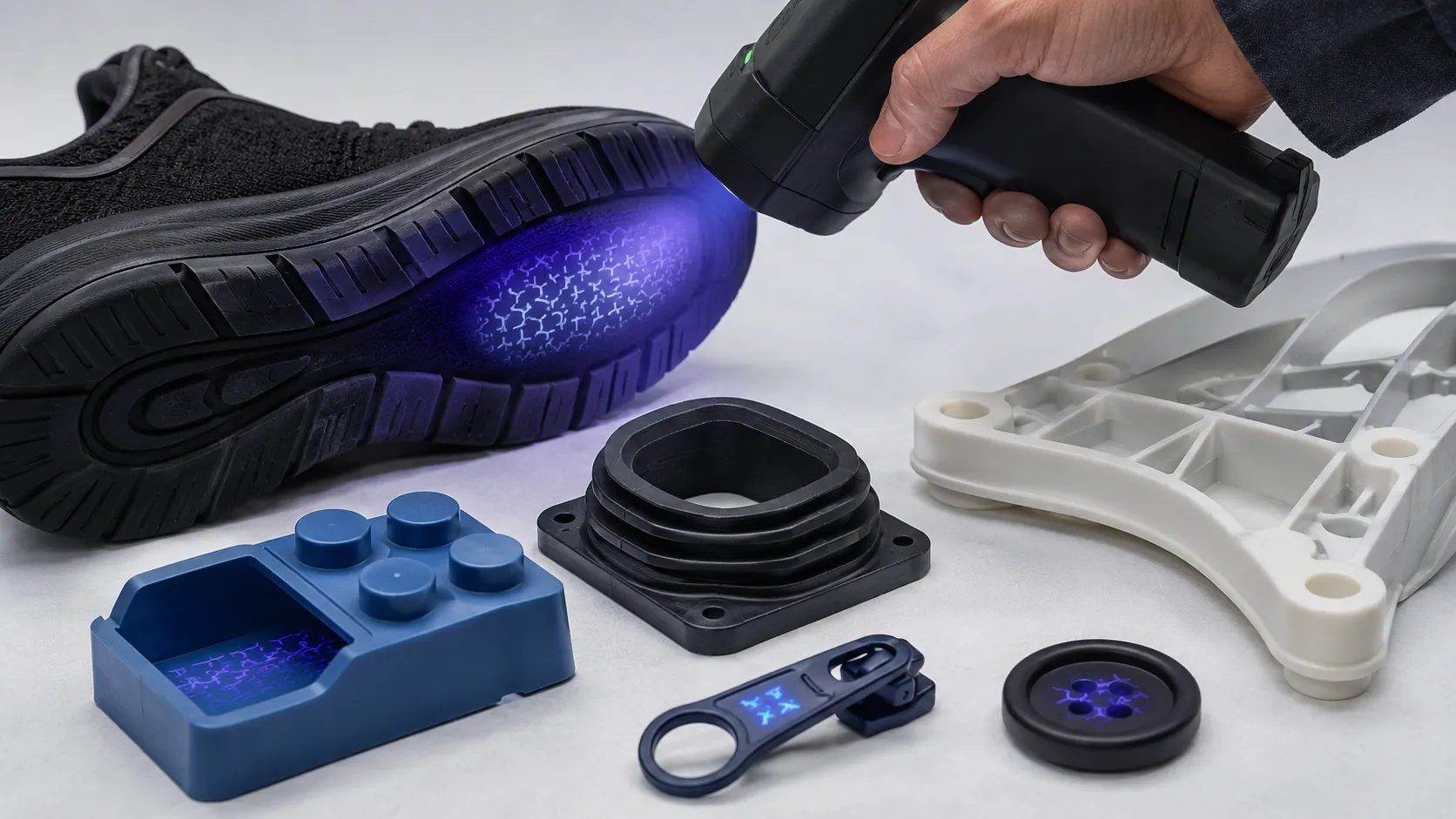
Mina’s ultra-covert quantum anti-counterfeiting technology addresses construction-specific challenges by embedding authentication information directly into the material substrate rather than applying surface-level markers that degrade or detach.
Surface Markers (Traditional)
- Paint stamps: abrasion removes them during handling
- Labels: detach during storage or installation
- Holograms: cannot survive high-temperature processing
- QR codes: require clean surface, easily copied
Material Integration (Mina Technology)
- Information encoded during melting or molding
- Resistant to cutting, welding, and coating
- Survives temperatures exceeding 1500°C for steel
- Cannot be removed without destroying material
For electrical wiring and conduit applications in construction, cable anti-counterfeit marking systems provide additional protection for critical electrical infrastructure. To understand the broader landscape of available technologies, see our overview of best anti-counterfeiting technologies for brand protection.
Application Workflow
Nano-quantum material introduced during steel melting or concrete mixing; unique batch identifier encoded
Standard processes proceed—rolling, casting, extrusion—without affecting embedded information
Materials tracked via overt QR/barcode labels linked to covert data; substitution attempts detected at receiving
Field inspectors verify authenticity before installation using handheld detection devices; results logged to project database
Regulatory inspectors or building owners can verify installed materials years later for compliance audits or insurance claims
Technical Specifications: Material Compatibility
| Material Type | Integration Method | Temperature Resistance | Verification Time |
|---|---|---|---|
| Structural steel (rebar, beams, plates) | Melt addition before casting/rolling | Up to 1500°C | 8–12 seconds |
| Precast concrete elements | Mix integration during batching | Ambient to 600°C (fire exposure) | 10–15 seconds |
| Metal fasteners (bolts, anchors, screws) | Coating application post-manufacture | Up to 800°C | 5–8 seconds |
| PVC/PE pipes and conduits | Masterbatch integration during extrusion | Up to 150°C | 6–10 seconds |
| Roofing materials (metal sheet, shingles) | Coating or substrate integration | Up to 300°C | 8–12 seconds |
Important consideration: Ultra-covert marking technology operates independently of visual appearance. Materials retain their standard look and feel—no visible alteration that could affect architectural specifications or client acceptance. The mark’s invisibility is precisely what prevents counterfeiters from targeting it. For applications requiring high-temperature security ink protection, Mina’s technology delivers comparable durability under extreme thermal conditions.
Regulatory and Standards Alignment
Construction material traceability increasingly appears in building codes and procurement specifications. Mina’s technology supports compliance with:
- ASTM E1134 – Standard Guide for Conducting Audit of Construction Materials
- EN 10204 – Inspection documents for steel products (Type 3.1/3.2 certificates)
- ISO 9001 Clause 8.5.2 – Identification and traceability requirements
- Local building codes – Mandating material certification for structural elements (varies by jurisdiction)
For government infrastructure projects—bridges, tunnels, public buildings—anti-counterfeiting measures often appear in tender specifications. Demonstrating material-level authentication capability can differentiate suppliers bidding on high-profile contracts.
Procurement Considerations: Evaluating Anti-Counterfeiting Solutions
Cost-Benefit Analysis Framework
| Factor | Quantifiable Impact | Measurement Approach |
|---|---|---|
| Risk of structural failure from substandard materials | Litigation costs, project delays, insurance premium increases | Historical incident data; insurance risk modeling |
| Regulatory non-compliance penalties | Fines, permit revocations, mandatory remediation | Local code enforcement records |
| Reputation damage from publicized material failures | Lost future contracts, brand devaluation | Market research; competitor benchmarking |
| Insurance claim denial due to material defects | Uncovered losses in liability claims | Policy review with insurance provider |
| Implementation cost per project | Equipment, training, integration with existing workflows | Vendor pricing; internal resource allocation |
Common Implementation Mistakes
- Treating anti-counterfeiting as a one-time purchase: Effective traceability requires ongoing training, equipment calibration, and data management—not just initial deployment.
- Over-relying on documentation: Paper certificates can be forged. Digital records without physical verification are vulnerable to manipulation.
- Excluding subcontractors: Main contractors may implement rigorous controls, but material substitutions can occur at subcontractor level where oversight is weaker.
- Ignoring post-installation verification: Material tracking often stops at installation. Long-term projects benefit from the ability to audit installed materials months or years later.
Integrating Anti-Counterfeiting Into Construction Project Workflows
Phase 1: Pre-Construction
- Include material authentication requirements in supplier contracts
- Specify verification protocols in project quality management plans
- Train procurement and receiving staff on detection device operation
Phase 2: Material Procurement
- Require suppliers to provide Mina-verified materials with batch-level tracking
- Conduct verification sampling at receiving—minimum 10% of high-risk material batches
- Log verification results to project database with timestamp and inspector ID
Phase 3: Installation
- Verify critical structural materials before placement (rebar, steel connections, load-bearing components)
- Flag any verification failures for quarantine and supplier investigation
- Maintain photographic documentation linking verified materials to installation locations
Phase 4: Post-Construction
- Compile verification records for project handover documentation
- Provide building owners with access to material traceability database
- Support regulatory inspections with on-demand verification capability
Application Example: Bridge Construction Project
A municipal infrastructure project involving a 400-meter steel truss bridge required documented traceability for all structural steel components. The engineering team implemented Mina’s ultra-covert marking system across the steel supply chain.
| Material | Quantity | Verification Points | Findings |
|---|---|---|---|
| Structural steel beams (Grade 50) | 2,400 tons | Mill, fabrication shop, job site | One batch failed verification—traced to unauthorized supplier substitution; quarantined before installation |
| High-strength bolts (A325) | 28,000 units | Supplier warehouse, job site | All verified authentic |
| Welding consumables | 12 tons | Supplier, job site | Minor packaging discrepancies resolved through verification |
The project completed on schedule with full material traceability documentation. The detected substitution—representing approximately 3% of total steel weight—would have compromised structural integrity under design seismic loading. Remediation cost was approximately $85,000; projected failure-related costs would have exceeded $12 million.
Getting Started With Construction Material Anti-Counterfeiting
Implementing material-level traceability requires coordination across procurement, quality assurance, and site management functions. The following steps outline a practical approach:
- Assess current vulnerability: Identify which materials pose highest counterfeit risk based on value, criticality, and supply chain complexity.
- Define verification scope: Determine which materials require full traceability versus sampling-based verification.
- Engage suppliers: Communicate authentication requirements to existing suppliers; evaluate their capability to provide Mina-verified materials.
- Pilot implementation: Start with one high-risk material category on a single project before scaling organization-wide.
- Document and iterate: Capture lessons learned; refine verification protocols based on field experience.