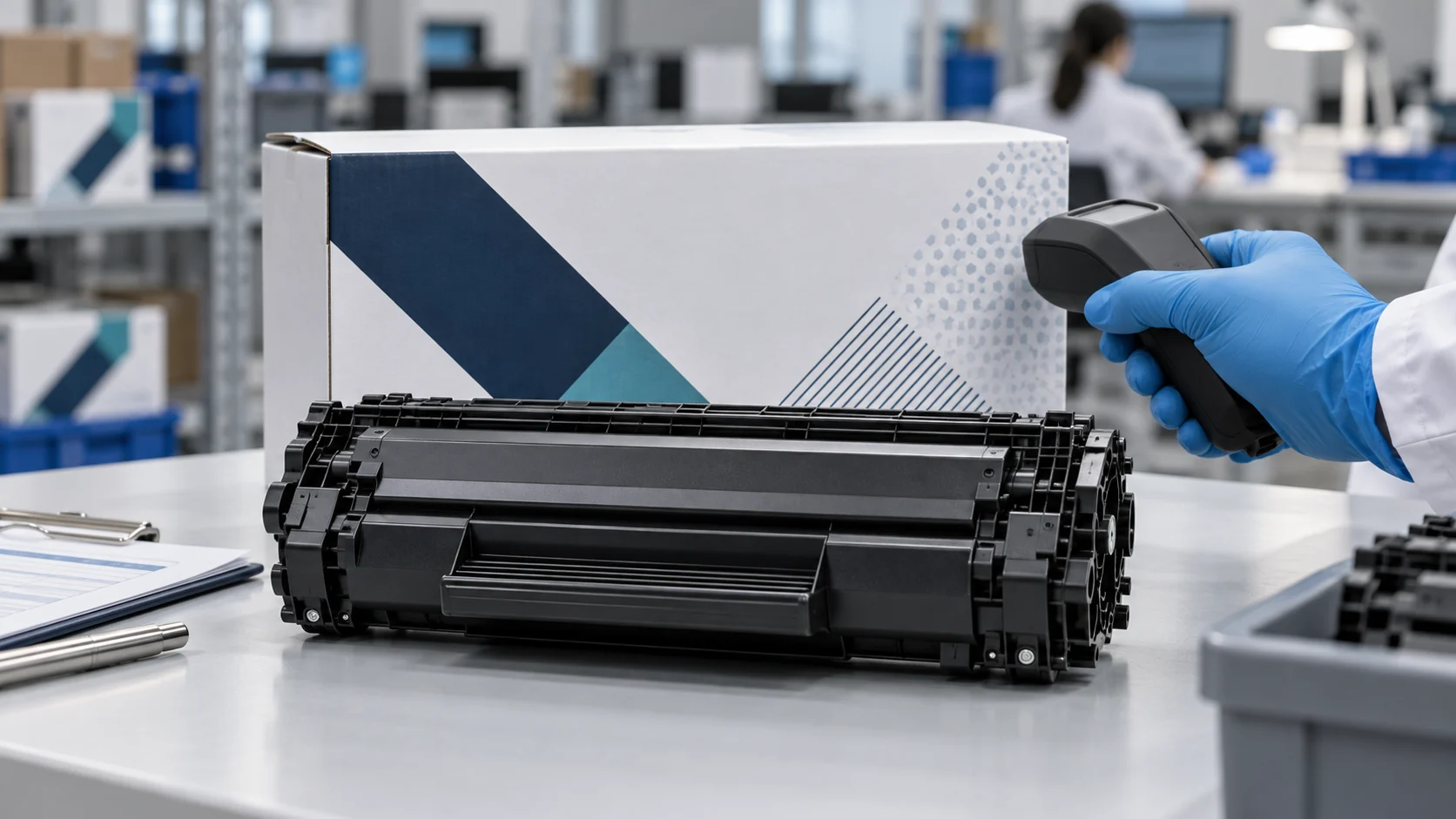
Executive Decision Overview: Luxury cosmetic houses, skincare conglomerates, and niche fragrance brands face a constant conflict between security enforcement and minimalist design. Applying obtrusive exterior security stickers disrupts premium packaging aesthetics, soft-touch coatings, and hot-stamped foil finishes. Furthermore, authorized contract packaging converters (CMOs) frequently overproduce excess unprinted components for illicit distribution. This technical guide explains how invisible security overprint varnishes (OPV) and microscopic covert codes protect folding cartons, acrylic caps, and glass flacons with zero optical interference.
The Luxury Dilemma: High-Security Verification vs. Pristine Packaging Aesthetics
In high-end perfumery, prestige skincare, and boutique cosmetic packaging, visual presentation is inseparable from brand value. Packaging design directors invest heavily in custom Pantone pastels, tactile matte soft-touch coatings, metallic micro-embossing, and heavy-walled transparent acrylic closures. In this luxury context, mandatory anti-counterfeiting features often encounter fierce internal resistance from creative marketing teams.
Applying conventional overt security labels—such as rainbow holographic stickers, metallic void seals, or large high-contrast QR codes—creates visual clutter on minimalist packaging faces. More critically, exterior labels can peel when exposed to essential oils, fatty acid esters, and alcoholic perfume essences that frequently migrate to container surfaces during consumer use. When adhesive labels lift or bubble, consumers perceive the product as damaged or cheapened.
Packaging engineers and brand protection directors require an authentication mechanism that delivers forensic-grade security while remaining 100% invisible under daylight, retail LED spotlights, and vanity table lighting. This is accomplished by blending specialized ultra-covert invisible anti-counterfeiting ink taggants directly into clear overprint varnishes (OPV), UV curable lacquers, or hot-stamped protective coats during standard carton and bottle converting runs.
Overcoming Subcontractor Overproduction and Packaging Component Leaks
A major vulnerability in global cosmetics supply chains is unauthorized third-party manufacturing overproduction. Prestige brands typically outsource folding carton printing, injection molding of lipstick cases, and glass flacon manufacturing to contract manufacturing organizations (CMOs) across multiple jurisdictions. Unscrupulous contract factories often run “night shifts,” producing authentic-spec surplus packaging components and selling them to counterfeit syndicates who fill them with illicit, unapproved chemical formulations.
Because these counterfeit products utilize genuine packaging components produced on authentic factory tooling, visual packaging audits fail completely. The only way to detect and legally prosecute unauthorized overproduction is to establish strict, proprietary material control over the printing chemical supply chain.
By supplying certified contract printers with proprietary covert varnishes carrying batch-specific molecular signatures, brand owners can audit retail stock globally. During market surveillance, auditors instantly distinguish between authorized, royalty-paid production runs and illicit ghost-shift packaging lacking the proprietary covert taggant formula.
Technical Comparison: Luxury Cosmetics Authentication Technologies
The table below provides a structured decision framework for packaging developers evaluating security integration across luxury folding cartons, glass flacons, and molded compacts:
| Evaluation Parameter | Conventional Holographic Security Label | Standard UV Fluorescent Print (365 nm) | Mina Covert Invisible OPV & Micro-Chain Code |
|---|---|---|---|
| Visual Interference on Luxury Finish | High (covers brand art, disrupts soft-touch texture). | Moderate (leaves faint yellowish hue on white cartons). | Zero Interference (100% transparent; preserves delta-E color). |
| Resistance to Cosmetic Oils & Alcohol | Low (adhesives dissolve in essential oils and ethanol). | Moderate (organic dyes can bleed into solvents). | High (inorganic crystal structure; solvent/oil inert). |
| Counterfeiting Replication Risk | High (hologram replicas readily available online). | Very High (widely duplicated with commercial blacklights). | Near-Zero (narrow-band excitation; invisible to blacklights). |
| Contract Factory Overproduction Control | Low (extra labels can be stolen or diverted). | Low (common fluorescent inks easily acquired locally). | Strict Proprietary Control (batch-serialized taggant allocation). |
| Field Inspection Cycle Time | Visual check only (subject to counterfeit lookalikes). | Requires UV blacklight inspection in darkened room. | Instant 0.5s Pass/Fail via handheld Mina optical reader. |
Chemical Formulations and Rheological Compatibility on High-Speed Presses
Luxury cosmetic packaging utilizes demanding converting processes, including Heidelberg sheet-fed offset printing, Bobst high-speed die-cutting, automated foil stamping, and offline UV roller coater applications. Any functional additive must integrate seamlessly without altering press chemistry or causing micro-foaming on delicate paperboards (such as SBS bleached virgin board or metallized polyester board).
Mina’s covert inorganic materials are engineered with ultra-fine sub-micron particle sizing (D50 < 1.2 μm), ensuring complete dispersion in:
- UV-Curable Radical Overprint Varnishes (OPV): High curing reactivity under standard mercury vapor and LED-UV lamps (385 nm–395 nm) without inhibiting surface slip or scratch resistance.
- Water-Based Barrier Coatings: Clean emulsion compatibility for eco-friendly, plastic-free luxury folding cartons and FSC-certified paperboards.
- Screen-Printing Enamels & Ceramic Decals: High-opacity, precise registration for printing directly onto luxury glass perfume flacons and heavy glass cream jars.
- Polymer Masterbatch for Caps & Compacts: Direct compounding into Surlyn, PMMA, and ABS resins for molded luxury closures and lipstick barrels.
Because the concentration of active inorganic taggants is maintained at low loading levels (typically 0.3% to 1.5% by weight), the formulation preserves pristine optical clarity, high gloss (>90 GU at 60°), and flawless hot-stamping foil receptivity.
Field Enforcement Protocol: Channel Audits and Anti-Diversion Intelligence
Luxury cosmetic brands face extensive grey-market diversion, where goods allocated to specific duty-free regions or authorized salon networks are illicitly diverted to unauthorized e-commerce discount platforms. This damages brand equity and creates friction with flagship retail partners.
1. Covert Micro-Chain Code Serialization
By embedding covert micro-chain codes into the varnish layer, brand owners serialize individual cartons or master shippers without altering visual packaging graphics. The microscopic pattern cannot be detected or scraped off by rogue distributors attempting to sanitize batch tracking numbers.
2. Handheld Multi-Spectral Verification
Market surveillance auditors equipped with Mina handheld optical detectors can scan shelves in authorized department stores or grey-market retail boutiques. Within a single second, the device reads the encrypted optical signal, verifying genuine manufacturing origin and instantly revealing the intended distribution territory.
Technical Due Diligence: Questions for Packaging Engineers Before Sampling
Before initiating pilot trials with folding carton converters and component suppliers, procurement managers should clarify several critical engineering parameters:
Engineering Checklist for Cosmetic Covert Varnish Trials
- Varnish Base Chemistry: Identify exact press varnish type (UV radical, LED-UV, cationic UV, water-based acrylic, or solvent-based lacquer).
- Substrate Surface Energy: Verify dyne levels on target substrates (e.g., metallized PET foil laminates, soft-touch matte films, or uncoated textured paperboards) to guarantee cross-hatch adhesion (ASTM D3359 5B rating).
- Regulatory & Allergen Compliance: Confirm that taggants comply with EU Cosmetics Regulation (EC) No 1223/2009, US FDA guidelines, and standard Proposition 65 heavy metal thresholds.
- Post-Print Converting Operations: Verify that the cured covert varnish layer supports downstream embossing, foil stamping, folding-gluing, and window patching without flaking or cracking.
Structuring a Commercial Validation Pilot
A structured validation roadmap ensures seamless qualification across global contract manufacturing networks:
- Phase 1: Laboratory Proof of Concept (Drawdowns): Execute laboratory Meyer rod drawdowns on target production board stocks. Measure optical transmission, color delta-E shift (ΔE < 0.5 target), gloss retention, and rub resistance (ASTM D5264 Sutherland rub test >500 cycles).
- Phase 2: Commercial Press Trial Run: Blend covert taggant concentrate into commercial varnish reservoirs during a standard 10,000-sheet production run. Confirm press stability at production speeds (>12,000 sheets/hour), verify drying rates, and check die-cutting tolerance.
- Phase 3: Global Retail Audit Validation: Distribute marked commercial cosmetic cartons across representative retail lighting environments. Validate detector read reliability under bright daylight, fluorescent store fixtures, and low-light boutique counters.
Safeguard Your Luxury Cosmetics Line Without Aesthetic Compromise
Eliminate obtrusive security labels while establishing impenetrable overproduction control and anti-diversion intelligence. Contact Mina’s technical packaging team to evaluate covert overprint varnishes and request custom laboratory drawdowns.