Executive Decision Overview: Entertainment IP licensors, designer toy conglomerates, and anime merchandise brand owners face severe revenue under-reporting and illicit overproduction from authorized contract manufacturing organizations (CMOs) and regional licensees. In blind box and limited-edition figure distribution, market surveillance auditors cannot tear open sealed, foil-bagged collector packaging without destroying secondary retail value ($50–$500 per unit). Furthermore, conventional holographic stickers are routinely forged or siphoned by licensees to disguise unauthorized production runs. This technical guide explains how non-destructive covert micro-chain codes and invisible overprint varnishes enable sealed-box field authentication and strict royalty quota enforcement.
The Licensing Vulnerability: Under-Reported Royalties, Ghost Runs, and Sealed Blind Boxes
Global intellectual property (IP) licensing across entertainment franchises, anime brands, gaming properties, and art toy collectibles generates hundreds of billions of dollars annually. To monetize character IP, brand owners license visual assets to hundreds of third-party merchandise manufacturers across categories including vinyl blind boxes, injection-molded action figures, plush toys, apparel, and trading merchandise.
This decentralized manufacturing ecosystem introduces two catastrophic commercial risks for IP licensors:
- Licensee Overproduction & Royalty Under-Reporting: A licensee contracts to produce 100,000 units of a limited-edition collectible figure and pays corresponding IP royalties. However, the licensee runs 250,000 units on authorized factory tooling, reporting only the contractual baseline while selling the additional 150,000 units through secondary e-commerce channels and unauthorized distributor networks.
- The “Blind Box” Inspection Dilemma: In modern pop-culture retail, collectible figurines are packaged inside opaque, foil-sealed internal bags enclosed within sealed outer cardboard blind boxes. Once an outer box tear-strip or inner foil is opened, the item transitions from a pristine “mystery collectible” to an opened commodity, wiping out 60% to 90% of its secondary market retail value. Brand protection auditors and customs agents cannot physically open packaging to inspect inner figurines without causing immense commercial inventory destruction.
To audit retail shelves globally without destroying collectible inventory, IP brand directors require non-destructive covert IP authentication technologies that enable rapid, through-the-box verification while enforcing rigid, material-level royalty production quotas.
Why Conventional Holographic Licensing Stickers Fail Modern Audit Scenarios
For decades, the standard licensing governance mechanism has been the physical holographic security sticker (often incorporating generic rainbow diffractive patterns and serialized sequential numbers). In modern pop-culture merchandising, this approach has collapsed under several operational vulnerabilities:
- Licensee Sticker Hoarding & Diversion: Dishonest licensees frequently purchase genuine security stickers from official label vendors under the pretext of “manufacturing scrap replacement” and apply them to unauthorized overproduced goods.
- Precision Sticker Slicing & Transfer: High-value limited-edition packaging stickers are delicately sliced from low-tier merchandise using thermal scalpels and transferred onto expensive fake resin statues or rare collectible figures.
- Optical Cloning via Commercial Embossing: Commercial holographic foil embossers readily copy 2D/3D holographic imagery, producing visual lookalikes that fool casual retail consumers and store clerks who lack optical microscopes.
To restore integrity to IP brand governance, licensors are transitioning from peelable exterior stickers to multi-layered covert micro-chain codes integrated directly into the packaging print run and figure molding resin.
Micro-Chain Code Technology: High-Density Forensic Encoding at Microscopic Scales
Mina’s proprietary Micro-Chain Code technology combines physical microscopic structuring with advanced cryptographic algorithms, creating a high-density, covert anti-counterfeiting identifier that can be printed across microscopic packaging zones (e.g., within character graphic linework, barcode borders, or clear protective varnishes).
The technical architecture operates on several core principles:
- Micro-Scale Physical Footprint ($< 0.5\ \text{mm}^2$): The micro-chain code consists of complex micro-structural arrays with feature resolutions below 20 μm, rendering it completely un-copiable by standard commercial digital printing presses or high-resolution plate-setters (which max out at 2400–4800 DPI).
- Algorithmic Anti-Copy Distortion: If a counterfeiter attempts to scan or photograph the packaging under optical microscopes, optical diffraction and aliasing deliberately corrupt the mathematical micro-chain structure, preventing algorithmic reconstruction.
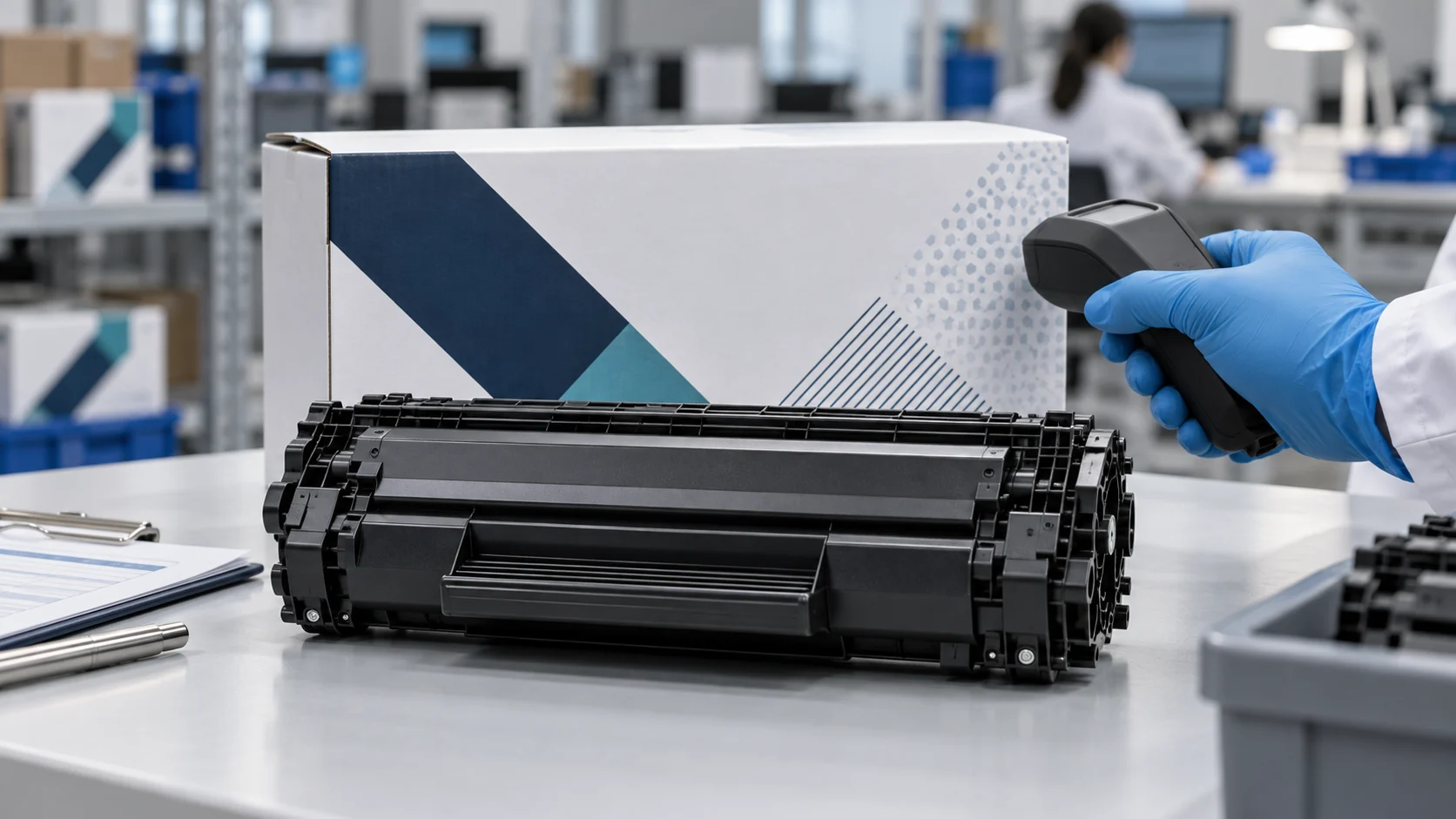
- Non-Destructive Exterior Scanning: The code is printed using specialized invisible infrared-responsive or UV up-converting inks. Field auditors place a Mina handheld optical reader against the exterior of the sealed blind box. The device excites the microscopic code through the paperboard or outer shrink wrap in 0.5 seconds, decoding the embedded royalty license ID without breaking the factory seal.
Technical Comparison: IP Licensing Authentication Solutions
The matrix below compares performance metrics across methods used by global entertainment licensors to enforce brand protection and royalty quotas:
| Evaluation Dimension | Conventional Holographic Licensing Sticker | Exterior Serialized 2D QR Code | Mina Covert Micro-Chain & In-Mold Tagging |
|---|---|---|---|
| Non-Destructive Blind Box Audit | Requires visual sticker check (fails if sticker is cloned). | Scannable, but public QR codes are easily cloned online. | Instant Non-Destructive Scan through sealed box / shrink wrap. |
| Resistance to Licensee Overproduction | Low (licensees buy extra generic stickers or falsify scrap). | Low (QR code ranges can be duplicated on cloned boxes). | Strict Material Quota Enforcement via proprietary ink allocation. |
| Figure-Level (Toy Body) Authentication | None (stickers cannot be applied to small vinyl toys). | Laser QR on toy base alters aesthetic & collector value. | In-Mold Covert Polymer Masterbatch in vinyl/PVC figure body. |
| High-Resolution Copy Resistance | Low (holograms replicated by commercial foil embossers). | Zero (static QR codes copied with standard digital printers). | Forensic Grade (microscopic structural aliasing defeats 4800 DPI scans). |
| Field Inspection Speed & Accuracy | Subjective visual check (high error rate). | Requires smartphone internet connectivity & cloud lookup. | 0.5s Offline Objective Pass/Fail via Mina Handheld Reader. |
Multi-Layered Governance: Packaging Level vs. Figure-Level Material Authentication
To achieve total lifecycle protection across primary retail and secondary collector markets, leading IP brand owners implement a dual-layer authentication hierarchy:
1. Outer Packaging Layer: Covert Micro-Chain Varnish
Applied directly onto blind box folding cartons or backing blister cards during commercial offset printing. This layer carries the encrypted Licensee ID, Production Batch Code, and Authorized Territory Key. Field auditors scan retail shelves in major shopping malls and pop-up stores to immediately detect unauthorized distributor leakage.
2. Inner Toy Body Layer: In-Mold Vinyl/PVC Masterbatch
For high-value designer figures ($100–$2,000 statues), Mina’s covert plastic masterbatch is compounded directly into the vinyl (rotocasting) or ABS/PVC (injection molding) resin. In secondary collector disputes or auction authentications, appraisers scan the bare figure foot or back with a handheld probe, proving genuine factory casting even if the original box has been lost.
Royalty Quota Enforcement & Supply Chain Governance Workflow
Implementing Micro-Chain Code technology allows IP licensors to transform brand protection from a reactive policing effort into an automated financial governance system:
- Royalty-Matched Material Allocation: When a licensee signs an agreement for 50,000 collectible units, the licensor authorizes the shipment of the exact volume of proprietary covert ink or micro-chain printing plates required for that run. If the licensee attempts to produce 100,000 units, the excess 50,000 units will either lack the covert identifier entirely or register an invalid cryptographic signature.
- Global Retail Field Audits: Brand enforcement agents and third-party audit firms equipped with encrypted Mina handheld readers visit authorized retail chains, comic conventions, and specialty collectible shops. Auditors scan sealed merchandise displays at a rate of 30 to 50 boxes per minute.
- Automated Breach Notification: If unauthorized production batches or diverted regional SKUs are detected, the handheld scanner automatically geotags the incident, captures device timestamps, and uploads forensic evidence to the licensor’s legal portal to initiate contractual breach penalties.
Procurement Guidelines: Engineering Due Diligence Checklist
Before standardizing covert micro-chain codes across global licensee style guides, IP licensing operations managers should verify the following technical parameters:
Engineering Checklist for IP Licensing Authentication Trials
- Packaging Print Process Compatibility: Verify that micro-chain code vector files integrate cleanly into licensee offset, flexographic, or gravure packaging prepress workflows (Cylinder/Plate resolution ≥ 2400 DPI).
- Non-Destructive Signal Transmission: Confirm that covert optical signals penetrate through standard blind box substrates (e.g., 350 gsm SBS paperboard, matte lamination films, and PET blister windows).
- Toy Safety Compliance: For figure-level resin masterbatch, verify 100% compliance with international toy safety standards, including EN 71-3 (Migration of certain elements), ASTM F963 (Standard Consumer Safety Specification for Toy Safety), and CPSIA phthalate limits.
- Licensee Training & Prepress Auditing: Provide certified prepress digital separation files and clear quality control tolerance guidelines to licensee packaging printers.
Structuring a 3-Phase IP Licensing Rollout Roadmap
IP brand owners should follow a disciplined phased deployment across tier-1 licensees before global contract mandate:
- Phase 1: Prepress Calibration & Print Proofing: Supply encrypted micro-chain vector assets to designated master packaging printers. Execute press proofing runs on 350 gsm SBS board; measure line sharpness, optical contrast, and reader decodability under 50× optical magnification.
- Phase 2: Flagship Product Launch Pilot (100,000 Blind Boxes): Deploy covert micro-chain coding on a major seasonal blind box series across 500 retail stores. Benchmark auditor scanning cycle times on sealed retail shelves and verify 100% read reliability.
- Phase 3: Global Licensee Contract Mandate: Incorporate mandatory covert micro-chain ink specifications into all standard IP licensing agreement templates, establishing automated royalty reconciliation across all global licensees.
Protect Your IP Royalties and Safeguard Collector Trust
Eliminate licensee overproduction and audit sealed collectible blind boxes without destroying retail packaging value. Consult with Mina’s IP brand protection engineering specialists to evaluate Micro-Chain Code solutions and request sample proofing sheets for your licensing program.