Executive Decision Overview: Power utilities, railway infrastructure EPCs, and cable manufacturers face severe legal and fire safety liabilities when fraudulent subcontractors substitute certified Low Smoke Zero Halogen (LSZH) and cross-linked polyethylene (XLPE) power cables with cheap, flammable PVC knockoffs. Because external surface ink-jet meter marks can be wiped with solvent, ground off, or reprinted with fake UL/BASEC certification marks, surface inspection is inadequate on active construction sites. This technical guide evaluates how polymer-integrated covert masterbatch (0.5%–2.0% addition rate) embeds a permanent molecular fingerprint directly into the cable jacket during extrusion.
The Infrastructure Risk: Substandard Wire & Cable Spec Substitution
In high-density commercial construction, transit tunnels, power grid substations, and industrial manufacturing plants, electrical power and control cables must adhere to strict fire safety, thermal performance, and smoke toxicity standards (such as IEC 60332-1, IEC 60754-1, and UL 1685). Certified Low Smoke Zero Halogen (LSZH) jackets and Cross-Linked Polyethylene (XLPE) insulations are engineered to self-extinguish without emitting acidic, corrosive halogen gases during electrical arc faults.
However, the wire and cable industry is plagued by pervasive grey-market substitution. Fraudulent distributors and cost-cutting contractors frequently purchase substandard cables formulated with inferior recycled PVC, undersized copper conductors, and flammable plasticizers. They utilize commercial solvent-resistant ink-jet printers to apply counterfeit brand logos, falsified BASEC/UL certification numbers, and continuous meter markings along the jacket.
When an electrical fire occurs, these counterfeit cables rapidly propagate flames and release lethal hydrogen chloride (HCl) smoke. For cable manufacturers and utility procurement directors, the inability to quickly prove authentic supply chain provenance during construction acceptance or forensic fire investigations creates catastrophic financial and legal liability.
Why Exterior Surface Markings Fail in Electrical Field Installations
Traditional wire and cable authentication relies primarily on surface-printed text, laser indentation, or external adhesive drum tags. These methods possess fundamental engineering vulnerabilities under construction site conditions:
- Mechanical Pulling Abrasion: During cable pulling through concrete conduits and underground cable trays, high friction and pulling tension scrape away surface ink-jet markings, rendering serial numbers and certification codes illegible.
- Solvent & Alcohol Wiping: Counterfeiters easily wipe genuine manufacturer markings using acetone or MEK solvents and re-print fraudulent branding and higher voltage ratings.
- Cut-Length & Drum Segregation: Once a 1,000-meter master wooden cable drum is cut into smaller 50-meter or 100-meter drops for individual building risers, the original drum label and warranty certificate are disconnected from the installed hardware.
To eliminate these vulnerabilities, cable manufacturers are moving from surface-applied text to extrusion-grade anti-counterfeiting plastic masterbatch, embedding the security feature uniformly throughout the entire cross-sectional depth of the polymer jacket.
Polymer Masterbatch Integration: Continuous Extrusion from 160°C to 280°C
Mina’s anti-counterfeiting plastic masterbatch is engineered specifically for high-speed continuous cable jacketing and core insulation extrusion lines. The functional security taggants consist of sub-micron inorganic rare-earth crystal structures pre-dispersed into compatible carrier resins (such as LDPE, LLDPE, EVA, or universal polyolefin carriers).
During the cable manufacturing process:
- Dosing & Blending: The anti-counterfeiting masterbatch is dosed directly into the extruder hopper at a controlled addition ratio of 0.5% to 2.0% by weight alongside standard color masterbatch (black, red, blue, or grey) and flame-retardant additive packages.
- Extrusion Rheology: As the polymer melts across extruder zones (typically 160°C to 240°C for polyolefins and up to 280°C for specialized fluoropolymers), the covert taggants achieve complete, homogeneous distribution across the melt without clumping or altering melt flow index (MFI).
- Zero Die Build-Up: The sub-micron particle sizing ($D_{50} < 1.5\ \mu\text{m}$) ensures zero abrasion to the extruder screw, barrel, or crosshead tooling, and causes no die lip buildup during continuous multi-kilometer extrusion runs.
Once cooled in the water trough, every millimeter of the cable jacket—from outer surface to inner interface—contains the permanent molecular security signature. The cable can be cut, scraped, stripped, or bent without ever losing its authentic identity.
Technical Comparison: Cable Authentication Technologies
The matrix below compares performance metrics across cable authentication methods utilized in infrastructure projects:
| Technical Parameter | Surface Ink-Jet / Laser Marking | External Adhesive Drum RFID Tag | Mina In-Jacket Covert Masterbatch |
|---|---|---|---|
| Durability Under Pulling Friction | Low (text wears off in rough conduits). | Zero on-cable retention (stays on wooden drum). | Permanent (distributed across entire jacket wall thickness). |
| Resistance to Solvent Alteration | Very Low (wiped with acetone or MEK). | N/A (removed once cable is unspooled). | Immune (inorganic taggant trapped inside cross-linked polymer). |
| Cut-Length Verification | Fails if cut section lacks visible text. | Fails once cable is removed from drum. | 100% Verifiable at Any Cut Point or exposed end. |
| Impact on Electrical Properties | None. | None. | Zero Impact on dielectric breakdown or insulation resistance. |
| Impact on Flame Retardancy (LSZH) | None. | None. | Maintains IEC 60332-1 / UL 94 V-0 flame & smoke ratings. |
| Field Inspection Tool | Visual text check (easily faked). | RFID scanner (restricted to warehouse drum). | Mina Handheld Spectral Reader (instant on-site confirmation). |
Electrical, Mechanical & Flame-Retardant Compliance Verification
A critical requirement for cable engineering teams is verifying that functional masterbatch additives do not compromise mandatory mechanical or electrical compliance standards. Extensive laboratory testing confirms that Mina covert masterbatch formulations at 1.0% loading maintain strict compliance with international electrical specifications:
1. Electrical & Dielectric Integrity
- Volume Resistivity: Maintains $>10^{14}\ \Omega\cdot\text{cm}$, meeting IEC 60093 standards.
- Dielectric Breakdown Voltage: Zero reduction in AC/DC withstand voltage ratings across XLPE core insulations.
- Thermal Aging (IEC 60811): Zero degradation in tensile strength and elongation at break after 168 hours at 135°C.
2. Fire & Toxicity Compliance
- Smoke Density (IEC 61034-2): Light transmittance remains $>60\%$ during vertical flame testing.
- Halogen Acid Gas Emission (IEC 60754-1): Zero halogen content ($<0.5\%$ HCl/HF), preserving full LSZH designation.
- Limiting Oxygen Index (LOI): Preserves base resin LOI ratings ($>32\%$ in flame-retardant compounds per ASTM D2863).
On-Site Field Inspection Protocol for Utility Inspectors and EPCs
On large construction sites—such as solar farms, data centers, or subway tunnels—utility quality inspectors can audit installed cables without cutting power or destroying active lines:
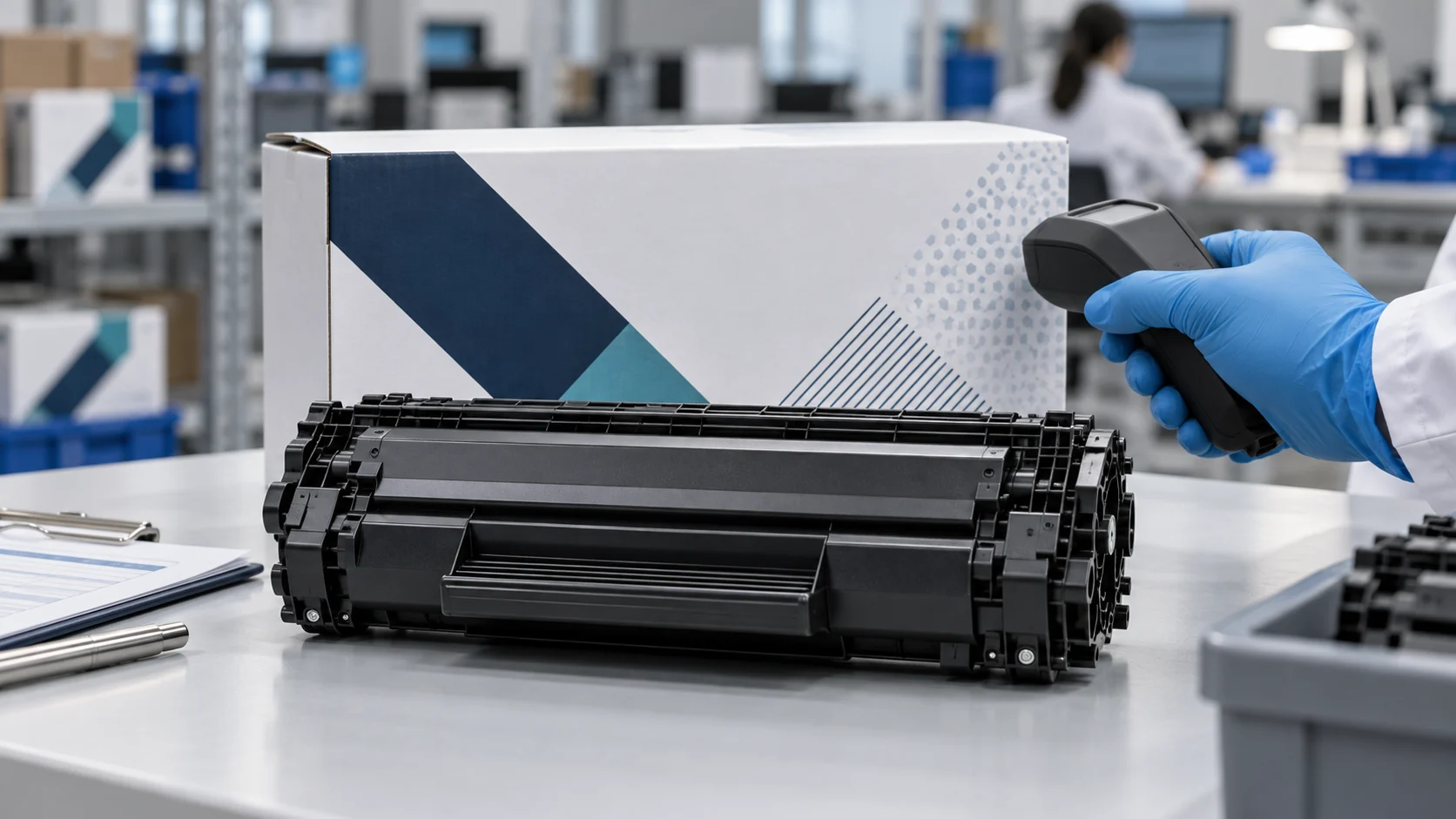
- Point-and-Scan Verification: The inspector places the optical aperture of the Mina handheld reader against the outer cable sheath or cut cable end.
- Multi-Spectral Excitation: The reader emits a calibrated narrow-band optical pulse. The inorganic taggants embedded in the polymer matrix respond with a distinctive spectroscopic emission curve.
- Instant Pass/Fail Result: Within 0.5 seconds, the detector emits a green LED confirmation and displays the authentic manufacturer code on its digital screen. If the cable is a counterfeit PVC substitute, the device alerts the auditor immediately.
Procurement Guidelines: Masterbatch Specification Checklist
When preparing technical specifications for cable jacketing compounders or internal extrusion lines, procurement and compound development engineers should verify:
Engineering Checklist for Cable Masterbatch Trials
- Base Polymer Carrier Match: Specify identical carrier chemistry (e.g., LLDPE carrier for PE jackets, EVA carrier for LSZH flame-retardant compounds) to ensure 100% melt compatibility and zero phase separation.
- Processing Temperature Range: Confirm taggant thermal stability exceeds maximum extruder profile temperatures (typically 180°C–240°C for polyolefins).
- Environmental Stress Crack Resistance (ESCR): Verify ASTM D1693 compliance (condition B, 50°C Igepal) to ensure no jacket embrittlement in underground wet conditions.
- Lot Serialization & Custody Control: Require the masterbatch supplier to provide batch test certificates with verified spectral response benchmarks for every shipment.
Structuring a 3-Phase Extrusion Trial and Acceptance Roadmap
Cable manufacturers should implement a disciplined qualification protocol before transitioning to full commercial compounding:
- Phase 1: Laboratory Compound Plaque Testing: Blend 1.0% masterbatch into virgin base resin; compression mold 2 mm test plaques. Execute ASTM D638 tensile testing, UL 94 vertical flammability tests, and optical reader baseline calibration.
- Phase 2: Pilot Extrusion Line Trial (500-Meter Run): Dose masterbatch on an industrial 90 mm or 120 mm continuous jacketing extruder at normal line speeds (30–80 m/min). Inspect for surface smoothness, die pressure stability, and crosshead temperature uniformity.
- Phase 3: Field Simulation & Tensile Pull Testing: Subject extruded cable samples to mechanical friction pulling through 90-degree steel conduit bends. Verify 100% optical authentication read rates on both scratched outer surfaces and cut cross-sections.
Protect Your Infrastructure Projects from Substandard Cable Substitution
Ensure foolproof cable authenticity from factory extrusion to on-site terminal connections. Contact Mina’s technical materials engineering team to evaluate plastic masterbatch formulations and request sample compound pellets for your extrusion trials.