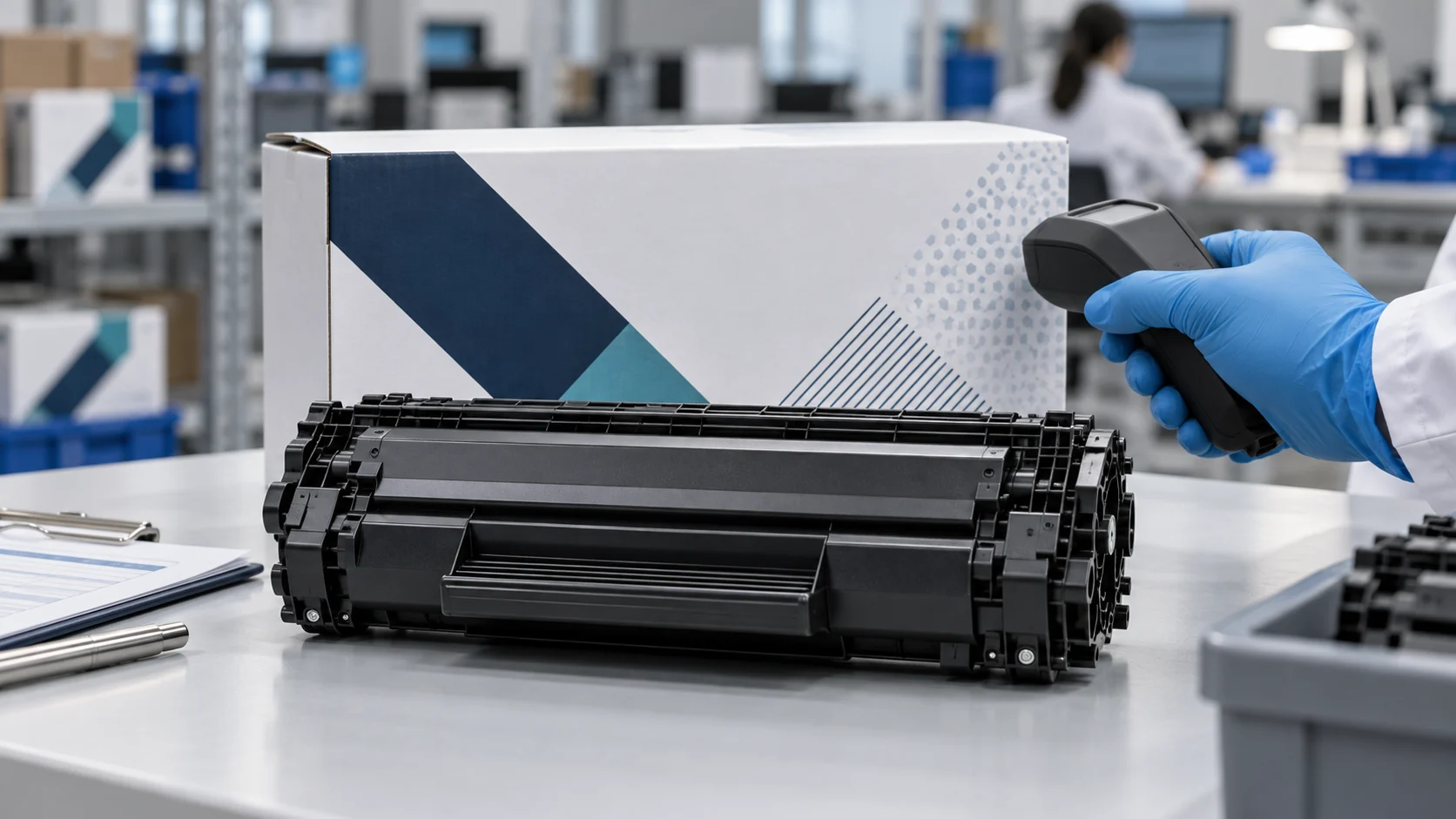
Executive Decision Overview: Global athletic footwear brands, luxury sneaker houses, and licensed sportswear conglomerates face tens of millions of dollars in annual revenue leakage and brand equity erosion caused by contract manufacturing organizations (CMOs) running unauthorized “ghost shifts,” component siphoning, and high-fidelity clone uppers. In limited-edition sneaker drops, basketball shoes, and high-performance running footwear ($150 to $2,000+ per pair), brand licensors traditionally rely on tongue sizing tags, shoebox barcode labels, or paper hangtags. However, automated computerized stitching machinery and digital thermal transfer printers effortlessly replicate authentic tongue labels, UPC shoebox stickers, and holographic hangtags. Furthermore, external hangtags and RFID zip-ties are immediately removed upon retail purchase or discarded during wear. Inside the active shoe cavity, footbed insoles endure punishing biomechanical friction (Martindale abrasion >50,000 cycles per ISO 20344), acidic human sweat exposure (lactic acid and urea at pH 4.5–5.5), and dynamic bodyweight compression up to 3.0 MPa, causing conventional printed logos and basic fluorescent inks to smudge, dissolve, or flake away within weeks. This comprehensive engineering guide examines how screen-printed covert inorganic security inks—applied directly over OrthoLite EVA/PU footbed insoles, tongue fabric labels, and Strobel board linings—withstand extreme in-shoe abrasion and perspiration while enforcing rigid material-level OEM production quotas.
The Sneaker Licensing Dilemma: Unauthorized Factory Runs, Cloned Tongue Tags, and Resale Market Fraud
The global athletic footwear and luxury sneaker market has expanded into a massive global retail sector and liquid secondary collector asset class. Leading sportswear giants, designer fashion houses, and celebrity collaborative brands design high-performance footwear silhouettes and license production to third-party Original Equipment Manufacturer (OEM) assembly plants across Vietnam, Indonesia, China, and Cambodia.
However, this decentralized, high-volume manufacturing model creates severe intellectual property and supply chain governance challenges for brand protection executives:
- Unauthorized Factory Overproduction (“The Ghost Shift”): An authorized contract assembly plant receives an official brand purchase order to manufacture 100,000 pairs of a highly anticipated limited-edition running shoe. After fulfilling the contractual 100,000 units, the factory operates unauthorized overnight shifts using genuine upper tooling, leftover EVA/TPU midsole foam, and original sole molds to produce an additional 40,000 un-contracted pairs. These unauthorized “unauthorized authentic” (UA) pairs are diverted into secondary marketplace channels and global e-commerce platforms without royalty remittance.
- High-Precision Tongue Tag & Packaging Cloning: Counterfeiters and rogue trim suppliers easily acquire industrial thermal transfer barcode printers and ultrasonic fabric label cutters. They flawlessly duplicate inner tongue sizing labels, factory date stamps, country-of-origin typography, and shoebox UPC labels, rendering visual authentication by retail staff or customs agents completely ineffective.
- Post-Purchase Evidence Destruction: Traditional retail packaging features—such as shoebox labels, paper hangtags, and plastic RFID security zip-ties—are detached immediately after purchase. When a customer returns a counterfeit pair inside an authentic shoebox to a retail department store, or when secondary sneaker consignment platforms (e.g., StockX, GOAT, Flight Club) authenticate pre-owned sneakers, all external packaging evidence is absent.
To eliminate reliance on easily faked paper boxes and superficial tongue tags, footwear brand owners must implement direct-on-component covert chemical authentication by silk-screen printing proprietary invisible security inks directly onto the permanent footbed insole, insole fabric topcloth, or internal Strobel lining.
Why Conventional Footwear Anti-Counterfeiting Fails Inside the Shoe Cavity
Attempting to integrate security features inside athletic footwear involves navigating one of the most hostile micro-environments in consumer goods. Footwear brand owners have experimented with various security methods, but most fail under athletic wear conditions:
- Acidic Human Perspiration & Salt Degradation: During athletic activity, human feet release up to 200 ml of moisture per hour, containing lactic acid, urea, sodium chloride ($NaCl$), and fatty acids at an acidic pH of 4.5 to 5.5. Standard organic fluorescent security dyes (which glow under 365 nm blacklights) undergo chemical protonation and hydrolytic breakdown in acidic sweat, turning completely inert and invisible to UV detectors within 10 to 20 wear hours.
- Extreme Biomechanical Shear & Martindale Abrasion: Under repetitive running and jumping impacts, the human heel and forefoot generate dynamic contact pressures exceeding 2.0 to 3.0 MPa combined with high-frequency shear friction against the insole topcloth. Standard screen-printed silicone inks, plastisols, and direct thermal transfer prints suffer severe micro-cracking, flaking, and abrasive erasure ($<10,000$ Martindale cycles per ISO 20344).
- Mechanical Crushing of In-Sole RFID / NFC Microchips: Flexible RFID transponders or NFC antenna inlays embedded inside polyurethane (PU) or ethylene-vinyl acetate (EVA) foam insoles suffer high failure rates. Cyclic dynamic heel impact forces (exceeding 2 to 3 times user bodyweight per step) rapidly fracture brittle silicon IC microchips and snap delicate copper antenna wire bonds.
- Commercial 365 nm UV Blacklight Duplication: Organic fluorescent inks emitting visible neon green or red light under commercial 365 nm UV lamps are readily purchased by counterfeit trim suppliers from commercial screen-printing markets, allowing illicit factories to mimic basic UV security checks effortlessly.
To establish durable, multi-year product verification, footwear brand owners require covert security inks formulated with chemically inert inorganic crystal taggants compounded into highly elastic, cross-linked polyurethane and acrylic textile polymer vehicles.
Insole Silk-Screen Covert Ink Chemistry: Polyurethane Vehicles & Inorganic Taggants
Mina’s footwear-grade security ink architecture combines sub-micron, thermally stable inorganic rare-earth crystal taggants ($D_{50} < 0.6\ \mu\text{m}$) with high-elongation, water-based aliphatic polyurethane (PU) and polycarbonate-polyurethane hybrid textile vehicle binders.
During the insole and trim manufacturing process:
- Direct Silk-Screen Printing over Insole Topcloth: The covert ink is applied as a discrete screen-printing pass directly over the woven polyester, recycled rPET mesh, or brushed nylon insole topcloth using monofilament polyester mesh (100–120 threads/cm / 250–305 mesh). The ink penetrates the fibrous capillary structure of the fabric, mechanically locking around individual yarn filaments without altering insole moisture-wicking porosity.
- Micro-Chain Code & Covert Brand Logo Integration: The ink can be printed as an invisible solid overprint across the brand’s visible heat-transferred heel logo, or printed as a microscopic serialized dot-matrix code or micro-chain identifier directly onto the raw EVA/PU foam underside.
- Thermal Cross-Linking (120°C–140°C Curing): Following screen printing, the decorated insole rolls pass through an infrared curing tunnel at 130°C to 140°C for 90 to 120 seconds. Specialized polycarbodiimide cross-linking agents form a tight 3D polymer matrix that shields the inorganic crystal taggants from sweat immersion and abrasive friction.
Because the active taggants are inorganic crystal structures rather than organic fluorescent dyes, they do not photobleach under ambient light, do not dissolve in sweat electrolytes, and remain 100% dark under standard 365 nm UV blacklights, responding exclusively to proprietary narrow-band infrared excitation.
Technical Comparison: Athletic Footwear Authentication Technologies
The matrix below compares technical performance metrics across methods used by leading athletic footwear and sneaker brands to authenticate shoes and prevent unauthorized OEM overproduction:
| Performance & Durability Metric | Tongue Sizing Tag & Box Barcode | Embedded In-Sole RFID / NFC Tag | Mina In-Sole Covert Screen-Printed Ink |
|---|---|---|---|
| Resistance to OEM Ghost-Shift Overproduction | Zero (factory prints identical labels). | Low (extra RFID tags bought or bypassed). | Complete Material Quota Control (ink allocation matched 1:1 to PO). |
| Martindale Abrasion Resistance (ISO 20344) | N/A (tongue label not under foot friction). | Low to Moderate (chip cracks under heel impact). | Exceeds 50,000 Dry/Wet Rub Cycles with zero signal loss. |
| Acidic Sweat & Hydrolysis Resistance (pH 4.5) | Low (ink fades from sweat contact). | Plastic tag survives; antenna solder corrodes. | 100% Immune (chemically inert inorganic crystal taggant). |
| Impact on Insole Cushioning & Hand Feel | None. | Rigid tag creates localized pressure point. | Zero Impact; ultra-soft, flexible polyurethane film (≤15 μm). |
| Resistance to Commercial UV Blacklights | Zero (fluorescent inks easily copied). | N/A. | 100% Dark under Daylight & UV; requires Mina Reader. |
| Field Inspection Speed at Consignment / Retail | Visual inspection only (high error rate). | Requires active RFID scanner. | Instant 0.5s Pass/Fail via Mina Handheld Scanner. |
Biomechanical Wear Fastness, Acidic Sweat & Oeko-Tex Compliance Standards
In athletic footwear manufacturing, all functional chemical formulations applied to footbed components must undergo rigorous biomechanical and toxicological qualification to ensure long-term durability and skin safety:
1. Mechanical Abrasion & Sweat Resistance
- Martindale Insole Abrasion (ISO 20344 / ASTM D4966): Endures >50,000 cycles under dry and wet testing conditions with zero ink flaking, film delamination, or taggant signal loss.
- Color Fastness to Synthetic Perspiration (ISO 105-E04 / AATCC 15): Grade 4–5 rating after 24 hours of continuous immersion in acidic (pH 5.5) and alkaline (pH 8.0) artificial sweat solutions at 37°C.
- Dynamic Flexing Resistance (Bally Flexometer ISO 5402): Withstands >100,000 continuous flex cycles at -10°C and 23°C without surface micro-cracking.
- Bespoke OrthoLite & EVA Bonding (SATRA TM404): Cross-hatch tape adhesion achieves 100% retention (5B rating per ASTM D3359) on open-cell PU foam and compressed EVA.
2. Ecological Safety & Human Skin Compatibility
- Oeko-Tex Standard 100 Class I (Direct Skin Contact): Fully certified non-toxic, formaldehyde-free (<16 ppm per ISO 14184-1), and free of extractable heavy metals (lead, cadmium, arsenic).
- Zero Phthalate Plasticizers (EN 14372 / CPSIA): Total phthalate content (DEHP, DBP, BBP, DINP) < 0.01%, preventing skin contact irritation.
- Restricted Substances List (RSL) Compliance: Compliant with Nike, Adidas, and ZDHC MRSL Level 3 standards for zero hazardous chemical discharge.
Licensing Quota Governance, Retail Returns & Sneaker Consignment Workflow
Deploying covert screen-printed inks on footbed insoles enables athletic footwear brands to establish an end-to-end anti-counterfeiting and distribution governance architecture:
- Royalty-Matched Ink Allocation to Insole Molders: When an athletic footwear brand issues a manufacturing purchase order for 200,000 pairs of technical running shoes, the brand supplies the exact volume of proprietary covert textile ink required for 200,000 pairs of insoles to the certified Tier-1 insole manufacturing facility (e.g., OrthoLite). If the final footwear assembly factory attempts to run an unauthorized 50,000-pair ghost shift using unapproved insoles or generic trims, the unauthorized shoes will completely lack the covert in-shoe ink signature.
- Retail Store Return & Fraud Prevention: When a customer returns a pair of sneakers to a flagship brand store for a cash refund, store associates insert the compact Mina handheld optical wand directly into the shoe collar. In 0.5 seconds, the detector reads the covert insole signature through ambient store lighting, verifying that the returned shoes are genuine OEM products rather than counterfeit fakes swapped into an authentic shoebox.
- Secondary Sneaker Consignment Appraisals: In high-volume luxury sneaker authentication centers (e.g., StockX or GOAT verification hubs), authenticators scan the insole heel logo with the handheld probe. The scanner confirms genuine factory chemical provenance in real time, eliminating human subjectivity and preventing fraudulent replica sneakers from entering the collector market.
Procurement Guidelines: Insole Converter Prepress Checklist
Before issuing technical specifications to insole manufacturers and screen-printing converters, footwear sourcing directors should establish the following engineering parameters:
Engineering Checklist for Insole Covert Ink Qualification
- Insole Substrate Identification: Specify exact insole material (open-cell polyurethane foam, molded EVA, supercritical nitrogen-infused TPU, or recycled OrthoLite foam) and topcloth composition (100% recycled polyester mesh or brushed nylon).
- Screen Mesh & Squeegee Parameters: Recommend 100 to 120 threads/cm polyester monofilament mesh with a 75 Shore A polyurethane squeegee to ensure deep ink penetration into the knitted fabric texture (wet film thickness 20–30 μm).
- Curing Tunnel Temperature Profile: Verify that converter drying ovens maintain 130°C to 140°C air temperature with a dwell time of ≥ 90 seconds to achieve complete polyurethane cross-linking without shrinking EVA foam blanks.
- Dual-Custody Supply Governance: Establish secure, serial-numbered batch delivery protocols for all covert textile ink shipments supplied to approved Tier-1 insole molders.
Structuring a 3-Phase Footwear Brand Validation Roadmap
Footwear brand owners and insole manufacturing partners should execute a formal qualification roadmap prior to global production deployment:
- Phase 1: Laboratory Printing & Abrasion Stressing: Screen-print covert ink onto 500 production insole blanks. Subject printed insoles to 50,000 Martindale abrasion cycles (wet and dry) and 24-hour synthetic sweat immersion per ISO 105-E04. Measure optical excitation signal retention and verify zero surface stiffness increase.
- Phase 2: Full Shoe Assembly & Athlete Wear Testing (100 Pairs): Assemble 100 pairs of high-performance running shoes using marked insoles. Deploy shoes to competitive collegiate athletes for 500 kilometers of intensive road running trials. Measure insole wear, moisture absorption, and verify 100% optical reader decodability on heavily sweat-stained insoles.
- Phase 3: Consignment & Retail Store Blind Audit: Distribute marked production footwear alongside high-end replica sneakers to retail store associates and secondary consignment authenticators. Validate handheld scanner usability, non-contact scan speed (<1 second per shoe), and 100% detection accuracy under real-world retail lighting.
Protect Your Footwear Line from OEM Ghost Shifts and Resale Market Fraud
Ensure that every sneaker bearing your brand logo carries an unalterable, sweat-immune chemical identity inside the shoe cavity. Consult with Mina’s footwear materials engineering specialists to evaluate screen-printed covert insole inks and request sample printed insole blanks for your Martindale abrasion trials.